Skip to content



If you’ve ever wondered how your home stays comfortable during changing seasons in Oklahoma City, a major reason is the evaporator coil inside your HVAC system. Most homeowners know about a furnace or AC unit, but the evaporator coil often gets overlooked even though it is a vital part of heating and cooling. When combined with the condenser coil, it helps cool the air, manage humidity, and maintain steady comfort throughout your home.
Furnace Evaporator Coil
This guide explains what an evaporator coil is, where it is located, how it works with the HVAC system, and how cleaning, repair, and installation can help maintain your home comfort. Whether you are facing evaporator coil issues, need cleaning, or you’re curious about how parts of your air conditioning system function, this article helps you understand why the evaporator coil is a vital component for heating and cooling.
A Advantage Inc has proudly helped Oklahoma City homeowners with ** HVAC maintenance, evaporator coil replacement, furnace repair, installation, and cleaning**. Let’s look more closely at how this coil works in your air conditioner and furnace.
Understanding the Evaporator Coil
The evaporator coil is a major part of your furnace, air conditioner, and overall HVAC system. When you hear the phrase furnace evaporator coil, it may sound unusual because we think of a furnace as a heating unit. However, the evaporator coil is attached to your furnace cabinet and is essential for cooling the air and supporting heating and air operations.
What Does the Evaporator Coil Do?
The evaporator coil cools the air inside your home. It works with your AC unit or heat pump to absorb heat from the air. As warm air passes across the evaporator coil, the coil absorbs heat and sends that heat outdoors to the condenser coil in the condenser unit. The cool air then travels throughout your home.
This process lets the evaporator coil create cool air while removing moisture from the air in your home. The evaporator coil may also gather condensation, which drains away safely. When the coil is dirty or damaged, the system can’t cool properly.
Where Is It Located?
The evaporator coil is located inside the furnace cabinet or inside the air handler. Since it sits inside the system and homeowners don’t see it, cleaning and maintenance are often forgotten.
A trained HVAC technician accesses the evaporator coil for repair, cleaning, installation, or inspection.
How an Evaporator Coil Works
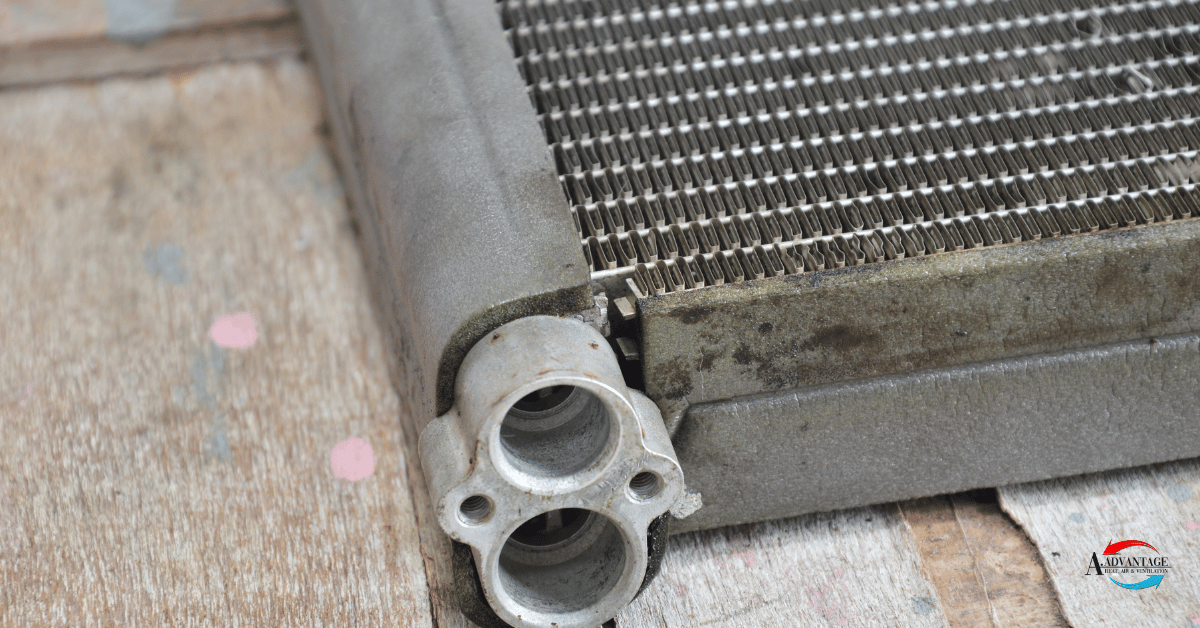
Your air conditioning system uses refrigerant to absorb heat from the air inside your home. The evaporator coil contains refrigerant, and as warm indoor air passes over the coil inside the air handler, the coil absorbs heat. Then, refrigerant travels to the condenser coil outside. The condenser coil releases the heat to outdoor air.
- Air passes across the coil
- Refrigerant inside the coil absorbs heat
- Cool air travels through your ducts
As part of humidity control, airborne moisture condenses on the cold coil and drains away. Because the evaporator coil is responsible for absorbing heat and controlling moisture, coil maintenance is important.
Types of Evaporator Coils
A Advantage Inc works on multiple coil styles:
- A-coil
- N-coil
- Slab coil
Your HVAC technician can identify yours during maintenance, repair, or installation.
Signs Your Evaporator Coil Needs Attention
If the evaporator coil develops coil problems, you may notice:
- Warm air
- Reduced airflow
- Water near the furnace
- Frozen evaporator coil
- Musty odor
A frozen evaporator coil may mean refrigerant issues or a dirty evaporator coil.
Common Evaporator Coil Problems
- Dirty evaporator coil
- Refrigerant leaks
- Blocked airflow
- Corrosion
- Improper installation
A dirty evaporator creates a blocked surface where air over the coil cannot transfer heat from the air inside properly.
Left uncorrected, coil issues can cause breakdowns.
Repair vs Replacement
Sometimes evaporator coil replacement is unavoidable when the coil is too damaged to repair.
Repair makes sense for newer systems, minor leaks, or small blockages.
You may need replacement when:
- Severe corrosion
- Multiple leaks
- Coil needs to be replaced and replacement costs outweigh repair
When the coil is too old, evaporator coil replacement costs may be the smarter choice.
Lifespan
Most evaporator coils last 10 to 15 years with HVAC maintenance. High humidity in Oklahoma can shorten lifespan.
Benefits of Caring for Your Evaporator Coil
- Better cooling
- Efficient heating
- Cleaner indoor air
- Longer life
DIY Maintenance Tips
- Replace air filter
- Keep vents open
- Watch for water leaks
- Schedule HVAC maintenance
Why Professional Maintenance Matters
A Advantage Inc provides complete HVAC maintenance, including:
- HVAC cleaning
- Coil cleaning
- AC repair
- Coil cleaner application
- Drain inspection
Cost Of Evaporator Coil Repair Or Replacement
Replacement costs depend on:
- System size
- Coil type
- Damage severity
- Choosing an HVAC Contractor
Look for:
- Experience
- Local service
- Honest pricing
A Advantage provides:
- HVAC repair Oklahoma City
- AC installation Oklahoma City
- HVAC maintenance Oklahoma City
When to Call A Advantage Inc
- Warm air from vents
- Ice buildup
- Water near furnace
We provide fast repair, installation, and cleaning to keep systems running smoothly.
Conclusion
The evaporator coil acts as a key part of heating and cooling. It works with condenser coils to cool the air, remove moisture, and keep temperatures stable. If your evaporator coil may be dirty, leaking, or damaged, contact A Advantage Inc for repair, installation, or HVAC maintenance.