Skip to content




Oklahoma City homeowners comparing a tankless vs tank water heater have a lot to consider. From triple-digit summer heat to freezing winter cold snaps, your home’s water heater works hard all year long. So when it’s time to replace an aging unit or choose one for a new build, this decision becomes very real, very fast.
It’s a decision you’ll live with for the next decade or more. Both options deliver hot water, but they do it in very different ways, and each comes with tradeoffs that matter more or less depending on your household. If you’ve been dealing with common water heater problems like inconsistent temperatures or rising energy bills, this guide will help you weigh your options clearly.
Let’s break it down so you can make the best choice for your OKC home.
Key Takeaways
- Tank water heaters cost $300 to $2,000 for the unit and $500 to $1,000 for installation, making them the budget-friendly choice for most OKC homeowners.
- Tankless water heaters run $1,000 to $3,000 for the unit with total installed costs of $3,000 to $5,000, but they can be 24% to 34% more energy efficient.
- Lifespan matters: tankless units last 15 to 20+ years compared to 8 to 12 years for tank models, potentially saving you a full replacement cycle.
- OKC’s hard water from Lake Hefner and Lake Atoka accelerates mineral buildup in both systems, making routine maintenance essential to protect your investment.
- Energy Star tankless heaters qualify for a 30% federal tax credit up to $600, helping offset the higher upfront cost.
- Oklahoma City’s seasonal temperature swings affect both systems differently, so proper sizing for your home and household demand is critical.
How Does a Tank Water Heater Work?
The Basics of Stored Hot Water
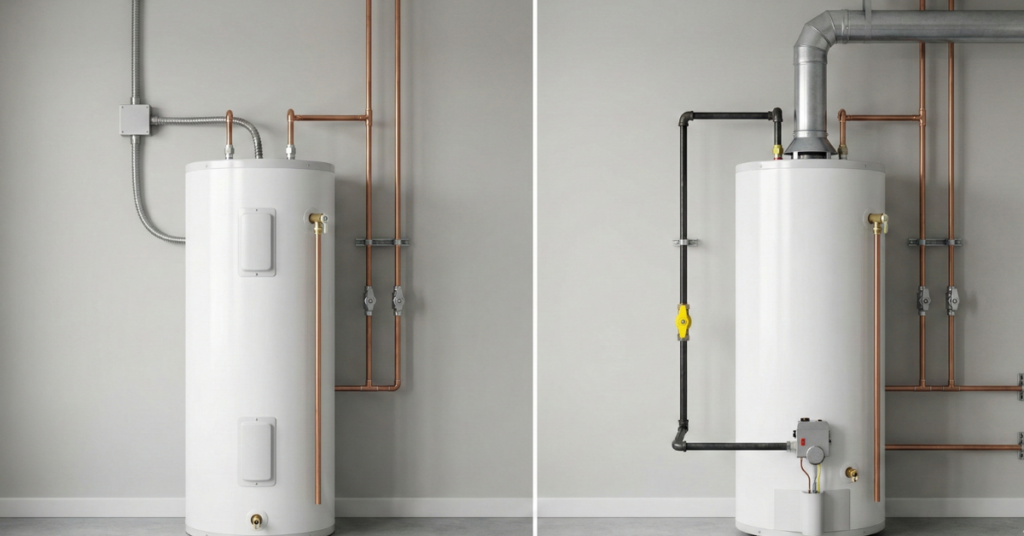
A tank water heater is the traditional setup most Oklahoma City homes are already using. It works by storing a large volume of water, typically 40 to 80 gallons, inside an insulated cylinder. A gas burner or electric heating element keeps that water heated to a preset temperature, usually between 120 and 140 degrees Fahrenheit, so it’s ready whenever you turn on the faucet.
The system is straightforward. Cold water enters the bottom of the tank, gets heated, and rises to the top where it’s drawn out through your plumbing. Once the stored hot water runs out, you’ll need to wait for the tank to refill and reheat before you have a full supply again.
Tank Sizes and Fuel Options for OKC Homes
For most Oklahoma City households, a 40- to 50-gallon tank handles daily needs comfortably. Larger families may need 60- to 80-gallon units to keep up with back-to-back showers, laundry, and dishwashing.
You can choose between gas and electric models. Gas tank water heaters are popular in OKC since natural gas is widely available and tends to cost less to operate than electricity. Electric models are simpler to install but typically come with higher monthly operating costs. Either way, tank water heaters remain the most common choice in homes across Oklahoma, and nearly any licensed plumber can install or service them quickly.
How Does a Tankless Water Heater Work?
On-Demand Heating Explained
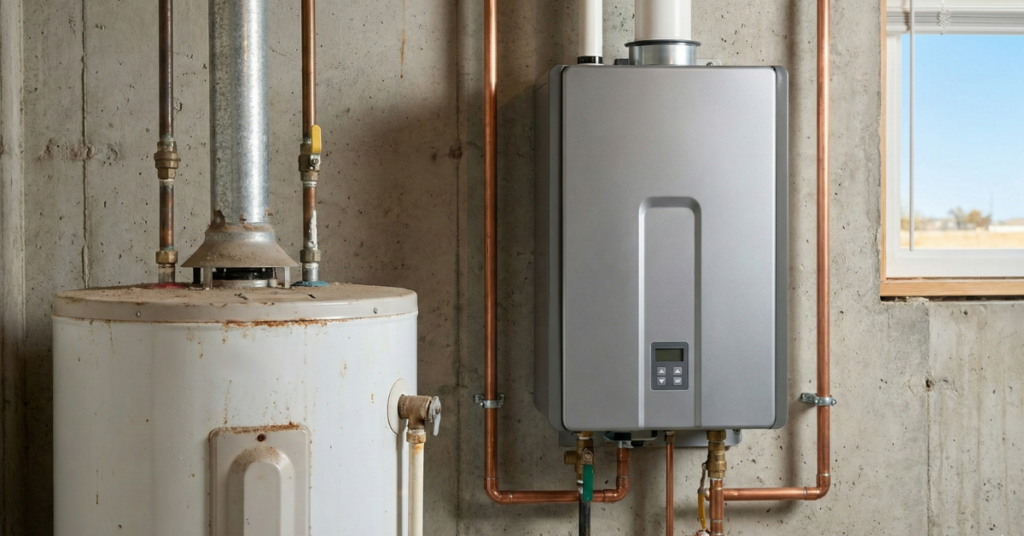
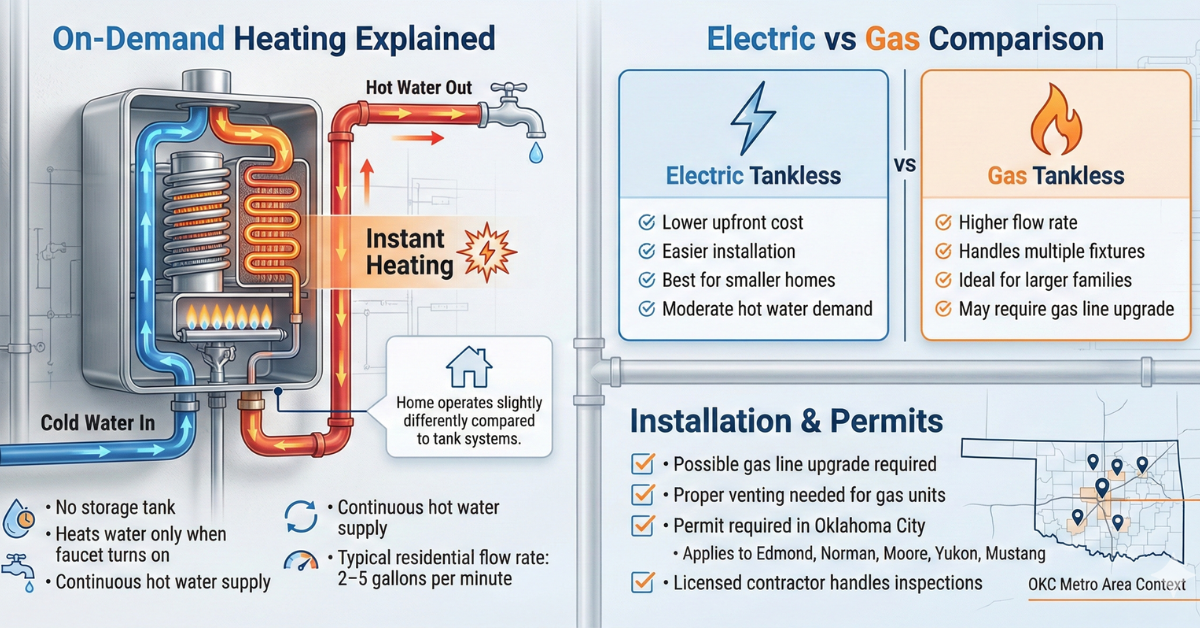
A tankless water heater takes a completely different approach. Instead of storing hot water, it heats water instantly as it flows through the unit. When you turn on a hot water faucet, cold water passes through a powerful heat exchanger powered by either gas burners or electric coils, and comes out hot on the other side.
This “on-demand” design means you’re not paying to keep a large tank of water hot around the clock. Plumber Geno Caccia, a third-generation plumber featured in independent testing by Consumer Reports, notes that homeowners making the switch should expect the house to “operate a little differently” since there’s a brief adjustment period when moving from stored to on-demand hot water.
The result is a continuous supply of hot water as long as your demand doesn’t exceed the unit’s flow rate, which typically ranges from 2 to 5 gallons per minute for residential models.
Electric vs. Gas Tankless Options
Just like tank models, tankless water heaters come in electric and gas versions. Electric tankless units cost less upfront and are easier to install, but they work best in smaller households or homes with moderate hot water demand. Gas tankless units deliver higher flow rates and handle multiple fixtures running at the same time, making them better suited for larger OKC families.
One important consideration: gas tankless units often require upgraded gas lines and proper venting. If your Oklahoma City home doesn’t already have the right gas line capacity, you may need professional gas line installation before the tankless unit can go in. That’s an added cost worth factoring into your budget.
It’s also worth noting that Oklahoma City requires a permit for most water heater installations and replacements. This applies whether you live in OKC proper or in surrounding communities like Edmond, Norman, Moore, Yukon, or Mustang. A licensed contractor will handle the permitting process and make sure your new system meets local building codes and passes safety inspections.
What Are the Cost Differences Between Tankless and Tank Water Heaters?
When comparing a tankless vs tank water heater, cost is usually the first thing OKC homeowners want to understand. Let’s look at both the short-term and long-term numbers.
Upfront Purchase and Installation Costs
This is where the two options diverge sharply. Tank water heaters are significantly more affordable upfront. According to leading water heater manufacturers, a traditional tank unit typically runs between $300 and $2,000 depending on the model and features, with installation adding $500 to $1,000.
Tankless systems carry a higher price tag. The unit itself can range from $1,000 to $3,000, and installation costs climb quickly when gas line modifications, electrical upgrades, or new venting are needed. The owner of Sullivan Plumbing and Heating, a Massachusetts-based plumbing company interviewed by Prudent Reviews, explained that tankless installation often takes a full day and requires reworking water and gas lines, which is why total installed costs frequently land between $3,000 and $5,000.
For Oklahoma City homeowners watching their budget, the upfront difference is real and worth considering carefully.
Long-Term Operating Costs and Energy Savings
Here’s where tankless systems start to make up ground. Because they only heat water when you need it, tankless water heaters eliminate standby heat loss, the energy wasted keeping a full tank of water hot 24 hours a day whether anyone’s using it or not. For OKC homeowners on OG&E or ONG service plans, that wasted energy shows up on every monthly bill.
The U.S. Department of Energy reports that water heating accounts for roughly 13% of annual residential energy use. Steven Nadel, Executive Director of the American Council for an Energy-Efficient Economy (ACEEE), has called water heaters the “second-biggest user of energy” in most households, making efficiency improvements especially impactful.
For homes using 41 gallons or less of hot water daily, tankless units can be 24% to 34% more energy efficient than conventional tank models. Even homes with higher usage, around 86 gallons per day, can see efficiency gains of 8% to 14%. Over the 15- to 20-year lifespan of a tankless unit, those monthly savings add up.
One OKC family who upgraded from a 15-year-old system with AAdvantage saw a 35% reduction in their energy costs, proving that the right upgrade can deliver meaningful savings in real Oklahoma City conditions.
Energy Star gas tankless heaters are also eligible for a 30% federal tax credit up to $600, which helps offset the higher upfront cost.
Which Water Heater Lasts Longer in Oklahoma City?
Lifespan is another major factor in the tankless vs tank water heater decision, especially in OKC where local water conditions can shorten a unit’s life if maintenance is neglected.
Lifespan Comparison: 8-12 Years vs. 15-20+ Years
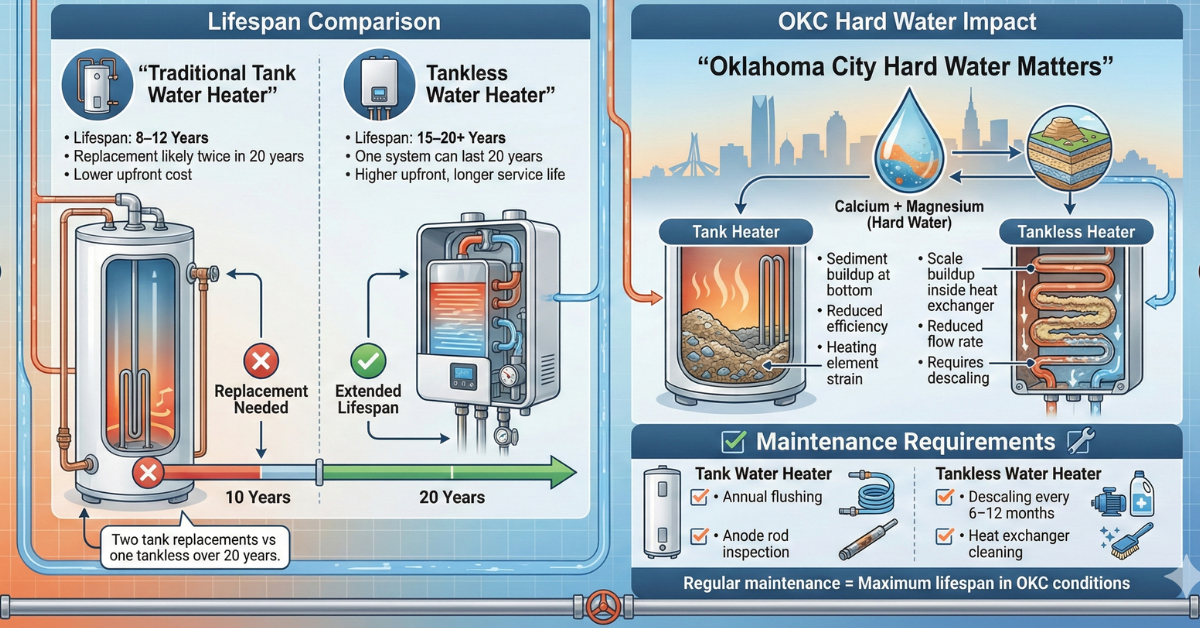
One of the biggest advantages of tankless water heaters is longevity. A well-maintained tankless unit can last 15 to 20 years or more, while traditional tank water heaters typically need replacement after 8 to 12 years.
That lifespan difference matters when you’re calculating the true cost of ownership. If a tank water heater lasts 10 years and a tankless model lasts 20, you may end up buying two tank units in the same time frame you’d use a single tankless system.
If your current unit is showing signs of age, it’s worth getting a professional assessment to determine whether professional water heater repair makes sense or if replacement is the smarter move.
How OKC’s Hard Water Affects Both Types
Here’s something many Oklahoma City homeowners don’t realize: local water quality plays a major role in how long your water heater lasts. OKC sits on top of limestone and sandstone formations that naturally dissolve calcium and magnesium into the water supply. The result is hard water, and it’s a factor you can’t ignore when choosing a water heater.
Hard water causes mineral buildup inside both tank and tankless systems, but the impact differs. In tank water heaters, sediment accumulates at the bottom of the tank, insulating the heating element and forcing the unit to work harder. This reduces efficiency and accelerates wear. In tankless systems, scale builds up inside the heat exchanger, which can restrict water flow and reduce heating performance over time.
Dave Musial, CEO of Four Seasons Heating, has noted in industry maintenance recommendations that tankless systems in hard water areas need descaling every 6 to 12 months to prevent damage and maintain peak performance. Tank water heaters benefit from annual flushing and anode rod inspections.
Either way, staying on top of a regular maintenance schedule is essential for OKC homeowners who want to get the most life out of their water heater investment.
How Does Oklahoma City’s Climate and Water Quality Affect Your Choice?
No tankless vs tank water heater comparison is complete without looking at how your local environment plays into the decision. OKC’s unique combination of extreme weather and hard water makes this an especially important factor.
Seasonal Demand Swings in OKC
Oklahoma City’s climate puts unique demands on water heaters. During winter cold snaps, incoming groundwater temperatures drop significantly, meaning your water heater has to work harder to reach your desired temperature. This affects tankless units more noticeably since they heat water in real time. A unit that performs well in July might struggle to deliver the same flow rate in January when it’s heating much colder incoming water.
For tank water heaters, cold weather means the unit cycles more frequently to maintain the stored water temperature, which drives up energy costs during OKC’s colder months. If your tank is located in an unheated garage or utility closet, which is common in many OKC homes built from the 1960s through the 1990s, the unit works even harder to compensate for the cold surrounding air.
Newer construction in areas like south Edmond, northwest Norman, and parts of west OKC often includes more insulated utility spaces, which helps both tank and tankless systems perform more consistently year-round. Older neighborhoods like Heritage Hills, Mesta Park, and Paseo may need additional considerations during installation since the original plumbing and electrical may require updates to support a modern tankless system.
In summer, both systems operate more efficiently since the incoming water is already warmer. OKC homeowners who track their OG&E bills often notice this seasonal pattern, especially with tank water heaters that run constantly.
Hard Water and Mineral Buildup Considerations
As we mentioned, Oklahoma City’s mineral-rich water is something both types of water heaters have to contend with. OKC’s water is primarily sourced from Lake Hefner and Lake Atoka, and the surrounding geology, ancient limestone and sandstone formations across central Oklahoma, loads the supply with calcium and magnesium. Some sources report that hard water can reduce water heater efficiency by as much as 29% and shorten the lifespan of tank systems from the expected 12 to 15 years down to just 6 to 8 years without proper maintenance.
For tankless systems, the heat exchanger is particularly vulnerable to scale buildup. If you’re considering a tankless unit for your OKC home, pairing it with a water softener is a smart move. This helps protect the internal components and keeps the system running efficiently for years longer.
Tank water heaters in OKC benefit from annual sediment flushing and regular anode rod checks. The anode rod is a sacrificial component that attracts corrosive minerals, protecting the tank itself. When it wears out, the tank starts to corrode, which is why many OKC units fail earlier than their rated lifespan.
Bottom line: regardless of which system you choose, Oklahoma City’s water quality makes routine maintenance a non-negotiable part of the equation.
Tankless vs Tank Water Heater: Which Is Better for Your OKC Home?
Now that you’ve seen the full picture on cost, lifespan, efficiency, and OKC-specific factors, here’s a quick framework to help you decide which side of the tankless vs tank water heater debate fits your situation.
Best Scenarios for a Tank Water Heater
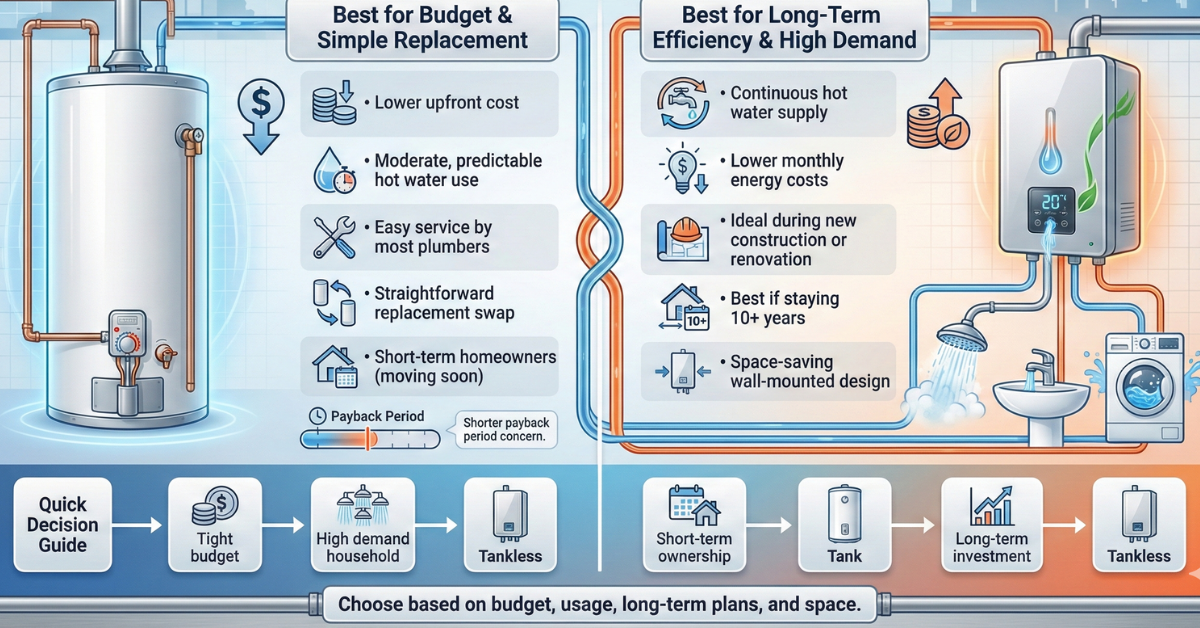
A traditional tank water heater might be the better fit for your Oklahoma City home if:
- You’re working within a tighter upfront budget and want the lowest initial cost.
- Your household has moderate hot water needs with predictable usage patterns.
- You prefer a simpler system that nearly any plumber can service quickly.
- You’re replacing an existing tank unit and want a straightforward swap without major modifications.
- You plan to move within the next few years and want to avoid a longer payback period.
Tank water heaters are reliable, widely available, and cost-effective for many OKC homeowners. They’ve been the standard for decades for good reason. If you’re ready for a new installation, AAdvantage offers trusted hot water tank installation in Oklahoma City to get you set up quickly.
Best Scenarios for a Tankless Water Heater
A tankless system could be the smarter long-term investment if:
- Your household uses a lot of hot water and you’re tired of running out during peak demand.
- You want to reduce your monthly energy costs and are willing to invest more upfront.
- You’re building a new home or doing a major renovation where gas line and venting modifications are already part of the project scope.
- You plan to stay in your OKC home for 10 or more years, giving you time to recoup the higher initial investment.
- Space is limited and you’d benefit from a wall-mounted unit that frees up floor space.
For larger Oklahoma City families who run multiple hot water fixtures at the same time, a properly sized gas tankless unit can be a game-changer for everyday comfort.
Make the Right Choice for Your OKC Home
The tankless vs tank water heater decision comes down to your household’s hot water needs, your budget, and how long you plan to stay in your home. Tank water heaters offer lower upfront costs and proven reliability. Tankless systems deliver long-term energy savings, a longer lifespan, and unlimited hot water on demand.
Oklahoma City’s hard water and seasonal temperature swings make proper sizing and routine maintenance critical regardless of which option you pick. Whether you’re in a newer build near Deer Creek or an established home in Nichols Hills, the right system installed correctly and maintained regularly will keep your home comfortable and your utility bills in check for years to come.
Not sure which option is best for your situation? The team at AAdvantage Heating & Air Conditioning serves homeowners across Oklahoma City, Edmond, Norman, Moore, and the surrounding metro area. We can evaluate your home’s hot water needs, assess your plumbing setup, and recommend the best solution for your household. Reach out today to get the honest, expert guidance you deserve.