


Standing in ankle-deep water during your morning shower or watching your kitchen sink back up after dinner happens to almost every homeowner at some point. Over 80% of homeowners deal with clogged drains during their time in a home, and most of these blockages develop gradually from everyday habits that seem harmless.
The frustrating part? Many clogs could have been prevented with simple awareness about what’s causing the problem. Understanding the common culprits behind drain blockages helps you stop issues before they become plumbing emergencies. Homes with regular drain maintenance experience 50% fewer emergency service calls, which means prevention really does pay off.
Oklahoma City homeowners face unique drainage challenges that go beyond typical household habits. Our clay-heavy soil shifts with seasonal moisture changes, putting stress on underground pipes. Hard water builds up mineral deposits inside drains year after year. Mature trees like elm, oak, and silver maple send their roots searching for moisture, and your sewer line is exactly what they’re looking for.
Whether you’re currently dealing with a slow drain or you want to protect your home from future problems, this guide explains the 12 most common causes of clogged drains and shows you when you can handle it yourself versus when it’s time to call a professional plumber.
What Are the Most Common Causes of Clogged Drains?
Your home’s drainage system is designed to handle water and small amounts of dissolved waste, but it’s not built to process everything we accidentally send down our sinks, showers, and toilets. Each drain in your home connects to a larger network of pipes that eventually meet at your main sewer line. When blockages form, they typically start small. A little hair here, some grease there, and over weeks or months, these materials combine and create obstructions that restrict water flow.
What makes drain clogs tricky is their progressive nature. You might notice your bathroom sink draining slightly slower than usual, but the problem feels minor enough to ignore. Meanwhile, that small amount of buildup is catching more debris with each use, growing larger until one day the water stops draining altogether. Drain clogs represent more than a third of plumbing service calls, and most could have been prevented with a bit of awareness about what’s going down the drain.
The location of a clog tells you a lot about its cause. Surface-level clogs near the drain opening are usually visible and easier to clear yourself. Deeper blockages in your branch lines or main sewer line require professional tools and expertise. Understanding where different types of clogs form and what causes them gives you the knowledge to prevent problems and recognize when professional help is necessary.
The 12 Most Common Culprits Behind Household Drain Clogs
1. Hair and Soap Scum Buildup
Every time someone showers or washes their hair over a sink, loose strands make their way toward the drain. By itself, hair is already problematic because its texture allows it to tangle and clump. The real trouble starts when hair combines with sticky substances like soap scum, creating dense masses that cling to pipe walls and trap even more debris.
Key facts about hair clogs:
- Bathroom drains, especially showers and tubs, are most vulnerable
- Bar soap creates more residue than liquid soap
- The combination of hair and soap forms stubborn blockages resistant to water pressure
- Drain guards catch hair before it enters pipes
- Regular cleaning of visible drain areas prevents deeper clogs
2. Grease, Fats, and Cooking Oils
If you’ve ever poured bacon grease down your kitchen sink, you’ve contributed to one of the most common and problematic drain issues. Grease and cooking oils account for over a third of holiday plumbing emergencies, and for good reason. When these substances are hot, they flow like water. As they cool inside your pipes, they solidify and coat the interior walls, creating sticky surfaces that trap food particles and other debris.
What you need to know:
- Grease clogs worsen over time, building layers like plaque in arteries
- Kitchen drain backups spike after Thunder games and holiday cooking in Oklahoma City
- Running hot water while pouring grease doesn’t prevent clogs, it just moves the problem deeper into your pipes
- Proper disposal: pour cooled grease into a container and throw it in the trash
- Even small amounts of oil accumulate over time
3. Food Waste and Garbage Disposal Misuse
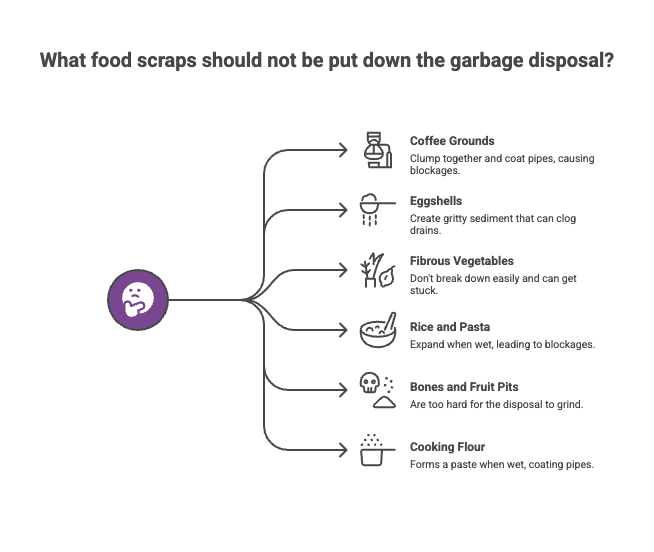
Your garbage disposal isn’t a trash can. While it’s designed to grind certain food scraps, many items either don’t break down properly or create paste-like substances that coat your pipes. Coffee grounds are notorious for this. They seem harmless going down the drain, but they don’t dissolve, and they clump together as they accumulate in your pipes.
Foods that cause drain problems:
- Coffee grounds and tea leaves
- Eggshells (create gritty sediment)
- Fibrous vegetables like celery, asparagus, and potato peels
- Rice and pasta (expand when they absorb water)
- Bones and fruit pits
- Cooking flour (forms paste when wet)
4. Soap Residue and Mineral Deposits
Oklahoma City’s water supply contains 15-20 grains per gallon of hardness, which is considered quite hard. When soap mixes with the calcium and magnesium in hard water, it creates soap scum that doesn’t rinse away cleanly. This scum accumulates on pipe walls, narrowing the passage for water and creating rough surfaces that catch other debris.
Hard water challenges:
- Mineral deposits reduce pipe diameter over time
- Soap scum combines with hair and dirt to form stubborn clogs
- Laundry room and bathroom drains are particularly affected
- Water softeners reduce but don’t eliminate buildup
- Professional descaling may be needed for severe mineral accumulation
5. Tree Root Infiltration
This is where Oklahoma City’s natural environment creates serious plumbing challenges. Tree roots are responsible for 90% of sewer line problems, and our local trees like elm, oak, and silver maple are particularly aggressive. Tree roots can extend 2-3 times the width of the tree’s canopy, searching for water sources. Your sewer line, with its steady supply of moisture and nutrients, is exactly what they’re looking for.
Roots enter through tiny cracks or loose joints in pipes. Once inside, they continue growing, creating masses that trap waste and eventually block the entire line. Clay pipes common in older Oklahoma City homes (especially in areas like Mesta Park and Heritage Hills) are particularly vulnerable because they weren’t designed to prevent root intrusion.
Warning signs of root invasion:
- Gurgling sounds from multiple drains
- Slow drainage affecting several fixtures simultaneously
- Sewage odors even after cleaning
- Recurring clogs despite clearing attempts
- Lush, green patches in your yard (sewage acting as fertilizer)
- Seasonal worsening during spring when root growth accelerates
6. Foreign Objects and Non-Flushable Items
Small toys, cotton swabs, dental floss, and jewelry find their way into drains more often than you’d think. The bigger problem is items marketed as “flushable” often cause significant blockages. Wet wipes, even those labeled flushable, don’t break down like toilet paper. They maintain their structure, clumping together and catching on any rough spots in your pipes.
Common culprits:
- Baby wipes and cleaning wipes (including “flushable” varieties)
- Feminine hygiene products
- Paper towels and tissues
- Kitty litter (even if the package says it’s flushable)
- Cotton balls and swabs
- Dental floss
- Small toys and jewelry
7. Old or Damaged Pipes
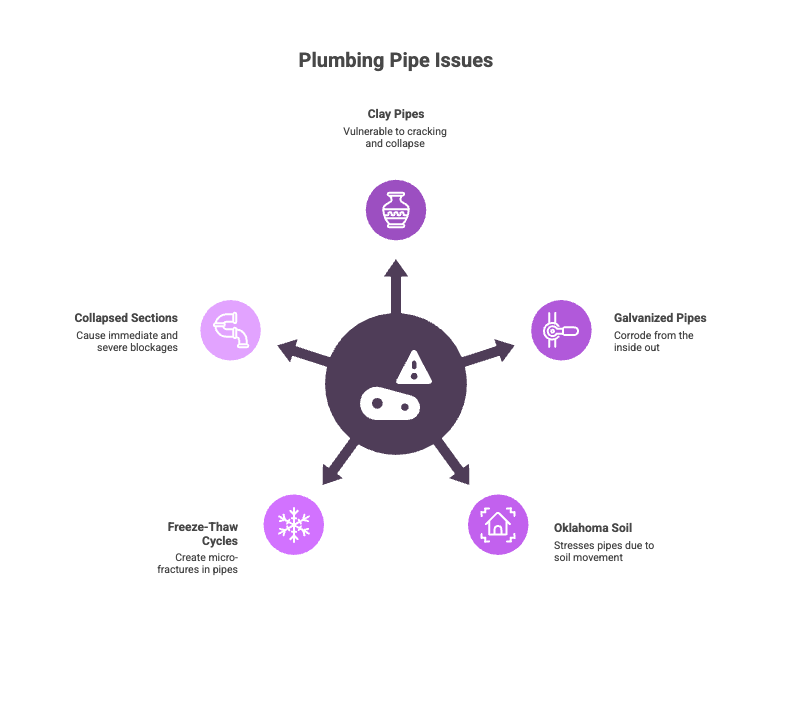
Age catches up with plumbing systems just like everything else. Clay pipes installed before the 1970s crack and collapse over time. Galvanized steel pipes corrode from the inside out, creating rough surfaces and narrowed passages. Oklahoma’s expansive clay soil and temperature fluctuations put constant pressure on underground pipes, causing them to shift, crack, or separate at the joints.
Aging pipe concerns:
- Clay pipes in historic neighborhoods are most vulnerable
- Galvanized pipes develop rust and mineral buildup
- Oklahoma’s freeze-thaw cycles create micro-fractures
- Soil movement from wet and dry cycles stresses pipe joints
- Collapsed sections create immediate, severe blockages
8. Excessive Toilet Paper Use
It seems simple enough: toilet paper is designed to break down in water. But excessive amounts, especially in older plumbing systems, can create temporary blockages. The paper doesn’t dissolve instantly. It needs time and water movement to break apart. When too much goes down at once, it forms clumps that get stuck, particularly at bends in the pipe or areas with reduced water flow.
Best practices:
- Use moderate amounts and flush multiple times if necessary
- Older homes with smaller pipes are more susceptible
- Septic systems require septic-safe toilet paper
- “Ultra-soft” varieties often don’t break down as quickly
9. Dirt and Outdoor Debris
Your outdoor drains handle water from downspouts, yard runoff, and rain drainage. During spring and fall, the most clog-prone seasons, these drains face heavy loads of leaves, dirt, and organic material. Spring rains wash sediment and pollen into drainage systems, while fall brings fallen leaves that decompose and create thick sludge in pipes.
Seasonal maintenance needs:
- Clean gutters before spring rains and after fall leaves drop
- Install grates over outdoor drain openings
- Remove visible debris regularly
- Flush outdoor drains with water during dry periods
- Schedule inspections after severe weather
10. Hard Water Mineral Buildup
We touched on this earlier, but it deserves its own category. Oklahoma City’s clay-heavy soil creates unique plumbing challenges, and one of them is the mineral content in our water. Over years, calcium and magnesium deposits accumulate inside pipes, essentially giving them a narrower diameter. This makes them more prone to clogs from other materials and reduces overall drainage efficiency.
Long-term effects:
- Pipes can lose 30-40% of their capacity over time
- Mineral deposits create rough interior surfaces
- Hot water pipes affected more severely
- Professional hydro-jetting may be needed to restore full flow
11. Broken or Collapsed Pipes
Sometimes the problem isn’t what’s in the pipe but the pipe itself. Oklahoma City’s climate creates the perfect storm for pipe damage. Our clay soil expands when wet and contracts when dry, putting enormous pressure on underground plumbing. Severe winter freezes can crack pipes, and years of this cycle weakens structural integrity until sections collapse entirely.
Damage indicators:
- Sinkholes or depressions in your yard
- Soggy areas that don’t dry out
- Sewage backing up into the lowest drains in your home
- Persistent problems that don’t respond to drain cleaning
12. Improper Drain Slope or Installation
Not all clogs result from debris. Sometimes drains were installed incorrectly from the start. Proper drainage requires a specific slope (typically 1/4 inch per foot) to allow gravity to move water and waste effectively. When pipes are too flat, water pools and debris settles instead of flowing toward the sewer line. When pipes are too steep, water rushes through but leaves solid waste behind.
Installation issues:
- More common in DIY plumbing additions or renovations
- Can affect single fixtures or entire sections
- Requires professional correction
- Often discovered only after recurring problems
What Are the Warning Signs of a Serious Drain Clog?
Recognizing early warning signs helps you address problems before they become emergencies. Pay attention to these indicators:
- Slow drainage across multiple fixtures – When more than one sink or drain slows down simultaneously, it points to a problem deeper in your system rather than an isolated clog
- Gurgling or bubbling sounds – These noises indicate trapped air in your pipes, usually caused by a partial blockage affecting water flow and air pressure
- Persistent foul odors – Sewage smells that don’t go away after cleaning suggest decomposing organic matter stuck in your pipes or venting problems
- Water backing up in unusual places – Using one fixture causes water to appear in another (like toilet flushing makes the shower drain bubble)
- Standing water that won’t drain at all – Complete blockage requiring immediate attention
- Recurring clogs in the same location – Clearing a drain only to have it clog again within days or weeks means the root cause hasn’t been addressed
- Changes in water level in toilets – Fluctuating water levels can indicate sewer line problems
- Wet spots or sinkholes in your yard – Signs of leaking or broken sewer pipes underground
When Should You Call a Professional Plumber Instead of DIY?
Knowing your limits saves you time, money, and frustration. Some clogs are perfect for DIY solutions, while others need professional expertise and equipment.
You can likely handle it yourself when:
- Only one drain is affected
- You can see the clog (hair in the shower drain, visible debris)
- The problem just started (not recurring)
- A plunger or basic drain snake solves it quickly
- Water is draining slowly but still draining
Call a professional plumber when:
- Multiple clogged drains throughout your home signal a serious main sewer line problem
- You’ve tried DIY methods multiple times without success
- Water or sewage is backing up into your home
- You suspect tree root intrusion (recurring problems, gurgling from multiple drains)
- Foul sewage odors persist despite cleaning
- You notice signs of pipe damage (wet spots in yard, foundation cracks)
- The clog returns within days of clearing it
- You’re uncomfortable working with plumbing tools or don’t have the right equipment
A word about chemical drain cleaners: Skip them. These products contain caustic chemicals that can damage your pipes, especially with repeated use. They create heat reactions that can crack older pipes, and they often provide only temporary relief by pushing the clog deeper rather than removing it. The chemicals are also hazardous to your health and the environment. Safe alternatives like baking soda and vinegar work for minor buildup, but for serious clogs, professional hydro-jetting or mechanical snaking is the safer, more effective choice.

Protect Your Oklahoma City Home from Drain Disasters
Understanding these 12 common causes of clogged drains gives you the power to prevent most plumbing problems before they start. Small changes in daily habits, like properly disposing of grease, using drain guards, and being mindful of what goes down your drains, make a significant difference in your home’s plumbing health. Regular maintenance catches developing issues while they’re still easy and affordable to fix.
For Oklahoma City homeowners, remember that our clay soil, hard water, and mature trees create unique challenges that require extra vigilance. If you’re experiencing any of the warning signs we’ve covered, or if you’d like a professional inspection to catch problems early, AAdvantage Plumbing is here to help. Prevention is always easier and less expensive than emergency repairs, and knowing when to call for professional help protects both your home and your peace of mind.
Don’t wait for a complete backup during your next holiday gathering or a Monday morning crisis. Understanding what causes clogs is the first step toward keeping your drains flowing freely year-round.