


Electric Vs Gas Water Heater For Oklahoma Homes
Electric water heaters are more energy-efficient and cost less to install, while gas water heaters heat water faster and typically cost less to operate monthly in Oklahoma. The best choice for your home depends on your existing infrastructure, household size, and hot water demand.
Your water heater quietly handles one of the biggest jobs in your home. According to estimates from the U.S. Department of Energy, water heating accounts for roughly 14-18% of your utility bill. That means the fuel type you choose has a real impact on your monthly budget. For Oklahoma homeowners, the decision comes with unique considerations.
Between our hard water conditions, wide temperature swings, and relatively affordable energy rates, this choice deserves a closer look. If you’ve already gone through the process of choosing between an electric or gas furnace, this comparison will feel familiar. Let’s break down the pros, cons, and key factors that matter most for Oklahoma homes.
Key Takeaways for Oklahoma Homeowners
- Electric water heaters offer higher energy efficiency (close to 98%), lower upfront costs, simpler installation, and safer operation with no gas leak or carbon monoxide risks. They’re a strong choice for smaller households, homes without existing gas lines, and homeowners who value simplicity.
- Gas water heaters heat water faster, cost less to operate monthly thanks to Oklahoma’s affordable natural gas rates, and continue working during power outages. They’re ideal for larger families with high hot water demand and homes that already have gas infrastructure.
- Oklahoma’s hard water accelerates sediment buildup in both types, so annual tank flushing and regular maintenance are essential no matter which fuel type you choose.
- Neither option is universally better. Your home’s existing setup, household size, hot water habits, and budget all play a role in the right decision.
- New federal efficiency standards arriving in 2029 will change the landscape for electric water heaters, so planning ahead now gives you more options and better value.
How Do Electric and Gas Water Heaters Work?
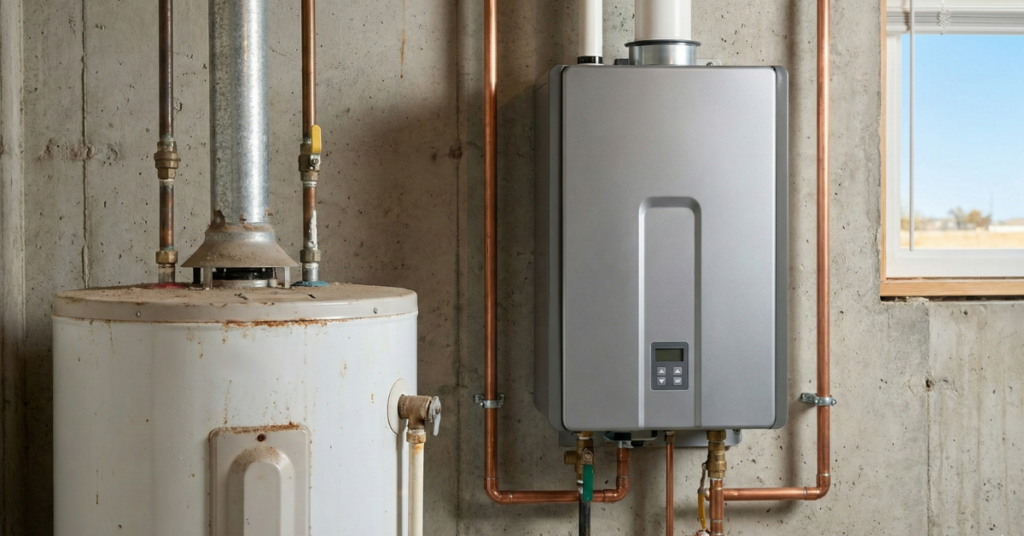
Electric water heaters use resistance heating elements powered by electricity, while gas water heaters use a natural gas or propane burner to heat water in a storage tank. Understanding this core difference helps explain why they vary in speed, efficiency, cost, and installation requirements.
Electric Water Heater Basics
Electric water heaters use one or two resistance heating elements submerged inside the tank to warm the water. There’s no flame, no combustion, and no exhaust gases. Cold water enters through a dip tube, gets heated by the elements, and rises to the top of the tank where it’s ready for use.
Because there’s no combustion involved, electric units don’t need venting or a gas line. That makes them simpler to install and more flexible in terms of placement. As leading water heater manufacturers note, electric models convert nearly all the electricity they consume directly into heat, which contributes to their high efficiency ratings.
Gas Water Heater Basics
Gas water heaters rely on a burner located at the bottom of the tank that ignites natural gas or propane. The flame heats the water from below, and a flue or vent pipe carries the exhaust gases safely out of your home. This combustion process generates heat quickly, which is why gas models tend to have faster recovery rates.
However, that burner and venting system adds complexity. Gas water heaters require a dedicated gas line, proper ventilation, and more careful installation to ensure safe operation. If your home doesn’t already have gas infrastructure, the cost of running a new gas line adds to the upfront investment.
What Are the Pros and Cons of Electric Water Heaters in Oklahoma?
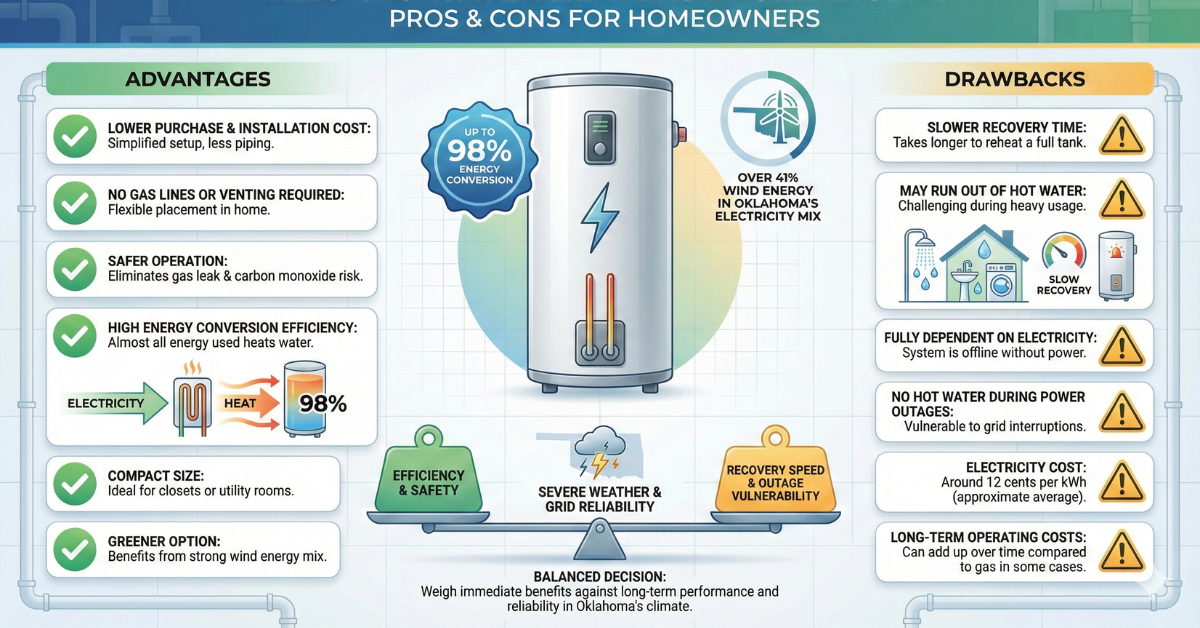
Electric water heaters offer higher efficiency (close to 98%), lower purchase and installation costs, safer operation, and simpler maintenance. The trade-offs include slower recovery times, vulnerability during power outages, and potentially higher long-term electricity costs. Here’s a closer look at both sides for Oklahoma homeowners.
Advantages of Electric Water Heaters
Electric models typically cost less to purchase and install. Without the need for gas lines or venting, installation is simpler, and the units can fit into tighter spaces like closets or utility rooms. They’re also considered safer since there’s no risk of gas leaks or carbon monoxide exposure from the heating process.
From an efficiency standpoint, electric water heaters convert close to 98% of the energy they consume into heat. That’s significantly higher than gas models. The U.S. Department of Energy confirms that electric resistance water heaters have some of the highest energy conversion rates among residential appliances, making them an efficient choice when electricity rates are reasonable. And for environmentally conscious homeowners, it’s worth noting that Oklahoma’s electricity mix includes over 41% wind energy, making electric appliances a greener option in our state.
Drawbacks of Electric Water Heaters
The biggest downside is speed. Electric water heaters take longer to recover after the tank has been depleted. If your household runs multiple showers, the dishwasher, and the washing machine in quick succession, you may notice the hot water running out faster.
Electric units are also completely dependent on the power grid. During an Oklahoma ice storm or severe weather event that knocks out electricity, you’ll be without hot water until power is restored. And while Oklahoma’s electricity rates are below the national average at roughly 12 cents per kWh, monthly operating costs for an electric water heater can still add up over the unit’s lifetime.
What Are the Pros and Cons of Gas Water Heaters in Oklahoma?
Gas water heaters deliver faster heating, lower monthly operating costs in areas with affordable natural gas, and continued operation during power outages. The downsides include higher upfront costs, more complex installation, increased maintenance, and safety risks from gas leaks and carbon monoxide. Here’s how those pros and cons break down for Oklahoma households.
Advantages of Gas Water Heaters
The standout benefit of gas water heaters is speed. They heat water faster and have a higher first hour rating (FHR), meaning they can deliver more hot water per hour than comparable electric models. For larger families or homes with high demand, that faster recovery rate makes a noticeable difference.
Gas models also tend to cost less to operate month-to-month in Oklahoma, where natural gas remains relatively affordable. According to recent data, the average monthly natural gas cost in Oklahoma ranges from $50 to $100 depending on the season. And here’s something many homeowners don’t think about until they need it: gas water heaters continue working during power outages, as long as the gas supply remains uninterrupted.
If your home already has a gas line, professional gas line installation ensures your system operates safely and meets Oklahoma building codes.
Drawbacks of Gas Water Heaters
Gas water heaters come with higher upfront costs. The unit itself tends to be more expensive, and the installation process is more involved due to venting requirements and gas line connections. Home service professionals estimate that switching from electric to gas can cost significantly more than a straightforward same-type replacement.
Safety is another consideration. Any gas appliance carries the risk of gas leaks and carbon monoxide exposure if not properly maintained. That means more regular maintenance, including vent cleaning, gas connection checks, and annual inspections. Gas water heaters also operate at lower efficiency than electric models, typically around 80-85%, because some energy is lost through the exhaust venting process.
How Does Oklahoma’s Climate and Water Quality Affect Your Choice?
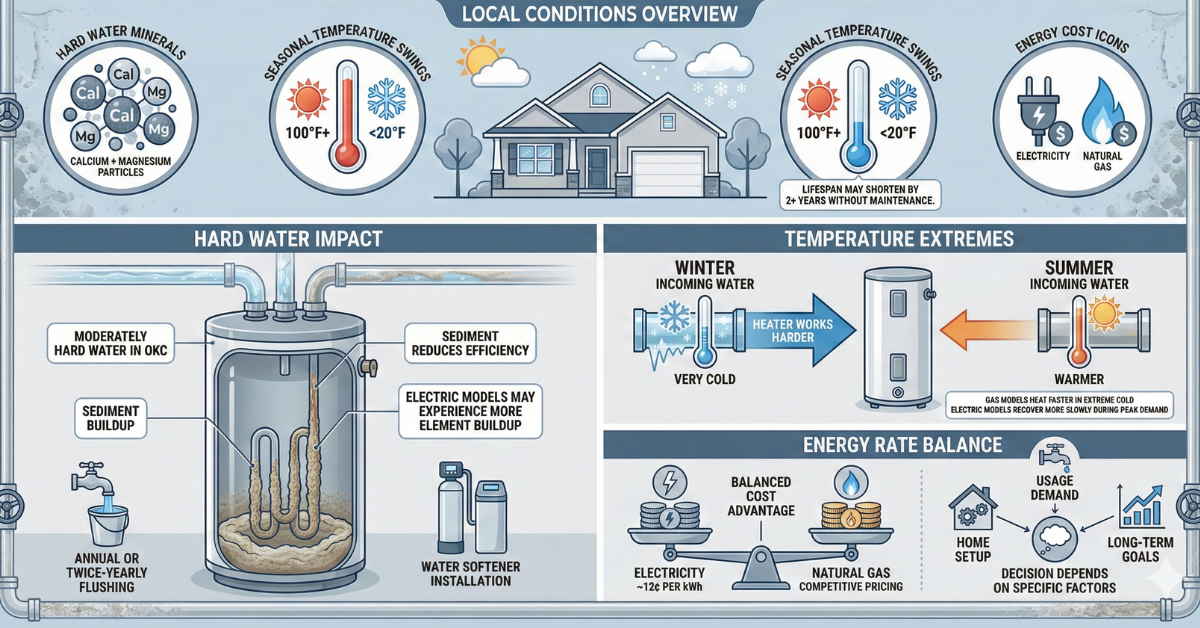
Oklahoma’s moderately hard water, extreme seasonal temperature swings, and affordable but balanced energy rates all play a significant role in water heater performance and longevity. These local conditions can shorten a water heater’s lifespan by two or more years compared to national averages if maintenance is neglected.
Hard Water and Sediment Buildup
Oklahoma City and the surrounding metro area have moderately hard water. Licensed Oklahoma City plumbing professionals report that this mineral content accelerates sediment buildup inside water heater tanks, reducing efficiency and shortening the unit’s lifespan over time. Both electric and gas models are affected, but the impact can be more pronounced in electric heaters where sediment settles directly around the heating elements.
Flushing your tank at least once a year (or twice if you’re in an area with particularly hard water) is essential. Installing a water softener can also help protect your investment. Staying on top of a regular maintenance schedule is one of the best ways to extend the life of any water heater in Oklahoma.
Temperature Extremes and Seasonal Demand
Oklahoma’s wide temperature range, from scorching summers to frigid winter cold snaps, puts extra strain on water heaters. During winter months, incoming water temperatures drop significantly, which means your water heater has to work harder to reach the desired temperature. Gas models handle this more efficiently due to their faster heating capability, while electric models may take noticeably longer during peak cold weather.
For a deeper look at how Oklahoma’s climate affects energy decisions, our Oklahoma-specific furnace comparison covers similar energy considerations for heating systems.
Oklahoma Energy Rates
Oklahoma homeowners benefit from energy costs that sit below the national average on both sides. Electricity averages around 12 cents per kWh, while natural gas rates remain competitive. That relatively balanced pricing means neither fuel type has an overwhelming cost advantage, which makes the decision more about your home’s specific setup, hot water demand, and long-term goals.
Which Water Heater Costs Less to Own Over Time?
In Oklahoma, gas water heaters generally cost less to operate monthly, but electric water heaters have lower upfront costs and longer lifespans. Over a 10-15 year ownership period, total costs often come out surprisingly close, making your home’s existing infrastructure the biggest deciding factor.
Upfront and Installation Costs
Electric tank water heaters (40-50 gallon) typically run between $1,200 and $2,500 fully installed. Gas tank models in the same size range cost between $1,400 and $2,800. The gap widens if you’re converting from one fuel type to another, since that often requires new gas lines, electrical upgrades, or venting modifications.
“Water heating makes up about 13% of both annual residential energy use and consumer utility costs,” according to the U.S. Department of Energy. That’s a significant share of your household budget, which is why choosing the right system matters.
Lifespan and Long-Term Value
Electric water heaters generally last 10-15 years with proper maintenance. Gas models typically last 8-12 years, partly because the combustion process creates more wear on internal components. According to ENERGY STAR, homeowners should begin evaluating replacement options once their water heater passes the 10-year mark, noting that visible corrosion, water leaking, and inconsistent temperatures are early warning signs of failure. In Oklahoma, where hard water accelerates sediment buildup, many homeowners find themselves replacing units closer to the 8-10 year mark regardless of fuel type.
It’s also worth keeping an eye on new federal efficiency standards taking effect in 2029. The U.S. Department of Energy called this rule “the largest energy savings action by the Appliance Standards Program in history,” projecting $7.6 billion in annual savings for American households. These standards will require larger electric water heaters to meet heat pump efficiency levels, which could change the cost equation significantly. If your current unit is approaching the end of its lifespan, planning ahead now gives you time to evaluate your options without making a rushed decision.
One Oklahoma City family who worked with AAdvantage saw a 35% reduction in energy costs after upgrading from an aging system to a high-efficiency unit. While that example involved an AC system, it reinforces a broader truth: investing in efficient equipment pays off in Oklahoma’s climate.
Quick Comparison at a Glance
Here’s a side-by-side summary to help you weigh the key differences:
| Factor | Electric Water Heater | Gas Water Heater |
| Upfront Cost | $1,200 – $2,500 installed | $1,400 – $2,800 installed |
| Energy Efficiency | ~98% | 80-85% |
| Recovery Speed | Slower | Faster |
| Monthly Operating Cost | Moderate (OK electricity ~12¢/kWh) | Often lower (affordable natural gas) |
| Lifespan | 10-15 years | 8-12 years |
| Safety | No gas leak or CO risk | Requires proper venting and maintenance |
| Power Outage Performance | No hot water | Continues working |
| Installation Complexity | Simpler | More involved (gas line + venting) |
If you’re noticing warning signs like inconsistent water temperature, rusty water, or unusual noises, it may be time to explore common water heater problems Oklahoma homeowners face before deciding on a repair or replacement.
Making the Right Choice for Your Oklahoma Home
There’s no single “best” answer when it comes to electric vs gas water heaters. The right choice depends on your home’s existing infrastructure, your household’s hot water demand, and your budget priorities. If your home already has a gas line and you have a larger family with high demand, a gas water heater’s faster recovery rate and lower monthly operating costs may be the better fit. If you’re looking for simpler installation, higher efficiency, and fewer safety concerns, an electric model makes a lot of sense, especially as Oklahoma continues expanding its renewable energy capacity.
Either way, the smartest thing you can do is consult with a qualified HVAC professional who understands Oklahoma’s unique conditions. ENERGY STAR recommends considering replacement once your unit passes the 10-year mark, so if you’re getting close, now is a great time to start researching. A professional evaluation takes the guesswork out of the equation and helps you choose a system that keeps your home comfortable and your energy bills manageable for years to come.