


Tank water heaters last 8 to 12 years on average, while tankless models can last 15 to 20 years with proper maintenance. However, Oklahoma homeowners often see shorter lifespans due to the state’s hard water, which accelerates sediment buildup and corrosion inside the tank. If your water heater is approaching the 10-year mark and showing signs of trouble, it’s likely time to start planning for a replacement.
The good news is that water heaters give you plenty of warning signs before they fail completely. This guide covers what Oklahoma homeowners need to know about water heater lifespans, local factors that shorten them, warning signs, replacement costs, and maintenance tips that can add years to your unit.
Key Takeaways:
- Tank water heaters typically last 8 to 12 years; tankless models last 15 to 20 years
- Oklahoma City’s hard water averages 154 parts per million, which can reduce your water heater’s lifespan by 2 or more years
- Six warning signs indicate it’s time to replace: age over 10 years, rusty water, strange noises, leaks, inconsistent temperatures, and rising energy bills
- Replacement costs range from $600 to $3,900 depending on type, with new DOE efficiency standards taking effect in 2029
- Annual tank flushing and anode rod inspections can extend your unit’s life by 3 to 5 years
How Long Do Different Types of Water Heaters Last?
Not all water heaters are built the same, and the type you have in your home plays the biggest role in how long it will last. Here’s a breakdown of what to expect from the most common types installed in Oklahoma homes.
Tank Water Heaters (8 to 12 Years)
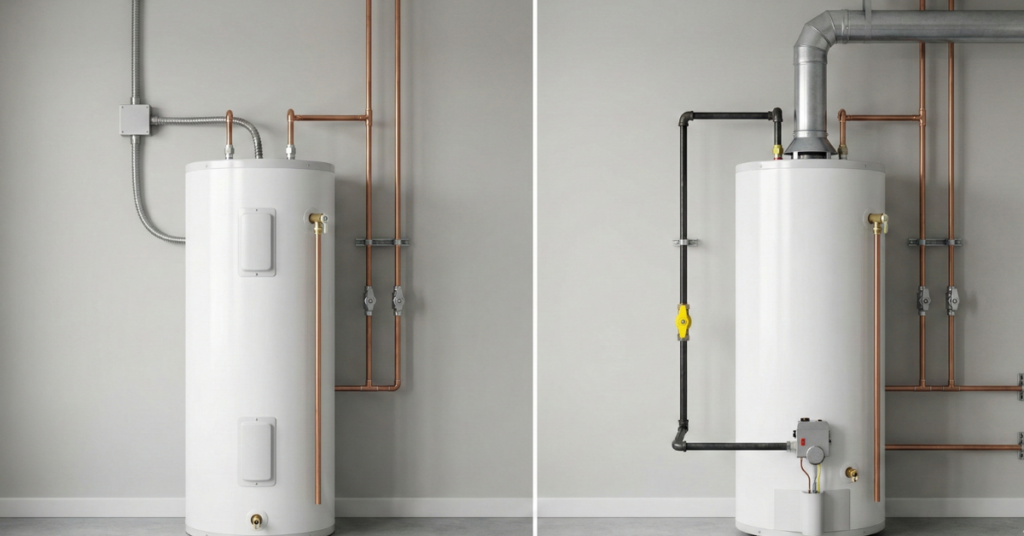
Traditional tank water heaters are the most common type in Oklahoma, and they typically last between 8 and 12 years. These units store 40 to 80 gallons of hot water in an insulated tank and keep it heated around the clock. That constant heating cycle creates wear over time, especially on the heating elements and the tank lining.
As Nick Woodward, a certified home inspector with InterNACHI, explains, “A good indication of a water heater’s construction quality is its warranty. Longer warranties naturally imply sounder construction, with nine- and twelve-year models typically having larger or higher-wattage heating elements and thicker insulation.”
Tankless Water Heaters (15 to 20 Years)
Tankless water heaters heat water on demand rather than storing it, which eliminates the constant reheating cycle that wears down tank models. According to A.O. Smith’s water heater lifespan guide, tankless units typically last 15 to 20 years because they avoid the sediment buildup and corrosion that shorten tank lifespans.
However, tankless models aren’t maintenance-free. Hard water mineral buildup is the leading cause of premature failure in tankless systems, and they require annual descaling to keep the heat exchanger functioning properly.
Heat Pump and Hybrid Water Heaters (13 to 15 Years)
Heat pump water heaters, also called hybrid models, pull heat from the surrounding air to warm your water. They’re more energy-efficient than traditional electric models and typically last 13 to 15 years. The U.S. Department of Energy estimates the average storage water heater lifespan at about 15 years, and heat pump models tend to fall at the higher end of that range thanks to reduced strain on heating elements.
Water Heater Lifespan Comparison
| Type | Average Lifespan | Best For | Upfront Cost Range |
| Tank (Gas or Electric) | 8 to 12 years | Budget-friendly replacement | $600 to $2,500 |
| Tankless (Gas or Electric) | 15 to 20 years | Long-term savings, endless hot water | $1,400 to $3,900 |
| Heat Pump / Hybrid | 13 to 15 years | Energy efficiency, lower operating costs | $1,200 to $3,500 |
| Solar | 10 to 25 years | Maximum efficiency, eco-friendly | $1,800 to $6,000 |
Why Do Water Heaters Wear Out Faster in Oklahoma?
Oklahoma homeowners often find their water heaters don’t reach the upper end of those lifespan estimates, and the biggest reason is the state’s water quality. Understanding how local conditions affect your unit can help you take steps to protect it.
Oklahoma’s Hard Water Problem
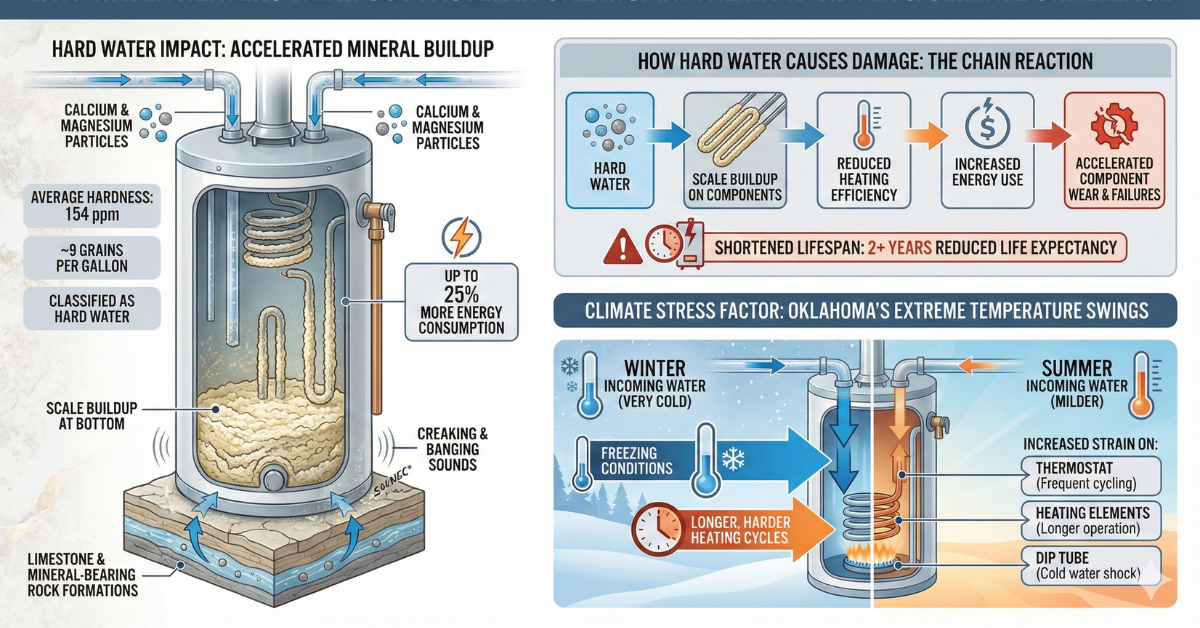
Oklahoma City’s water has an average hardness of 154 parts per million, or approximately 9 grains per gallon, which classifies it as hard water. Across the state, water hardness varies depending on local geology. Areas underlain by limestone and mineral-bearing formations tend to have even harder water, while regions near the Arbuckle-Simpson aquifer may have softer water.
Hard water contains elevated levels of calcium and magnesium that build up inside your water heater over time. This mineral scale coats the heating elements and lines the bottom of the tank, forcing the unit to work harder to heat water. According to the Water Quality Association, hard water can lead to 25% more energy consumption for water heaters. That extra strain doesn’t just raise your energy bills. It accelerates wear on internal components and can shorten your water heater’s life by 2 or more years.
Chris Deziel, a home improvement specialist who has published over 10,000 articles on the subject for Family Handyman, notes that hard water creates mineral deposits that harden into a thick crust at the bottom of the tank, causing the unit to creak and bang as it operates.
Climate Swings and Incoming Water Temperature
Oklahoma’s dramatic temperature swings also put extra stress on your water heater. When winter temperatures drop below freezing, the incoming cold water is significantly colder than during summer months. Your water heater has to work harder and run longer heating cycles, accelerating wear on the thermostat, heating elements, and dip tube.
What Are the Warning Signs Your Water Heater Needs Replacing?
Your water heater won’t suddenly stop working without giving you a few signals first. Knowing what to look for can help you plan a replacement before you’re stuck without hot water. Here are the six most common water heater problems that signal the end is near.
Age Over 10 Years
If your water heater is 10 years old or approaching that milestone, it’s already in the replacement window. To find your unit’s age, check the serial number on the rating plate. The first letter represents the month of manufacture (“A” for January through “L” for December), and the next two digits indicate the year.
Rusty or Discolored Hot Water
Brownish or tinted water coming from your hot water tap could mean the tank is rusting internally. As home improvement experts at Bob Vila point out, hard water has the potential to reduce a water heater’s service life by 2 or more years, and visible rust in your hot water is one of the clearest signs that corrosion has progressed too far for repair.
Rumbling, Popping, or Banging Noises
Strange sounds are one of the most common end-of-life signals. Sediment accumulates at the bottom of the tank over time. As it hardens, the heating element has to work through that layer to warm your water, creating rumbling or popping sounds. In hard water areas like Oklahoma, this problem develops faster.
Water Pooling Around the Base
Any moisture or puddles near your water heater could indicate a crack, corroded fitting, or internal leak. While some leaks can be repaired if they’re coming from a valve or fitting, a leak from the tank itself usually means the unit needs to be replaced.
Inconsistent Water Temperatures
If you’re running out of hot water faster than usual or the temperature fluctuates unpredictably, your water heater’s performance is declining. Sediment buildup reduces the tank’s effective capacity, and failing heating elements can cause temperature swings.
Rising Energy Bills
When your water heater loses efficiency due to sediment buildup or aging components, it draws more energy to produce the same amount of hot water. If your utility bills have increased without an obvious explanation, your water heater could be the culprit. Oklahoma homeowners enrolled in programs like the OG&E Smart Hours program can often spot these increases more easily by tracking their off-peak usage patterns.
Should You Repair or Replace Your Water Heater?
This is one of the most common questions Oklahoma homeowners ask, and the answer depends on two things: the age of your unit and the cost of the repair.
The 50% Rule
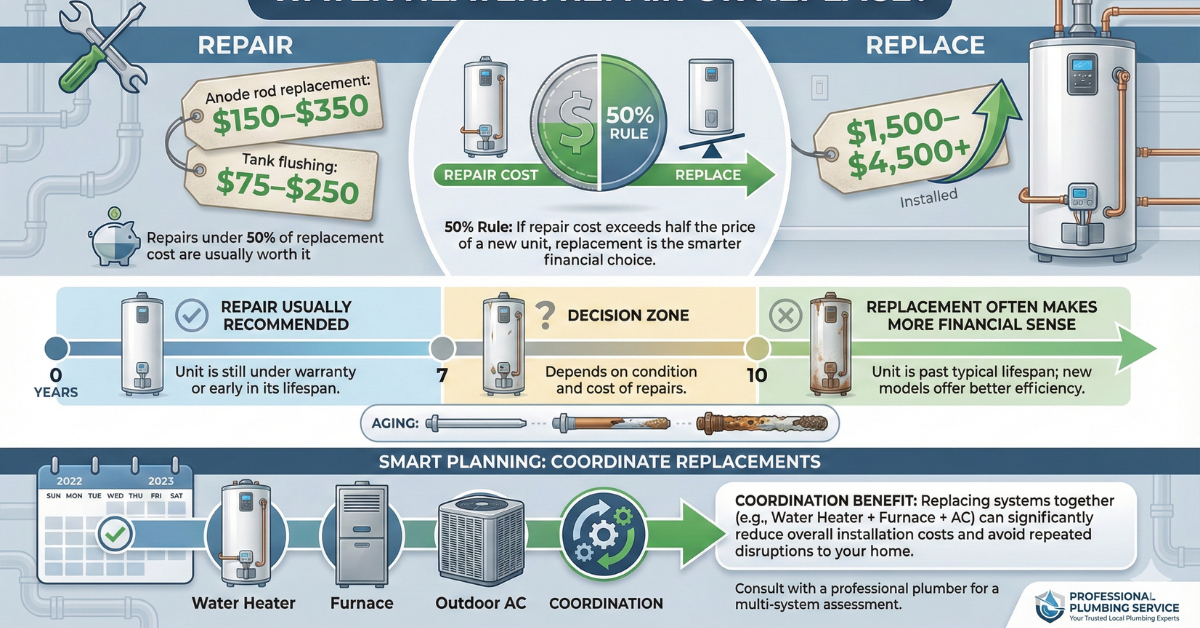
A good rule of thumb is this: if the repair costs more than 50% of what a new water heater would cost, replacement makes more financial sense. As repair cost data from HomeGuide shows, common repairs like anode rod replacement run $150 to $350, while tank flushing costs $75 to $250. These are worth doing on a younger unit. But if you’re looking at a $500+ repair on an aging system, that money is better invested in a new one.
Age-Based Guidelines
A licensed journeyman plumber with 27 years of experience shared this perspective on a recent industry forum: “If your unit is under seven years old, you will almost always want to repair it. But if your water heater is over seven years old, that’s where things get tricky. A ten-year-old unit that isn’t leaking can be repaired, but it will still be old. Does it need to be replaced? No. Should it be replaced? Well, it makes more economic sense to replace it.”
When you’re weighing the decision, think about it the same way you’d approach planning other major home system replacements. If multiple components are aging at the same time, coordinating replacements can save you money on installation and prevent back-to-back disruptions.
How Much Does It Cost to Replace a Water Heater in Oklahoma?
Understanding replacement costs helps you budget and avoid sticker shock when the time comes. Prices vary based on the type of unit, tank size, fuel source, and complexity of installation.
Tank Water Heater Replacement Costs
According to cost data from Angi’s 2026 survey, replacing a standard tank-style water heater typically costs between $600 and $2,500. The national average sits around $1,335. Labor usually makes up about 50% of the total project cost, with plumbers charging $45 to $200 per hour depending on your area and the complexity of the job.
Tankless Water Heater Replacement Costs
Tankless installations run higher at $1,400 to $3,900 due to more complex plumbing and potential electrical upgrades. However, these units can save 25% to 35% on energy usage compared to traditional tanks, and their 15- to 20-year lifespan means you’ll go significantly longer before needing another replacement.
New DOE Efficiency Standards Coming in 2029
Starting May 6, 2029, the U.S. Department of Energy’s finalized efficiency standards will require electric water heaters larger than 35 gallons to meet heat pump efficiency levels. Water heating accounts for roughly 13% of annual residential energy use, and the DOE projects these standards will save American households approximately $7.6 billion per year.
For Oklahoma homeowners, this means planning ahead makes sense. If your current water heater is nearing end of life, replacing it now lets you choose the model that fits your needs and budget before new requirements kick in.
How Can You Make Your Water Heater Last Longer in Oklahoma?
Preventive maintenance is the single best way to stretch your water heater’s lifespan, and it’s especially important here in Oklahoma where hard water accelerates wear. The benefits of regular maintenance for your home systems apply just as much to your water heater as they do to your HVAC equipment.
Flush the Tank Annually (or More)
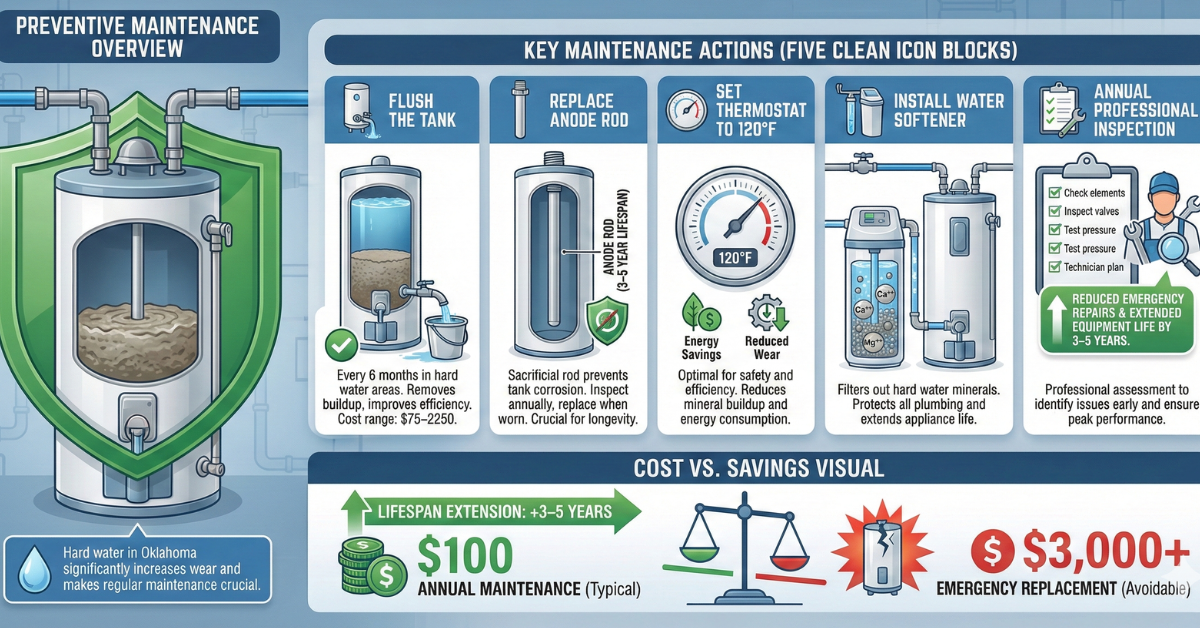
Flushing removes the sediment that builds up at the bottom of your tank. In areas with soft water, once a year is usually enough. But given Oklahoma’s hard water conditions, flushing every six months is a better practice. A professional flush typically costs $75 to $250, and it’s one of the most effective ways to prevent overheating, strange noises, and premature tank failure.
Inspect and Replace the Anode Rod
The anode rod is a sacrificial metal rod inside your tank that attracts corrosive elements in the water, protecting the tank walls from rust. Most anode rods last 3 to 5 years before they need replacing. Skipping this maintenance step leaves your tank vulnerable to corrosion, which is the leading cause of tank leaks that require full replacement.
Set the Thermostat to 120°F
The Department of Energy recommends 120°F. Higher settings force the unit to work harder, increasing wear and raising your energy bills. Anything above 130°F is generally unnecessary and wasteful.
Consider a Water Softener
Given Oklahoma’s hard water, installing a water softener can significantly extend your water heater’s life by reducing the calcium and magnesium that cause scale buildup. It’s an upfront investment that pays off through fewer repairs and lower energy consumption.
Schedule Professional Inspections
An annual inspection from a licensed technician can catch small problems before they become expensive failures. One Oklahoma property manager who enrolled in AAdvantage’s seasonal maintenance program saw a 60% reduction in emergency repair calls and extended their equipment lifespan by 3 to 5 years. As one satisfied client put it, “Regular maintenance has saved us thousands in emergency repairs and downtime.”
Preventive care can easily extend your water heater’s life by 3 to 5 years, and a $100 annual check-up is a small price compared to a $3,000+ emergency replacement.
Take Control of Your Water Heater’s Lifespan
Your water heater works hard every day. Knowing its age, watching for warning signs, and staying on top of maintenance are the three simplest things you can do to avoid an unexpected failure.
If your unit is approaching the 10-year mark or showing any of the warning signs above, schedule an inspection. AAdvantage Heating & Air Conditioning helps Oklahoma City homeowners evaluate their water heaters and find the best solutions for keeping their homes comfortable year-round.
Don’t wait for a cold shower to remind you. A quick inspection today can save you from a costly surprise tomorrow.