Skip to content




Many AC issues connect back to the refrigerant lines, yet most people never notice the small parts that keep the HVAC system running safely. One of those parts is the air conditioner service valve, a key component every technician uses during inspections and repairs. At A Advantage Inc, we work with these valves daily while helping homeowners with HVAC repair Oklahoma City and air conditioning repair OKC. Understanding how the service valve works can help you make better choices about maintenance, cleaning, and installation.
How an Air Conditioner Service Valve Works
A service valve sits on the refrigerant lines near the outdoor unit. It gives technicians a safe way to access the sealed refrigeration system without opening the entire line. This small valve plays a big role in protecting the compressor and maintaining proper refrigerant charge.
Common reasons technicians rely on service valves include:
- Checking system pressure and refrigerant levels
- Adding or removing refrigerant during service procedures for air conditioning
- Isolating parts of the HVAC system for repair or installation
- Performing leak inspections and troubleshooting
Where You’ll Find Service Valves on Your AC
Most air conditioning and refrigeration systems have two main valves. One is on the suction line and the other is on the liquid line. These lines carry refrigerant in different states as it moves through the cooling system. The position service valve placement allows technicians to control the flow of refrigerant during maintenance.
Typical placement includes:
- Suction service valve, which carries cool low pressure refrigerant
- Liquid or discharge service valve (also called a king valve), which carries high pressure refrigerant toward the indoor coil
- Access ports for gauge connections and diagnostic tools
How a Service Valve Works During Normal Operation
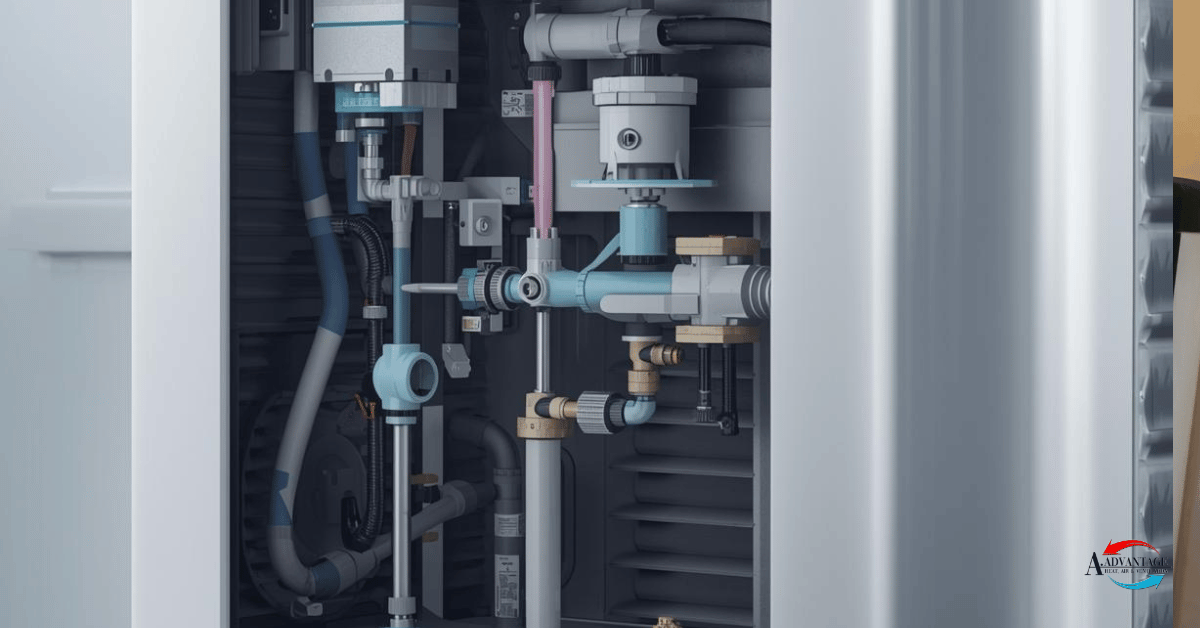
When your AC unit is running, refrigerant flows freely through these valves. They simply act as part of the refrigeration system circuit. The 2 position service valve design allows technicians to switch between normal operation and service mode. Nothing moves inside the valve body until a technician attaches refrigeration gauges or adjusts the valve stem for service work.
During standard operation, the system’s refrigerant flow moves through the system by:
- Returning as cool vapor to the compressor
- Leaving the condenser as high pressure liquid
- Moving through the indoor coil to transfer heat and absorb warmth from your home
How Technicians Use Service Valves During Diagnostics
When an HVAC system begins struggling to cool, most technicians start by attaching digital gauge stubs to the position service valve ports. These readings help identify low refrigerant issues or mechanical problems. At A Advantage Inc, this step is part of every HVAC repair Oklahoma City inspection and troubleshooting process.
Diagnostic tasks that rely on service valves play a critical role:
- Checking suction and discharge pressure with digital manifold sets
- Measuring superheat and subcooling for accurate air temperature measurements
- Identifying refrigerant undercharge or overcharge
- Spotting blockages or airflow issues affecting system efficiency
How Service Valves Help With Refrigerant Charging
If a system needs refrigerant added, the valve allows it to be done in small, controlled amounts through proper refrigerant charging and service procedures. The valve core inside the service valve controls refrigerant flow precisely. Charging the refrigeration system correctly is important because even slight overcharging or undercharging can affect cooling system performance and compressor function.
Refrigerant charging through the service valve involves:
- Connecting a refrigerant tank and gauge set to control the flow
- Opening the valve slowly to allow refrigerant to flow through the system
- Monitoring pressure changes and flow of refrigerant
- Confirming readings match equipment specifications for refrigerant changes r-32 and r-454b, changes r-32 and r-454b r-410a, or r-454b r-410a and r-22 more step-by-step
How Service Valves Are Used During Refrigerant Recovery
When repairs require refrigerant removal, the valves help move refrigerant into a recovery tank or isolate the compressor and other components. This process protects the equipment and keeps refrigerant from escaping into the air. The ball-type valves or standard service valves make it possible to seal off sections of air conditioning and refrigeration systems during installation or cleaning.
A technician may use the valves to:
- Seal off one side of the heat pump or air conditioning and heat pump systems
- Move refrigerant into the condenser for a pump down
- Remove refrigerant for AC installation Oklahoma City, HVAC installations, or equipment replacement
- Isolate components during inverter mini split system installations or ductless mini split installation OKC
Different Types of AC Service Valves
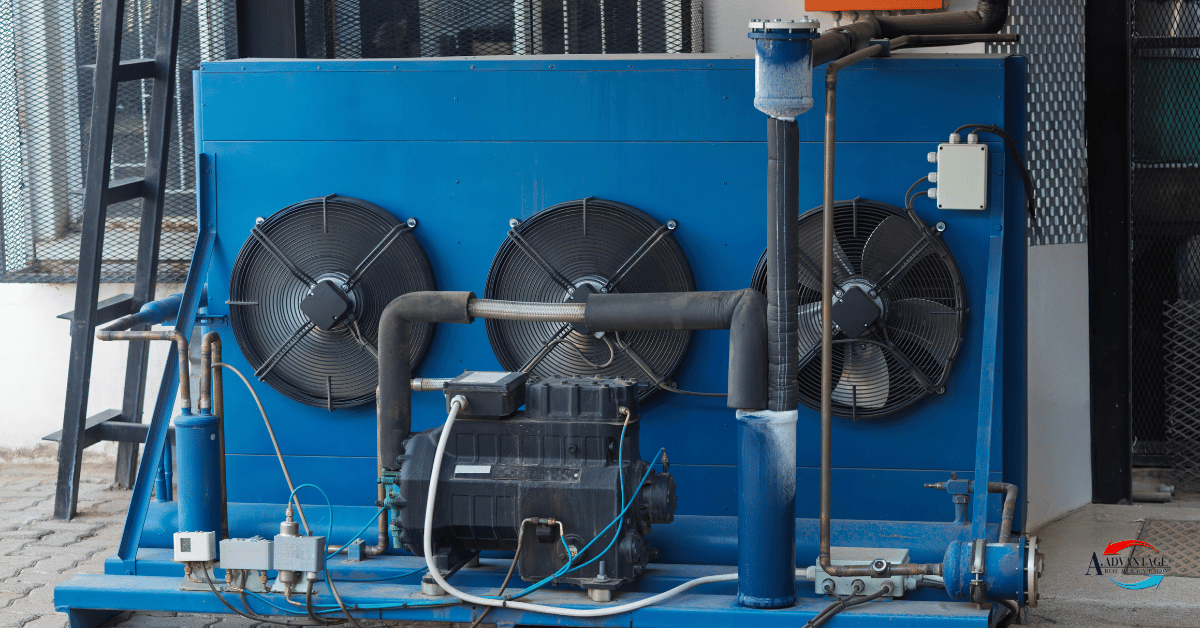
Not every HVAC and refrigeration system uses the same style of valve. The type depends on the design of the air conditioner and the size of the refrigeration system. Each valve type provides different levels of durability and ease of use during ac service calls.
Common types include:
- Schrader valves, similar to the valve found on a car tire
- Ball-type valves, often used on larger or commercial heat pump systems
- Multi-port valves that provide several access points for training video demonstrations at HVAC school
- Position service valve designs that allow flow control during service procedures
Common Problems with Service Valves
Even durable parts can wear out. When a service valve begins to fail, the AC system can lose refrigerant or develop pressure problems that affect system efficiency. Many A Advantage Inc repair calls involve common problems that point back to worn or damaged valves.
Typical problems include:
- Refrigerant leaks from worn seals or loose caps
- Damaged Schrader cores or valve core components
- Corrosion on older outdoor units
- Valves that become stuck or stripped
- Small leaks that reduce efficiency over time and lower refrigerant levels
If you notice warm air, ice on the refrigerant lines, or hissing noises, a service valve problem may be the source.
Why Homeowners Should Avoid Handling Service Valves
Service valves connect directly to the pressurized refrigerant circuit. Opening or adjusting them without proper tools and training from HVAC school can cause serious risks. Handling refrigerant also requires certification, and incorrect valve adjustment can damage the compressor. Homeowners should leave service valve work to professionals who understand the world on youtube tutorials versus real-world experience.
Reasons to avoid DIY work around service valves include:
- High pressure refrigerant can cause injuries
- Even slight mistakes can cause refrigerant loss
- Warranty issues may arise if a valve is tampered with
- Small leaks can worsen quickly without proper troubleshooting
Calling a licensed technician protects both your HVAC system and your safety.
How A Advantage Inc Handles Service Valve Repairs
Our team uses service valves during every air conditioning repair OKC visit, whether we are checking refrigerant charge levels or performing full system diagnostics. With over 50 years of combined experience, our technicians know how to spot valve issues early and fix them before they lead to larger system damage.
Our service includes:
- Full refrigerant testing and pressure checks
- Valve core replacement and cleaning
- Leak detection and repair for heat pump and cooling systems
- Emergency HVAC service OKC support
- Work on residential and commercial HVAC Oklahoma City systems
- Ductless mini split installation OKC and standard AC installation
- Installation, repair, and cleaning for all air conditioning and heat pump equipment
We approach every job with honest recommendations and clear pricing.