Skip to content




You wake up on a cold winter morning, and something feels off. The house is colder than usual, and when you check the thermostat, it’s set to 70 degrees, but the temperature reads 58. Your gas furnace isn’t heating, and after a quick inspection, you realize the pilot light has gone out.
If you have an older gas furnace with a standing pilot light, this scenario is more common than you might think. The good news? Learning how to relight a pilot light on a gas furnace is often a straightforward process you can handle yourself, as long as you follow proper safety procedures and know when to call in a professional.
This guide will walk you through everything you need to know about relighting your furnace pilot light safely. We’ll cover the step-by-step relighting process, explain why your gas furnace pilot light went out in the first place, and help you troubleshoot situations where the pilot light won’t stay lit. Most importantly, we’ll discuss critical safety warnings so you know exactly when to stop and call for professional help.
What Is a Pilot Light and How Does It Work?
If your gas furnace was manufactured more than 15 to 20 years ago, it likely uses a standing pilot light as its ignition source. A pilot light is a small, continuous flame that stays lit inside your furnace. When your thermostat signals that your home needs heat, the pilot light ignites the main gas burners, which then warm the air that circulates through your home. Without this small flame burning steadily, your furnace can’t produce heat, no matter how high you turn up the thermostat.
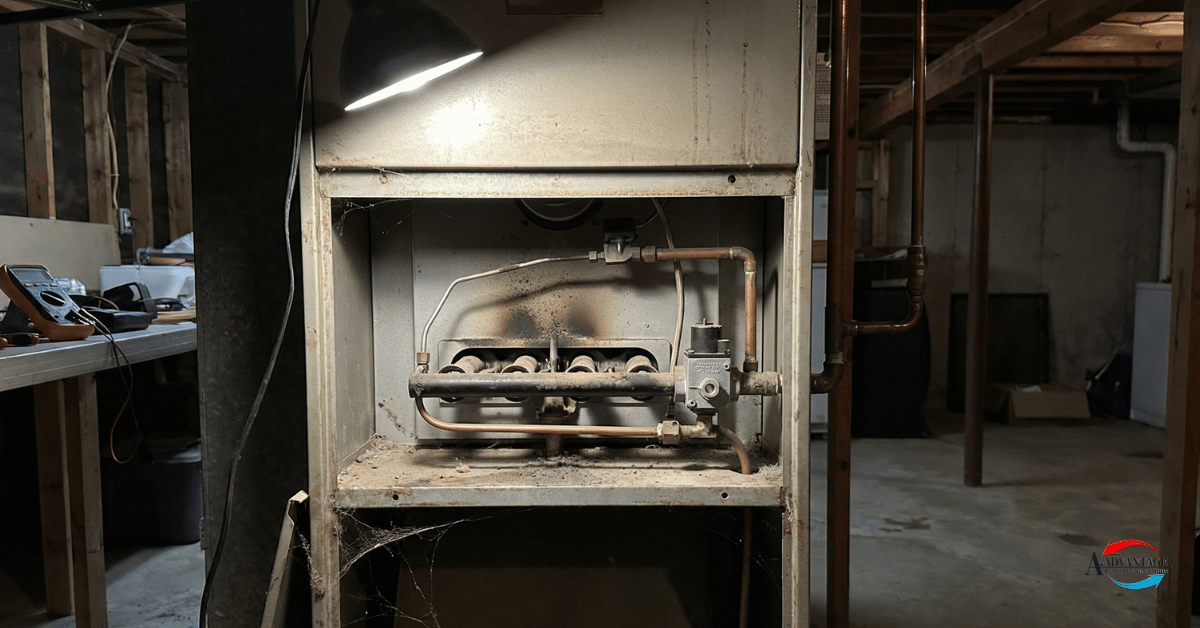
Understanding the basic components involved helps you feel more confident when it’s time to relight the pilot. The gas control valve is typically located near the bottom of your furnace and has three positions: On, Off, and Pilot. The thermocouple is a critical safety device that detects whether the pilot flame is burning. If the thermocouple doesn’t sense heat from the flame, it automatically shuts off the gas supply to prevent dangerous gas leaks. You’ll also find the pilot orifice, which is the small opening where gas flows to create the pilot flame, and a reset button that you press to allow gas to flow during the relighting process.
Modern gas furnaces typically use electronic ignition systems rather than standing pilot lights, so if your furnace is newer, the troubleshooting steps in this guide may not apply. You can learn more about the differences between modern gas furnaces with electronic ignition and older systems to understand which type you have.
How Do I Know If My Pilot Light Is Out?
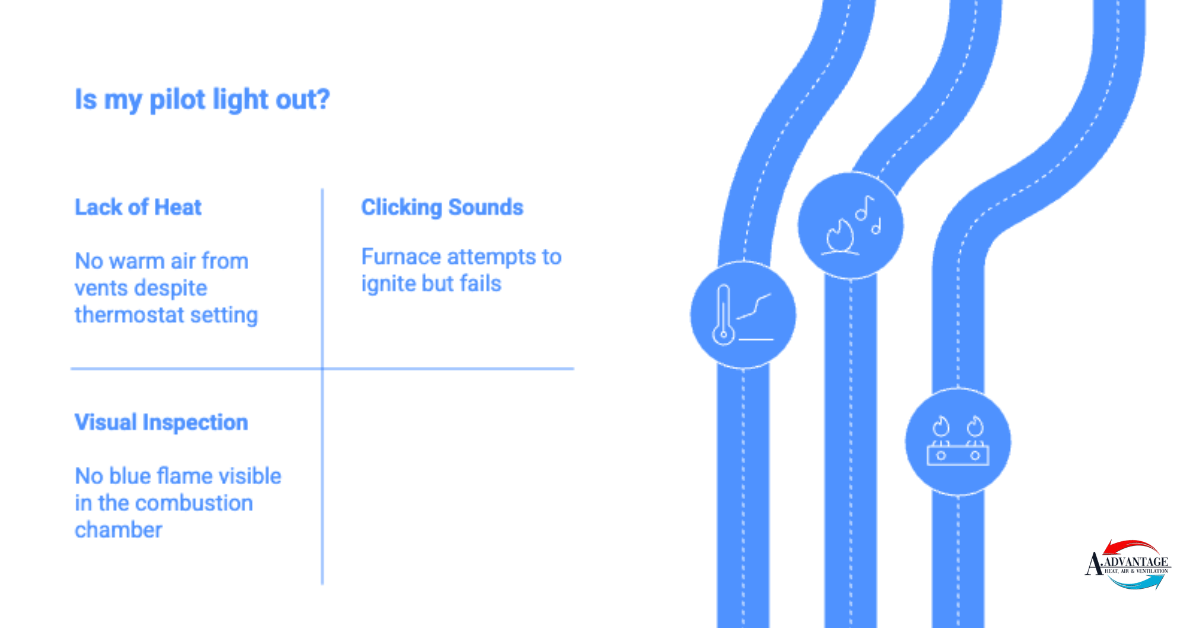
The most obvious sign that your pilot light has gone out is a complete lack of heat in your home, even when your thermostat is set properly. Your furnace may be blowing air through the vents, but the air feels cold or room temperature rather than warm. In some cases, you might hear clicking sounds as the furnace attempts to ignite but can’t because the pilot flame isn’t there to light the main burners.
To confirm your suspicion, you can visually inspect the pilot light. Most furnaces have a small access panel near the bottom of the unit that you can remove to see inside the combustion chamber. When you locate the pilot assembly near the bottom of your furnace, look for a small blue flame. If there’s no flame visible, your pilot light is definitely out and needs to be relit.
Safety First: When NOT to Attempt Relighting
Before you attempt to relight your pilot light, you need to be absolutely certain it’s safe to do so. There are several situations where you should immediately stop and call a professional instead of trying to fix the problem yourself.
Critical warning signs that require professional help:
- Strong gas smell: If you detect the distinctive “rotten egg” odor of natural gas, do not attempt to relight the pilot. Instead, evacuate your home immediately if you detect a gas odor, avoid using any electrical switches or creating sparks, and call your gas company or 911 from outside your home.
- Yellow or orange flame: A healthy pilot light burns blue. If you see a yellow or orange flame, this indicates incomplete combustion and potential carbon monoxide production.
- Pilot won’t stay lit after two attempts: If you’ve successfully relit the pilot but it goes out again, after two unsuccessful relighting attempts, stop and call for professional diagnosis.
- Hissing sounds or unusual noises: These could indicate a gas leak or mechanical problem requiring expert attention.
- If you feel uncomfortable or uncertain: There’s no shame in calling a professional. Working with natural gas requires caution, and proper gas line installation and safety should always be handled by trained technicians when you’re unsure.
These warnings exist for good reason. Natural gas leaks can lead to explosions, and carbon monoxide is an odorless, colorless gas that can be deadly. The thermocouple in your furnace is designed to shut off gas flow if the pilot goes out, but older thermocouples can malfunction. Your safety is always more important than saving a service call fee.
How to Relight a Pilot Light on a Gas Furnace: Step-by-Step Guide
If you’ve determined it’s safe to proceed, here’s what you’ll need and how to safely relight your furnace pilot light.
What you’ll need:
- Long-stem lighter or long fireplace match (never use a short lighter or regular match)
- Flashlight for better visibility
- Your furnace owner’s manual, if available
Once you have your supplies ready, follow these steps carefully. Take your time, and remember that using a long-reach lighter to stay safely away from the flame is important for preventing burns.
The relighting process:
- Turn off your furnace at the thermostat or set it to the lowest temperature setting.
- Locate the gas control valve on your furnace (usually a knob or dial near the bottom of the unit).
- Turn the gas control valve to the “OFF” position.
- Wait at least five full minutes. This is crucial for allowing any lingering gas to safely dissipate from the combustion chamber.
- Turn the gas control valve to the “PILOT” position.
- Press and hold the reset button (usually red) on the gas valve.
- While holding the reset button, bring the flame from your long-stem lighter close to the pilot light opening.
- Continue holding the reset button for 30 to 60 seconds after the pilot lights. This allows the thermocouple to heat up and signal that the flame is present.
- Slowly release the reset button and observe whether the pilot flame stays lit.
- If the pilot stays lit, turn the gas control valve to the “ON” position.
- Replace any access panels you removed and turn your thermostat back to your desired temperature.
Watch the pilot light for several minutes to ensure it remains steady. A healthy pilot flame should be a strong, steady blue color, not yellow, orange, or flickering wildly. The flame should completely envelop the tip of the thermocouple for the safety mechanism to work properly.
Why Did My Gas Furnace Pilot Light Go Out?
Understanding why your pilot light went out can help you prevent the problem from happening again. Several common factors can extinguish a pilot light, ranging from simple environmental issues to mechanical problems that need professional attention.
Drafts and airflow problems are among the most frequent culprits. A strong gust of wind through a nearby window, door, or even through your home’s ductwork can blow out the small pilot flame. This is particularly common in homes with leaky ductwork or improper venting. If your furnace is located in a drafty basement or utility room, you might need to address air infiltration issues around the unit.
Dirt and debris accumulation can also cause pilot light problems. Over time, dust, soot, and other particles can build up in the pilot orifice, restricting gas flow and weakening the flame. When dirt clogs the small opening where gas flows, when the pilot flame burns inefficiently, it may not be strong enough to stay lit or properly heat the thermocouple. The air intake valve can also become dirty, limiting the oxygen supply the pilot flame needs to burn properly.
Thermocouple issues are another common reason for pilot light failure. This safety device can become dirty, preventing it from accurately sensing the pilot flame. It can also become bent or misaligned so it’s no longer positioned directly in the flame. When the thermocouple doesn’t detect sufficient heat, it closes the gas valve, shutting off the pilot light. In older furnaces, the thermocouple itself may simply wear out and need replacement.
Gas supply interruptions can extinguish your pilot light as well. Sometimes the issue is as simple as a manually closed gas valve that someone accidentally turned. Other times, your utility company may have temporarily shut off gas service for maintenance. In rare cases, problems with gas pressure or the gas regulator in your meter can affect all gas appliances in your home.
In Oklahoma and Portland, seasonal factors play a role too. Oklahoma’s dusty conditions can lead to faster dirt accumulation in furnace components, while Portland’s damper climate can sometimes contribute to condensation issues. Both regions experience temperature swings that cause furnaces to cycle frequently, which can stress older components. Regular annual furnace maintenance helps address these regional challenges before they cause pilot light failures.
What If My Pilot Light Won’t Stay Lit?
Successfully relighting your pilot only to have it go out again minutes or hours later is frustrating and indicates an underlying problem that needs attention. Several issues can cause a pilot light to relight but not stay lit, and some you can troubleshoot yourself while others require professional diagnosis.
A dirty or faulty thermocouple is the most common reason a pilot won’t stay lit. If you can get the pilot to light initially but it goes out as soon as you release the reset button, the thermocouple is likely the culprit. Cleaning the thermocouple regularly with fine-grit sandpaper or even a dollar bill can remove soot buildup and restore proper function. Gently clean the copper rod while the furnace is cool, being careful not to bend it.
Thermocouple misalignment is another issue you might be able to address. The thermocouple needs to be positioned so the pilot flame completely covers its tip. If it’s bent away from the flame, it won’t sense the heat properly and will shut off the gas valve. You can carefully adjust the position of the thermocouple, but be gentle as these components can break if handled roughly.
A weak or discolored pilot flame signals a different problem. If your pilot flame is yellow, orange, or weak and flickering rather than a strong blue, the pilot orifice is likely clogged with debris. This requires systematic troubleshooting approach and often professional cleaning, as you’ll need to disassemble the pilot assembly to properly clear the orifice with a thin wire or compressed air.
DIY troubleshooting steps you can try:
- Check the thermocouple position to ensure it’s directly in the pilot flame path
- Look for obvious sources of drafts near the furnace and seal or redirect airflow
- Verify that all gas valves in the line to your furnace are fully open
- Clean the thermocouple if it appears sooty or dirty
- Ensure the pilot flame is blue and robust, not yellow or weak
If you’ve tried these basic troubleshooting steps and your pilot still won’t stay lit, it’s time to stop and call for help. Common causes for persistent pilot light failure like a faulty gas valve, failed thermocouple, or internal mechanical problems require professional tools and expertise to diagnose and repair safely.
Attempting repeated relighting when there’s clearly a mechanical issue can actually be dangerous. Each time you go through the relighting process, you’re introducing gas into the combustion chamber. If there’s a malfunction preventing proper combustion, you risk gas buildup. Additionally, forcing a malfunctioning system to operate can lead to carbon monoxide production or damage other furnace components. When you encounter persistent problems, professional furnace repair services can quickly diagnose the root cause and implement safe, lasting solutions.
Keeping Your Pilot Light Burning Reliably
Successfully relighting your pilot light is satisfying, but preventing future outages is even better. Regular furnace maintenance is your best defense against pilot light problems and other common furnace problems that can leave you without heat.
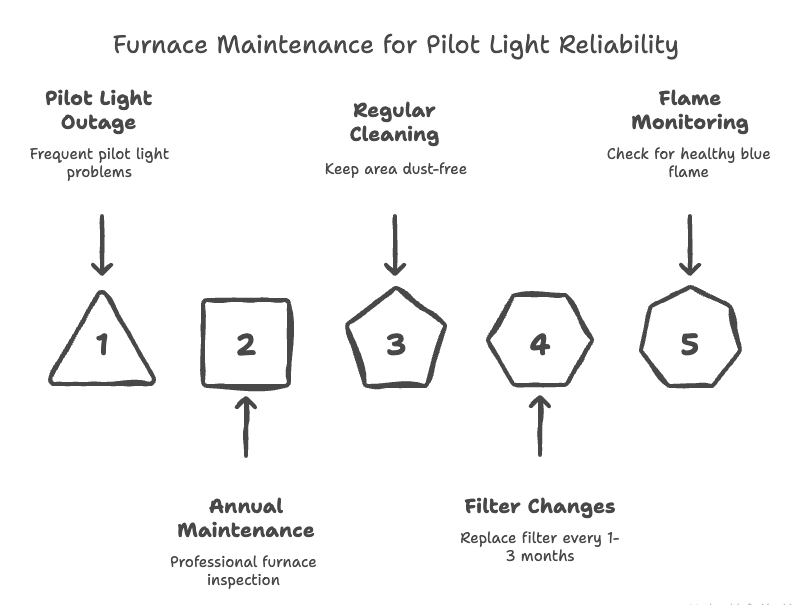
Schedule annual professional maintenance before the heating season begins each year. A qualified technician will clean the pilot assembly, inspect and test the thermocouple, check gas pressure and connections, and ensure proper venting and airflow. This preventive approach catches small issues before they lead to system failures on the coldest nights of winter.
Between professional service calls, you can help by keeping the area around your furnace clean and free of dust, changing your furnace filter every one to three months, and periodically checking that the pilot light is burning with a healthy blue flame. If you notice the flame becoming yellow or weak, don’t wait for it to go out completely, schedule a service call to address the issue proactively.
For homeowners with furnaces that are 15 to 20 years old or older, it might be worth considering an upgrade to a modern system with electronic ignition. While relighting a pilot light is a useful skill, newer furnaces eliminate this issue entirely while offering significantly better energy efficiency and reliability. If you’re tired of dealing with pilot light problems, a conversation with an HVAC professional about your options could save you both frustration and money in the long run.
When in Doubt, Call the Professionals
Relighting a pilot light on a gas furnace is a task many homeowners can handle safely when they follow proper procedures and heed important safety warnings. The key is knowing your limits and recognizing when a problem goes beyond simple DIY troubleshooting. If you smell gas, see a discolored flame, can’t get the pilot to stay lit after two attempts, or simply feel uncomfortable working with your furnace, there’s no shame in calling for professional help.
Your family’s safety and comfort are too important to risk. Whether you’re in Oklahoma or Portland, having a reliable HVAC partner means you’re never left in the cold when furnace problems arise. AAdvantage Heating & Air Conditioning provides fast, professional service for all your heating needs, from simple pilot light issues to complete furnace replacements.
Don’t let a stubborn pilot light leave your home uncomfortable. If you’ve tried relighting your pilot and it won’t cooperate, or if you’d simply prefer to have a professional handle the job from the start, our experienced technicians are ready to help. We understand that furnace problems never happen at convenient times, and we’re committed to restoring your home’s warmth and comfort quickly and safely.