Skip to content




Your air conditioner quietly does one of the hardest jobs in your home. Day after day, it pulls heat out of your living space, circulates cool air through every room, and keeps your family comfortable even when outdoor temperatures soar. Yet most homeowners give their AC less attention than they give their cars. You wouldn’t drive 50,000 miles without an oil change, but many people run their cooling systems for years without professional service.
Here’s what that oversight costs you: higher energy bills, shorter equipment life, and a significantly higher risk of breakdowns when you need cooling most. An AC tune up isn’t a luxury or an upsell from your HVAC company. It’s proven preventive care that regular maintenance shows prevents about 80% of repairs and boosts system efficiency by 15-30%.
Whether you’re in Oklahoma City dealing with triple-digit summer heat or in Portland where cooling demands are climbing each year, understanding what AC maintenance involves and why it matters can save you hundreds of dollars and countless headaches.
What Is an AC Tune Up?
An AC tune-up is a comprehensive inspection and maintenance service performed by professional HVAC contractors to ensure your air conditioning system operates at peak performance. Think of it like taking your car in for an oil change and inspection. You’re not waiting for something to break; you’re preventing problems before they start. During a typical tune-up, a certified technician will spend one to two hours examining your entire cooling system, cleaning critical components, and making necessary adjustments.
The process follows three essential steps that work together to keep your AC running smoothly. First comes the inspection phase, where the technician evaluates all major components for signs of wear, damage, or inefficiency. Next is the cleaning stage, which removes dirt, debris, and buildup that forces your system to work harder than necessary. Finally, the service phase addresses any issues discovered during the inspection, making repairs and adjustments to restore performance metrics to manufacturer specifications.
This comprehensive HVAC tune-up checklist ensures every part of your system gets the attention it needs. Whether you’re running a standard central AC or a heat pump system, professional maintenance catches small problems before they turn into major headaches.
What Does an AC Tune-Up Include? A Complete Checklist
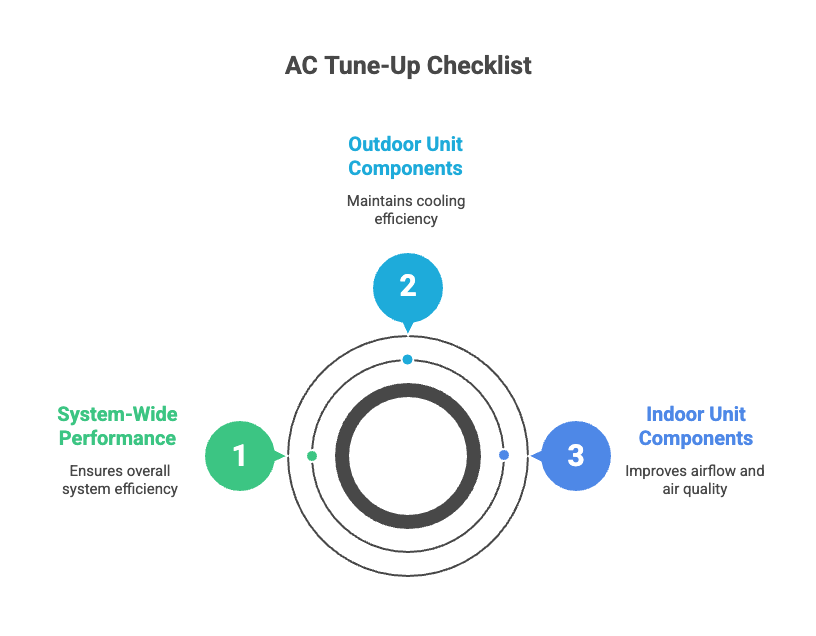
When you schedule an AC tune-up, you’re getting far more than a quick look at your outdoor unit. A comprehensive multi-point inspection covers every component that affects your system’s performance, efficiency, and reliability. Here’s what professional technicians check and service during your appointment:
Indoor Unit Components:
- Replace or clean air filters to restore proper airflow and improve indoor air quality
- Inspect and clean evaporator coils that absorb heat from your home’s air
- Check the blower motor and fan belt for signs of wear or damage
- Test and calibrate your thermostat to ensure accurate temperature readings
- Inspect the condensate drain line and clear any clogs that could cause water damage
Outdoor Unit Components:
- Clean condenser coils to maximize heat transfer and cooling efficiency
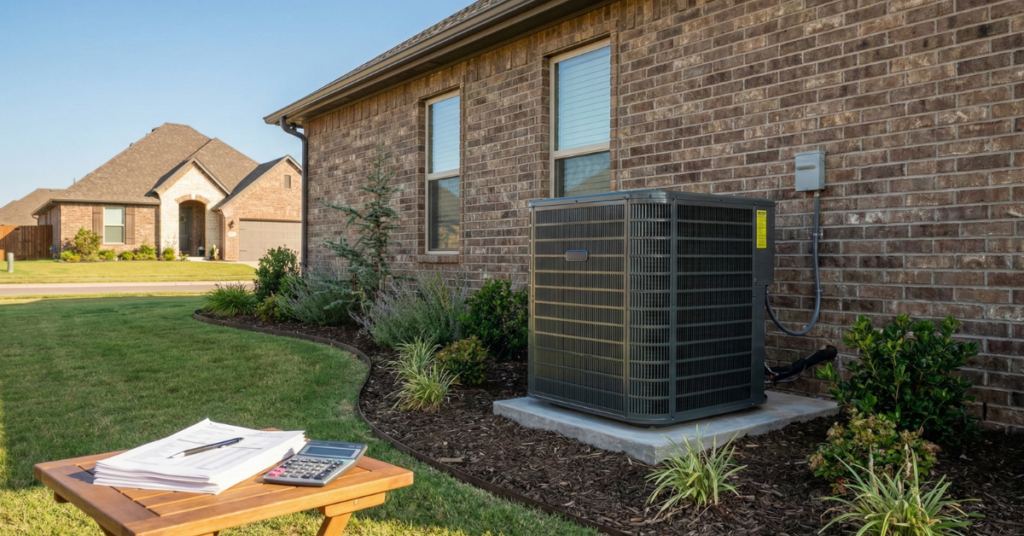
- Clear leaves, grass clippings, and debris from around the outdoor unit
- Check refrigerant levels and test the system for potential leaks
- Inspect all electrical connections and tighten any loose wires
- Lubricate moving parts to reduce friction and prevent premature wear
System-Wide Performance Checks:
- Measure operating pressures and temperatures against manufacturer specifications
- Test capacitors and relays that control your system’s electrical components
- Verify all safety controls are functioning properly
- Run a complete system cycle to confirm efficient cooling performance
- Check accessible ductwork for leaks that waste cooled air
This detailed attention to every part of your system is why regular HVAC maintenance delivers multiple benefits that go far beyond just keeping cool air flowing.
Why Is AC Maintenance Important? Key Benefits
Prevents Costly Breakdowns
Nobody wants their air conditioner to fail during a heat wave, but that’s exactly when neglected systems tend to break down. Research demonstrates that regular maintenance catches and prevents approximately 80% of potential AC repairs before they become emergencies. Think about what that means for your wallet and your comfort.
When a technician spots a worn fan belt, low refrigerant, or a failing capacitor during a routine tune-up, these issues can be fixed quickly and affordably. Wait until these small problems cause your system to stop working on the hottest day of summer, and you’re looking at emergency service fees, longer wait times, and possibly expensive component replacements. Preventative maintenance often pays for itself in avoided repair costs alone.
Improves Energy Efficiency
Your air conditioner loses efficiency over time if it doesn’t receive regular care. Systems can lose significant efficiency annually without proper maintenance, with some studies showing a 5-15% drop in performance each year. That declining efficiency translates directly to higher energy bills and reduced cooling power when you need it most.
The numbers tell a compelling story. A well-maintained AC system can run 20-30% more efficiently than a neglected one, according to energy efficiency research. When you consider that heating and cooling account for nearly half of home energy consumption, improving your AC’s efficiency can lead to substantial savings throughout the summer. Clean coils transfer heat better, proper refrigerant levels cool more effectively, and a calibrated thermostat prevents wasted cycles.
Extends System Lifespan
An air conditioner represents a significant investment in your home’s comfort, typically costing several thousand dollars to replace. With regular maintenance, properly maintained systems can serve homes reliably for 15-20 years. Neglect that same system, and you might be shopping for a replacement in half that time.
One Oklahoma property manager saw emergency repair calls drop 60% after implementing regular seasonal maintenance across multiple properties, while extending equipment lifespan by 3-5 years. The proactive approach saved thousands in emergency service costs and prevented tenant discomfort during peak seasons. This kind of result isn’t unusual. Routine tune-ups counteract the wear and tear your AC experiences during normal operation, catching issues before they damage expensive components like compressors or motors.
Additional Critical Benefits
Maintains Warranty Coverage:
- Most manufacturers require annual professional maintenance
- Skipping tune-ups can void your warranty protection
- Documentation of regular service protects your investment
Improves Indoor Comfort and Air Quality:
- Ensures consistent cooling throughout every room in your home
- Clean filters and coils reduce dust, allergens, and airborne pollutants
- Better humidity control during humid Oklahoma summers or Portland’s warmer months
- Eliminates hot spots and uneven temperatures
When Should You Schedule an AC Tune-Up?
Timing matters when it comes to AC maintenance. Scheduling between harsh seasons sets your system up for success by catching problems while outdoor temperatures are still comfortable and before your AC faces maximum demand.
Best Timing: Early Spring
The ideal window for scheduling your AC tune-up runs from March through May for both Oklahoma and Portland homeowners. This timing offers several advantages that make spring the sweet spot for preventive maintenance. HVAC companies experience their slowest period during these months, which means easier scheduling, more flexible appointment times, and often seasonal discounts on service.
More importantly, spring maintenance identifies winter wear before your system experiences the stress of peak summer temperatures. The Environmental Protection Agency recommends regular spring cooling checkups as an effective way to save energy and maintain clean indoor air quality. Preparing your HVAC system for summer starts with this crucial tune-up appointment.
Frequency Recommendations
Annual Service for Standard AC Units:
- Schedule one comprehensive tune-up each spring
- Oklahoma homeowners should follow specific scheduling guidelines based on local climate demands
- Consistent yearly service keeps warranty valid and system efficient
Twice-Yearly for Heat Pumps:
- Heat pump owners need twice-yearly maintenance due to year-round operation
- Spring service prepares cooling function; fall service checks heating components
- Double duty means these systems require extra attention
When to Increase Frequency:
- Older systems (10+ years) benefit from more frequent inspections
- Heavy-use environments or extreme climates may warrant additional service
- Commercial properties often schedule quarterly maintenance
Don’t Wait for Warning Signs
While annual tune-ups should happen whether your system seems fine or not, certain warning signs demand immediate attention. Strange noises, warm air from vents, unusually high energy bills, or uneven cooling throughout your home all indicate your AC needs professional service right away. Proactive maintenance costs far less than emergency repairs, and scheduling during off-peak seasons prevents the long wait times that happen when everyone’s AC fails during a heat wave.
F
Professional AC Tune-Up vs. DIY Maintenance
Understanding the difference between homeowner maintenance and professional service helps you protect your investment without putting yourself at risk. While you can handle certain basic tasks, comprehensive AC tune-ups require specialized knowledge, tools, and certifications.
What Homeowners Can Safely Do
Regular Filter Changes:
- Replace or clean filters every 1-3 months during cooling season
- More frequent changes needed if you have pets or allergies
- Single most important DIY task for system efficiency
Outdoor Unit Care:
- Keep area around condenser clear of leaves, grass, and debris
- Maintain at least two feet of clearance on all sides
- Trim back vegetation that could restrict airflow
Basic Monitoring:
- Check thermostat settings for proper operation
- Ensure all vents and registers remain unblocked
- Listen for unusual noises that might indicate problems
Why Professional Service Is Essential
DIY maintenance has its place, but attempting a full tune-up yourself creates serious risks. Refrigerant handling requires EPA certification and specialized equipment. Working with electrical components poses safety hazards for anyone without proper training. Most importantly, homeowners simply lack the diagnostic tools and experience to spot early warning signs that professionals recognize immediately.
Professional technicians understand manufacturer specifications, know how to properly calibrate complex systems, and can identify problems invisible to untrained eyes. Missing these issues doesn’t just waste the time you spent trying to service the system yourself; it can lead to major damage that costs far more to repair than the tune-up would have cost in the first place.
Conclusion
An AC tune-up is far more than just a routine service call. It’s a comprehensive inspection, cleaning, and optimization process that prevents 80% of potential repairs, improves system efficiency by 15-30%, and extends your air conditioner’s lifespan by years. The benefits speak for themselves: lower energy bills, fewer breakdowns, better indoor comfort, and the peace of mind that comes from knowing your system is ready for whatever weather comes your way.
Whether you’re facing Oklahoma’s intense summer heat or Portland’s increasingly warm summer months, scheduling professional AC maintenance in early spring gives your system the care it needs before peak demand arrives. Don’t wait for a breakdown to take action. Proactive maintenance saves money, prevents discomfort, and ensures your air conditioner delivers reliable cooling when you need it most. Your future self will thank you for making this small investment in comfort and efficiency today.