Skip to content




When your air conditioner stops cooling during an Oklahoma heat wave or your furnace fails on a freezing winter night, panic sets in fast. Oklahoma’s extreme climate puts exceptional stress on HVAC systems, with summer temperatures regularly exceeding 100°F and winter lows dropping below freezing. These temperature swings aren’t just uncomfortable, they create the perfect conditions for HVAC breakdowns that can lead to costly repairs or even safety hazards.
Understanding HVAC diagnostics helps you make informed decisions when problems arise. This comprehensive guide covers:
- Which issues you can safely troubleshoot yourself
- When to call a professional technician
- What to expect during the diagnostic process
- How much diagnostics cost in 2026
- Oklahoma-specific HVAC challenges
- Modern diagnostic tools and techniques professionals use
What is HVAC Diagnostics and Why Oklahoma Homes Need It
HVAC diagnostics is the systematic process of identifying what’s wrong with your heating and cooling system. While basic troubleshooting involves simple checks like verifying your thermostat settings, professional diagnostics uses specialized equipment and expertise to examine electrical components, refrigerant levels, airflow patterns, and control systems.
Professional technicians follow a methodical approach to rule out possibilities and identify the root cause rather than just treating symptoms. This prevents the costly “throw parts at it” approach that wastes your money on unnecessary repairs.
Oklahoma’s Unique HVAC Diagnostic Challenges
Oklahoma homes face diagnostic challenges that differ from milder climates. The wide temperature range from below 20°F to above 100°F puts exceptional stress on HVAC equipment, requiring systems that can efficiently transition between heating and cooling operations throughout the year.
Climate-specific challenges include:
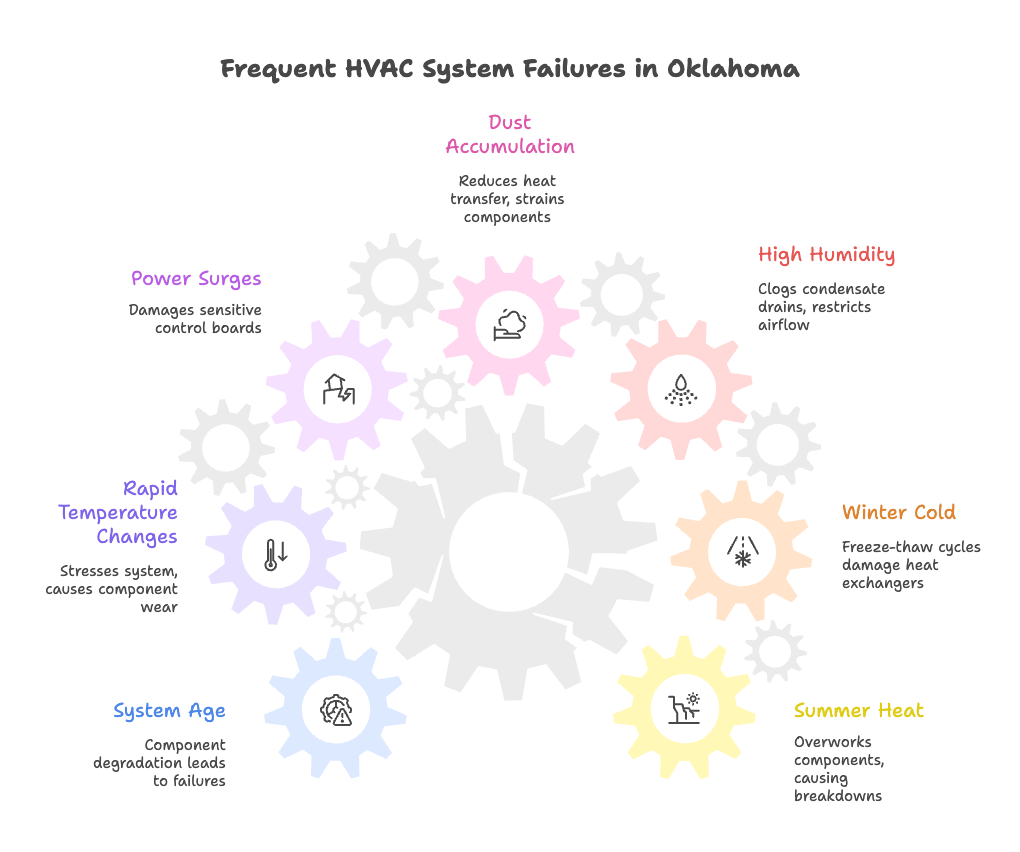
- Extreme temperature swings: Oklahoma’s diverse climate forces systems to work overtime most of the year
- High dust and allergen levels: Cottonwood, pollen, and dust clog condenser coils and filters more quickly
- Humidity fluctuations: Affect dehumidification capacity and indoor air quality
- Severe weather events: Thunderstorms and tornadoes create power surge risks that damage electronic components
- Constant cycling stress: Frequent heating/cooling transitions increase wear on capacitors, contactors, and compressors
How Much Does HVAC Diagnostics Cost in 2026?
Understanding diagnostic costs helps you budget appropriately and avoid surprises when you need service. Typical diagnostic costs vary based on timing and complexity.
Standard diagnostic fee ranges:
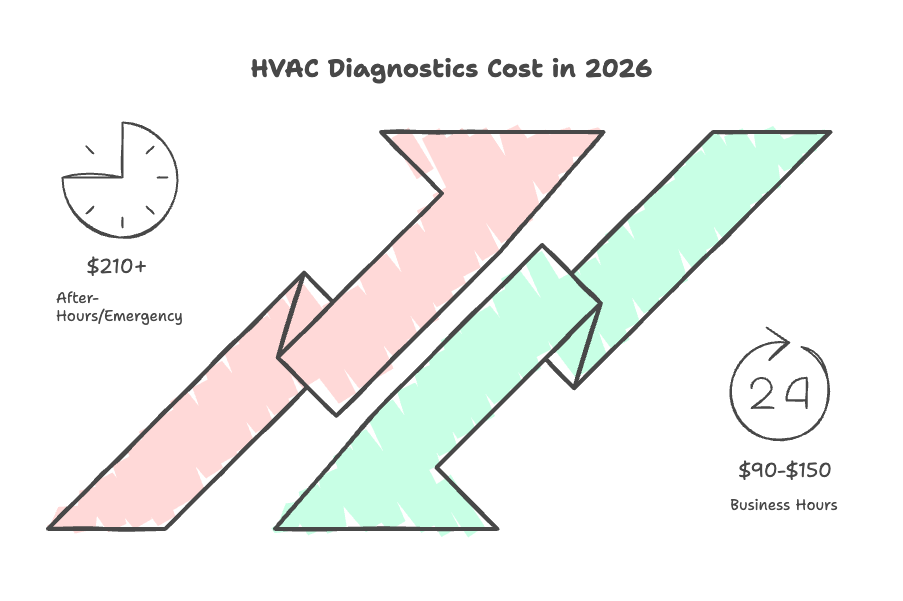
- Business hours: $90-$150 in Oklahoma City
- National average: $75-$200 for standard diagnostics
- After-hours/emergency: $140-$210+ (typically 1.5-2x regular rate)
- Weekend service: Similar premium pricing applies
Understanding What You’re Paying For
The diagnostic fee compensates skilled technicians for their knowledge and the sophisticated equipment they bring. You’re paying for more than just their time at your home.
Your diagnostic fee covers:
- Technician expertise and specialized training
- Travel time and fuel costs
- Professional diagnostic tools and equipment
- Comprehensive system inspection
- Written assessment with repair recommendations
- Credit toward repairs (with most companies)
Most reputable companies apply the diagnostic fee toward your final repair bill if you approve the work. This credit-with-repair policy means you’re essentially paying for the diagnosis only if you choose not to proceed with recommended repairs. Always ask about this policy before scheduling service.
DIY HVAC Diagnostics: What Homeowners Can Safely Check
Before calling for professional HVAC diagnostics, you can perform several safe checks that might resolve simple issues or provide valuable information to technicians. These basic maintenance tasks homeowners can perform take just a few minutes and require no special tools.
Start with the Simple Stuff
Thermostat checks:
- Verify correct mode setting (heat or cool)
- Confirm temperature setting makes sense for desired outcome
- Replace batteries in programmable thermostats
- Check for dust or debris affecting sensor accuracy
Electrical system checks:
- Look for tripped circuit breakers in your electrical panel
- Reset breakers by switching fully off, then back on
- Check disconnect switch near outdoor unit is in “on” position
- Verify indoor air handler shut-off switch is activated
Air filter inspection:
- Replace or clean filter every 1-3 months
- Check more frequently if you have pets or allergies
- A clogged filter causes weak airflow, short cycling, and frozen coils
- This is one of the most common troubleshooting steps that resolves multiple symptoms
Outdoor unit maintenance:
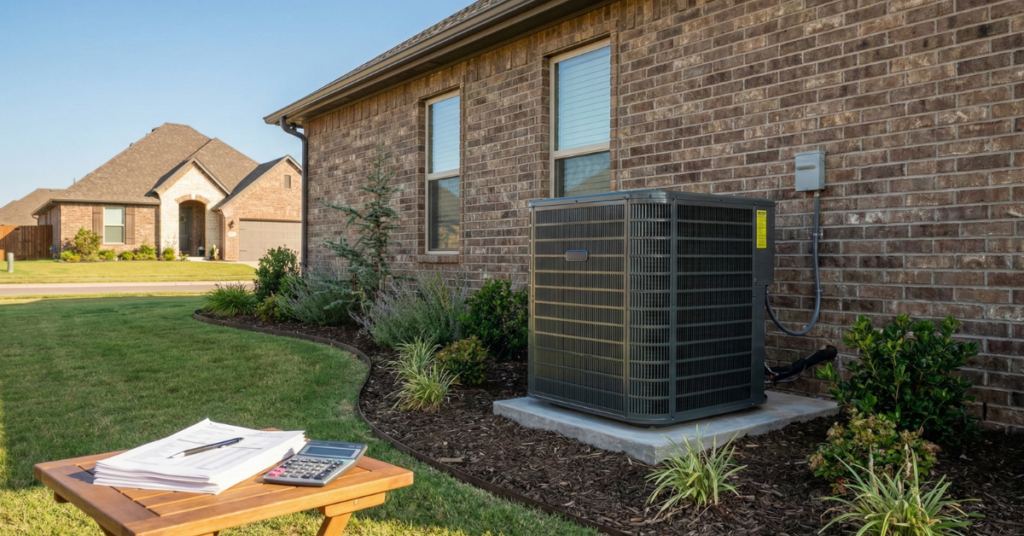
- Clear debris within 2-foot radius of condenser
- Remove leaves, grass clippings, and cottonwood buildup
- Gently rinse exterior coils with garden hose (power off first)
- Ensure unit sits level on its pad
Basic Troubleshooting Steps by Symptom
No heating or cooling:
- Verify power to the unit
- Check thermostat settings and batteries
- Replace air filter if dirty
- Ensure all vents are open and unobstructed
Weak airflow issues:
- Replace clogged air filter immediately
- Check that supply and return vents aren’t blocked by furniture
- Verify ductwork registers are fully open
- Consider duct leaks requiring professional air conditioning repair
Strange noises:
- Banging = loose parts that need tightening
- Squealing = belt or motor bearing issues
- Clicking = possible electrical problems
- Grinding = immediate shutdown required, call professional
Ice buildup on coils:
- Check and replace dirty air filter
- Verify all vents are open for proper airflow
- Look for blocked return air grilles
- If ice persists after filter change, call for diagnosis
The 20-Degree Rule for Oklahoma Summers
Oklahoma homeowners should understand realistic performance expectations during extreme heat. On average, your air conditioner can maintain an indoor temperature about 20 degrees cooler than the outdoor temperature.
What this means for you:
- 100°F outside = 80°F inside is normal performance
- 105°F+ outside = don’t expect 72°F indoors
- Continuous system operation during extreme heat is normal
- System isn’t failing if maintaining 20-degree differential
When to Call a Professional for HVAC Diagnostics
Some HVAC problems require professional expertise and specialized equipment. Attempting DIY fixes on these issues can be dangerous, void your warranty, or cause more expensive damage.
Red Flags That Require Professional Diagnosis
Immediate professional help needed for:
- Gas smells near furnace: Leave home immediately, contact gas company and HVAC technician
- Burning electrical odors: Indicates overheating components or failed wiring
- Sparks or arcing: Serious electrical hazard requiring immediate shutdown
- Repeated breaker trips: Points to electrical overload or short circuit
- Chemical or refrigerant odors: Indicates possible refrigerant leak
Refrigerant-related issues:
- Hissing sounds from refrigerant lines
- Frozen coils despite clean filters
- Ice buildup on outdoor unit
- Refrigerant handling requires EPA certification
- Refrigerant leak detection needs specialized equipment
Water and drainage problems:
- Water pooling around indoor air handler
- Persistent condensate drain clogs
- Water stains on ceiling near ductwork
- Unusual moisture in ductwork
Complete system failures:
- No response to thermostat adjustments
- System won’t turn on at all
- Intermittent operation with no pattern
- Multiple components failing simultaneously
Why Professional Diagnostics Save Money Long-Term
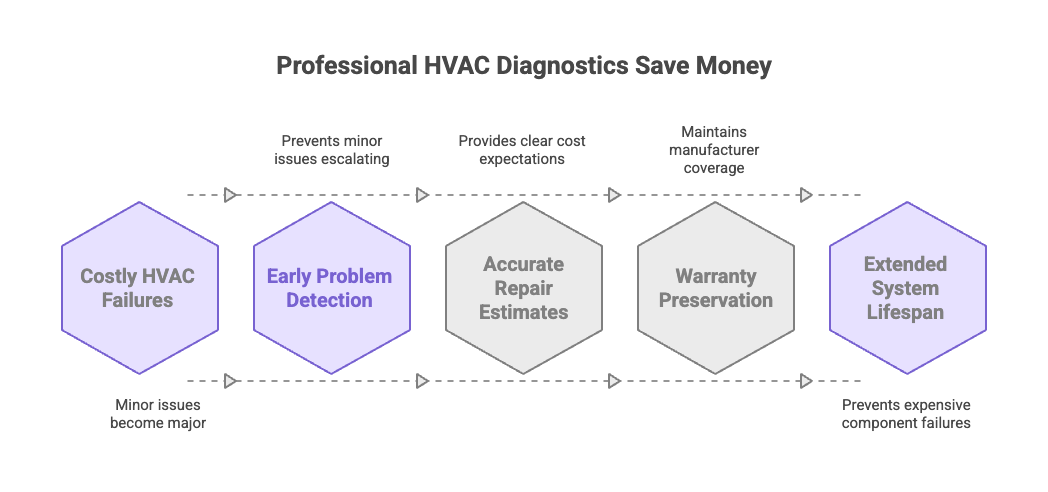
Investing in professional diagnostics prevents costly mistakes and extends your system’s lifespan. As one HVAC expert notes, it’s cheaper to call for diagnostics early with a $150 fee than to wait and replace a $2,500 compressor that failed due to a minor issue left unaddressed.
Benefits of professional diagnosis:
- Prevents expensive component failures from minor neglected issues
- Preserves manufacturer warranty (most require professional service)
- Identifies safety hazards before they cause injury
- Provides accurate repair cost estimates
- Reduces risk of DIY mistakes that void coverage
One Oklahoma property manager who implemented regular HVAC maintenance with diagnostic inspections saw emergency repair calls drop by 60%. Early problem detection through professional diagnostics prevents minor issues from becoming major failures.
What Professional HVAC Diagnostic Tools and Techniques Reveal
Professional technicians use sophisticated equipment that provides insights impossible to obtain without specialized training and tools. Understanding these diagnostic methods helps you appreciate the value of professional service.
Modern Diagnostic Equipment Technicians Use
Essential diagnostic tools:
- Digital multimeters and clamp meters: Measure voltage, current, and resistance in electrical components
- Manifold gauges: Connect to refrigerant lines to measure pressures and temperatures
- Thermal imaging cameras: Detect temperature variations invisible to naked eye
- Airflow meters: Measure cubic feet per minute (CFM) of air movement
- Micromanometers: Check pressure drops across components
- Advanced leak detectors: Identify refrigerant leaks as small as a few ounces per year
These specialized diagnostic instruments identify failing capacitors, weak compressor windings, and control board issues before complete failure occurs.
What thermal imaging reveals:
- Air leaks in ductwork
- Missing or inadequate insulation
- Hot electrical connections before failure
- Refrigerant flow issues through coils
- Heat patterns indicating system inefficiency
What Happens During a Professional Diagnostic Visit
Professional diagnostics follows a systematic approach that ensures nothing gets overlooked. Technicians start with your description of symptoms, then perform comprehensive inspections and testing.
The diagnostic process includes:
- Initial consultation: Discuss symptoms and system history
- Visual inspection: Check both indoor and outdoor equipment
- Electrical testing: Verify connections, measure voltages and currents
- Component inspection: Look for visible damage or wear
- Functional testing: Run system and measure performance
- Airflow verification: Check CFM at registers and ductwork
- Temperature measurements: Verify proper heating/cooling output
- Documentation: Record findings with photos and measurements
- Repair recommendations: Explain problems in plain language with options
You receive comprehensive documentation of findings including specific measurements, photos of problem areas, and detailed repair recommendations. Reputable technicians explain problems clearly and provide options with different price points when possible.
Common HVAC Problems Identified Through Diagnostics in Oklahoma
Oklahoma’s humid subtropical climate creates specific diagnostic patterns that professionals recognize. Understanding these common issues helps you know what to expect when calling for service.
Seasonal Issues Affecting Oklahoma HVAC Systems
Summer diagnostic findings:
- Refrigerant leaks: Become apparent as systems run continuously under heavy cooling loads
- Condenser coil fouling: Cottonwood, pollen, and dust coat outdoor coils
- Reduced heat transfer: Forcing compressors to work harder and use more energy
- Electrical component failures: Capacitors, contactors, and relays wear faster
- Hard-starting compressors: Often caused by failing capacitors under stress
- Intermittent operation: Usually points to worn contactors or control boards
Winter diagnostic issues:
- Cracked heat exchangers: Oklahoma freeze-thaw cycles accelerate deterioration
- Combustion problems: Require professional carbon monoxide testing
- Pilot light failures: Common in older furnaces during cold snaps
- Frozen evaporator coils: Can occur from restricted airflow or low refrigerant
- Ignition system failures: Electronic igniters fail more frequently in extreme cold
Year-round Oklahoma challenges:
- High humidity periods increase condensate drain clogs
- Dust accumulation requires more frequent filter changes
- Power surges from storms damage control boards
- Frequent HVAC issues from rapid temperature changes
Age-Related Diagnostic Findings
Systems 5-10 years old:
- Capacitor degradation from frequent electrical switching
- Contactor pitting and wear
- Minor refrigerant leaks from vibration
- Fan motor bearing wear
- Thermostat accuracy drift
Regular seasonal tune-up checklists catch these issues before they cause failures.
Equipment 10-15 years old:
- Blower motor bearing deterioration
- Compressor efficiency decline (15-25% loss common)
- Heat exchanger stress cracks
- Refrigerant line corrosion
- Control board component failures
- Ductwork seal degradation
Systems 15+ years old:
- Multiple component wear requiring frequent repairs
- Significant efficiency loss compared to modern standards
- Obsolete refrigerant (R-22) making repairs expensive
- Replacement typically makes better financial sense
- Repair costs often exceed 50% of new system cost
Professional Diagnosis Protects Your Investment
HVAC diagnostics represents an investment in your home’s comfort, safety, and efficiency. Understanding when to troubleshoot yourself versus when to call professionals protects both your safety and your wallet.
Key takeaways for Oklahoma homeowners:
- Start with simple DIY checks: thermostat, breakers, filters, outdoor unit
- Understand the 20-degree rule for realistic summer cooling expectations
- Call professionals immediately for gas, electrical, or refrigerant issues
- Expect diagnostic fees of $90-$150 in Oklahoma City
- Professional diagnostics save money by preventing expensive failures
- Oklahoma’s extreme climate demands more frequent maintenance
Oklahoma’s challenging climate with extreme temperatures, high allergen levels, and severe weather demands reliable HVAC systems. Regular diagnostic maintenance catches problems early, extends equipment life, and prevents the expensive emergency repairs that strike at the worst possible times.
Understanding HVAC system components and the diagnostic process empowers you to make informed decisions about repairs, replacements, and preventive maintenance. Whether you’re troubleshooting a minor issue yourself or calling for professional diagnostics, knowledge of the process reduces anxiety and helps you choose the right solution.
Don’t wait for complete system failure to address HVAC problems. Early diagnostics, combined with seasonal maintenance, keeps your Oklahoma home comfortable year-round while maximizing your system’s lifespan and efficiency.