


Standing in your driveway on a sweltering afternoon, you’re staring at your outdoor AC unit while a technician explains that you need either a new condenser or compressor. But which is which? Understanding the difference between AC condenser vs compressor isn’t just vocabulary. It’s about making informed decisions when your cooling system needs attention, knowing what questions to ask, and recognizing when a problem requires professional help.
What Is an AC Compressor?
The Heart of Your Cooling System
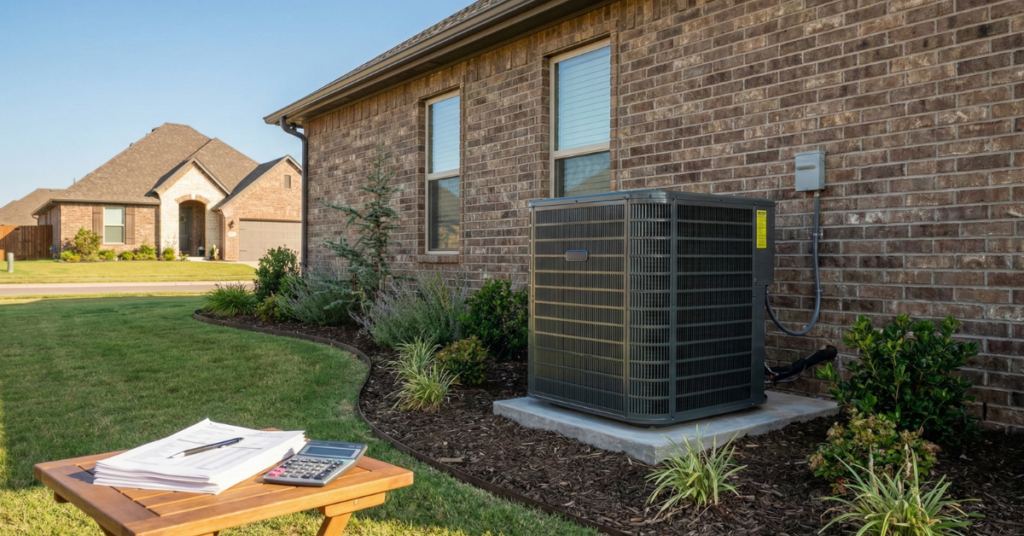
The compressor is often referred to as the heart of the air conditioning system. Just as your heart pumps blood throughout your body, the compressor pumps refrigerant through your AC system. This component sits inside your outdoor unit, housed within the metal cabinet on a concrete pad beside your home.
The compressor’s job is to pressurize refrigerant gas, raising both its temperature and pressure. The refrigerant compression process requires the refrigerant to be hotter than outside air temperature, which is why it must be pressurized before moving to the condenser coil.
How the Compressor Works in the Cooling Cycle
The compressor receives low-pressure refrigerant gas from your indoor evaporator coil after it absorbs heat from your home. Powerful mechanical action squeezes this gas into a much smaller space, creating high-pressure, high-temperature refrigerant vapor that moves to the condenser coil for heat release.
Types of Compressors Homeowners Should Know
Not all compressors operate the same way. Single-stage units cycle on and off at full capacity. Two-stage compressors offer high and low settings for better efficiency. Variable-speed compressors adjust output from 30% to 100% capacity to match your home’s exact needs. These variable-speed systems offer superior efficiency and can improve energy performance by 20% to 43% compared to basic units.
What Is an AC Condenser?
The Heat Release Component
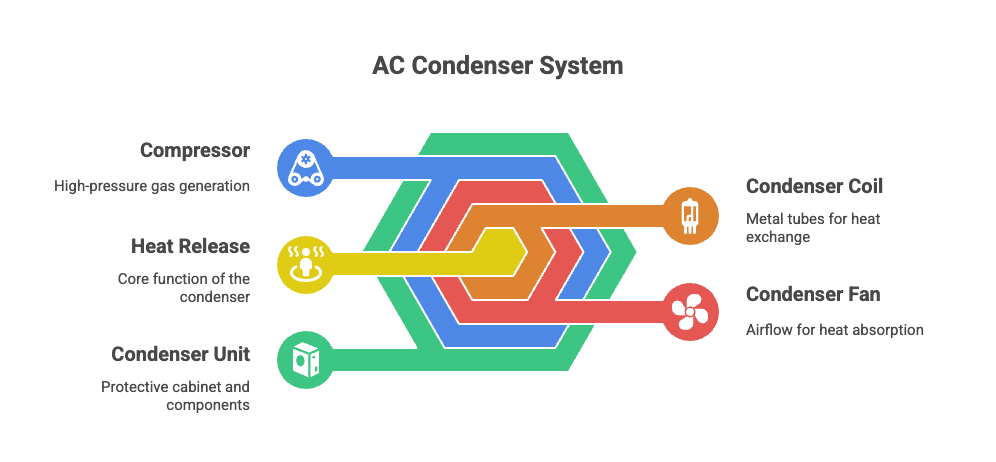
The term “condenser” can refer to two things. Broadly, it’s the entire outdoor unit. Specifically, it’s the coil inside that releases absorbed heat. The condenser unit houses the compressor, condenser coil, fan motor, and refrigerant lines. All these parts work together in the cooling cycle to keep your home comfortable.
How the Condenser Coil Functions
After leaving the compressor as hot, high-pressure gas, refrigerant enters the condenser coil. As refrigerant flows through metal tubes, the condenser fan pulls outdoor air across the coil. This airflow absorbs heat, allowing refrigerant to cool and condense from gas back to liquid. The liquid then travels to your indoor unit through an expansion valve before reaching the evaporator coil to absorb more heat.
Condenser Unit Location and Design
Your condenser sits outdoors on a concrete pad, typically near an exterior wall. The metal cabinet protects components while allowing airflow. Inside, thin aluminum fins surround the coil to increase surface area for heat exchange. These fins bend easily, so keep lawn equipment and debris clear.
AC Condenser Vs Compressor: Key Difference
Side-by-Side Comparison
Here’s a quick reference comparing these two critical components:
| Feature | AC Compressor | AC Condenser |
| Primary Function | Pressurizes and circulates refrigerant through the system | Releases absorbed heat to outdoor air and cools refrigerant |
| Physical Location | Component housed inside the outdoor unit | Can refer to entire outdoor unit OR the coil within it |
| Key Components | Motor, pistons/scrolls, valves, refrigerant lines | Coil, fan, cabinet, compressor (when referring to full unit) |
| Role in Cooling Cycle | Compresses low-pressure gas into high-pressure, high-temperature gas | Converts high-pressure gas into liquid through heat exchange |
| Common Warning Signs | Clicking, humming, hard starting, circuit breaker trips | Warm air from vents, loud fan noise, reduced airflow |
| Typical Issues | Motor problems, capacitor wear, refrigerant leaks, electrical faults | Dirty coils, bent fins, fan motor wear, blockages |
How They Work Together
The compressor starts the outdoor cooling cycle by pressurizing refrigerant, while the condenser completes it by releasing heat. Neither works effectively without the other. A failed compressor can’t pressurize refrigerant for heat release, and a blocked condenser can’t release heat even with a functioning compressor.
How Can Homeowners Identify Condenser or Compressor Problems?
Safe DIY Visual Checks You Can Perform
Before calling for professional help, homeowners can safely perform basic troubleshooting steps to identify minor issues:
- Clear debris like leaves and grass clippings from around the outdoor unit
- Inspect metal fins for damage or bending
- Look for blockages preventing airflow
- Listen for unusual sounds (clicking, grinding, humming, hissing)
- Check that the fan spins freely without obstruction
- Verify the circuit breaker hasn’t tripped
- Trim vegetation to maintain two feet of clearance on all sides
Warning Signs That Require Professional Diagnosis
Some symptoms need expert evaluation. These specific sounds indicate different component failures:
- AC runs continuously but produces only warm air
- Outdoor unit won’t turn on when thermostat calls for cooling
- Circuit breakers trip repeatedly
- Loud banging, screeching, or grinding noises
- Ice forms on refrigerant lines
- Unexpected energy bill spikes
When to Stop DIY and Call a Licensed HVAC Professional
Call a licensed technician for electrical troubleshooting beyond resetting a breaker, suspected refrigerant leak detection and safety, or internal component problems. Even after basic cleaning, if cooling performance doesn’t improve, professional assessment is your next step.
How Do Energy Efficiency Ratings Relate to Your Compressor and Condenser?
Understanding SEER and SEER2 Ratings
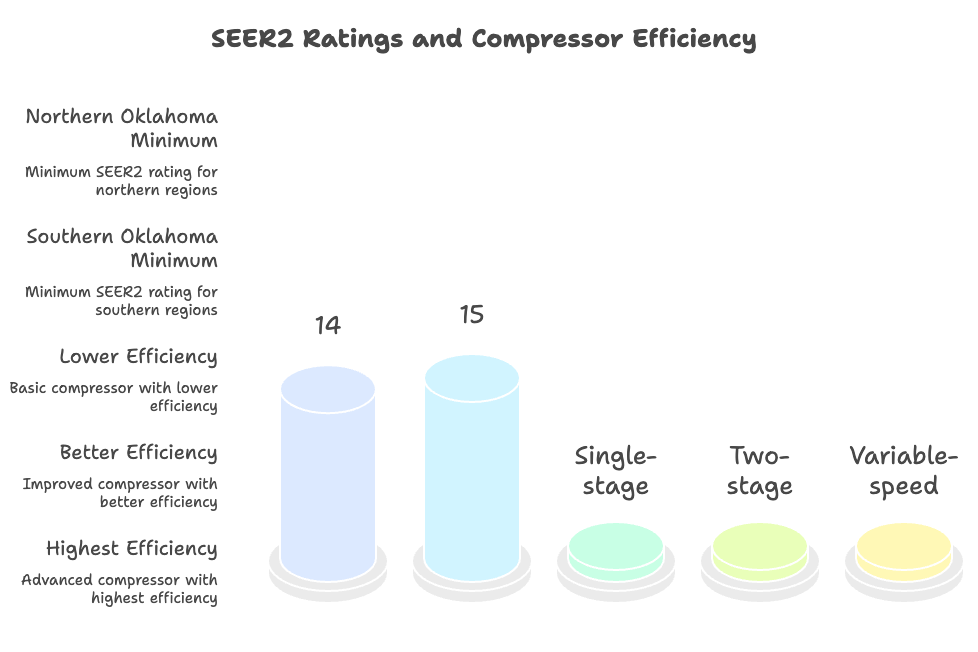
SEER stands for Seasonal Energy Efficiency Ratio and measures how efficiently your AC converts electricity into cooling. As of 2023, the industry uses SEER2, with more rigorous testing to reflect real-world conditions. Understanding SEER2 ratings for Oklahoma homeowners helps evaluate system performance. Current minimums require 14 SEER2 in northern regions and 15 SEER2 in southern areas. Higher ratings mean lower utility bills.
How Compressor Type Affects Efficiency
Your compressor type determines efficiency ratings. Single-stage units achieve lower ratings, two-stage units perform better, and variable-speed compressors achieve the highest efficiency by operating from 30% to 100% capacity. One Oklahoma City family saw cooling costs drop 35% after upgrading from a 15-year-old system to a high-efficiency unit, showing how modern compressor technology and higher SEER2 ratings deliver real savings during intense summer heat. Higher efficiency ratings improve indoor comfort with better humidity control and consistent temperatures.
Condenser Design and Energy Performance
While compressor type sets efficiency potential, condenser condition determines whether you achieve those ratings. Dirty coils reduce efficiency by 5% to 15%. Bent fins restrict airflow similarly. Regular HVAC maintenance extends system lifespan and preserves designed efficiency. Keep shrubs and obstacles at least two feet away to ensure optimal heat release in both Oklahoma heat and Portland summers.
Should You Repair or Replace a Failed Compressor or Condenser?
When Compressor Replacement Makes Sense
System age guides replacement decisions more than any factor. If your system is under 10 years old and the rest of the unit functions well, replacing just the compressor makes economic sense. This is especially true if your compressor is under warranty, covering the part while you pay labor costs.
When Condenser Repair Is the Right Choice
Many condenser problems don’t require major work. Dirty coils respond well to professional cleaning. Failed relay switches or capacitors are inexpensive repairs. Minor fan motor issues can be addressed without replacing the entire unit. These smaller repairs work when your system is otherwise healthy.
Signs It’s Time for Full System Replacement
If your equipment is 10 to 15+ years old, major component failure often signals other parts will soon follow. Multiple repairs within a short time indicate a worn-out system. Systems using R-22 refrigerant face additional costs, as this phased-out refrigerant is increasingly expensive.
Cost Awareness Without Exact Pricing
Understanding general repair and replacement cost ranges helps evaluate options. Compressor replacement typically ranks among the most expensive single repairs. Full replacement provides warranty coverage, improved efficiency, and peace of mind. Factor in utility rebates, tax credits for high-efficiency systems, and long-term energy savings. Preventative maintenance delivers proven returns, with every dollar spent on service saving an average of four dollars in avoided repairs.
Keep Your Compressor and Condenser Running Efficiently
Understanding the difference between your AC compressor and condenser helps you make informed decisions when cooling problems arise. The compressor pressurizes and circulates refrigerant, while the condenser releases heat and converts refrigerant to liquid. They work together seamlessly when properly maintained.
For homeowners in Oklahoma and Portland, seasonal AC service schedules keep both components operating efficiently. Regular professional maintenance catches small issues before they become expensive problems and extends system lifespan.
If you notice warm air, unusual sounds, or reduced cooling performance, don’t wait for a complete breakdown. Schedule a professional air conditioning repair inspection to have our licensed technicians diagnose the issue accurately and recommend the most cost-effective solution for your home.