


Choosing the right furnace size for your home is one of those decisions that can quietly shape your comfort for years. When a furnace is matched correctly to the home, everything feels steady and dependable. When it isn’t, problems show up fast.
How Big Furnace Do I Need For Home Comfort
A Advantage Inc has seen this firsthand in homes across Oklahoma City, where winter temperatures can dip quickly and make an undersized furnace or oversized furnace noticeable. Understanding furnace sizing doesn’t have to feel overwhelming. A few key details can point you in the right direction and help you feel more confident before speaking with an HVAC professional.
Why the Right Furnace Size Matters
A furnace that fits your home’s needs will heat your home evenly and operate consistently. When the size is wrong, the symptoms tend to show up in daily life, not just on your utility bill. A correctly sized furnace delivers steady comfort, better indoor air distribution, and a longer equipment lifespan.
Common issues with the wrong size furnace:
- Uneven temperatures throughout the house
- Higher energy use and utility bills
- Frequent cycling that reduces furnace efficiency
- Noisy operation during heating cycles
- Shorter system lifespan and more repair needs
Understanding Furnace Size and Square Footage
Square footage is usually the starting point when you determine what size furnace you need. Most Oklahoma City homes fall into a range of 30 to 60 BTUs for every square foot, depending on age and insulation. But two homes with the same square footage may require different furnace sizes due to layout differences.
Wide open spaces heat differently than homes with many closed-off rooms. The position of windows and the height of ceilings also make an impact on the size furnace you need.
Layout details that influence the size of furnace:
- Number of rooms and floor plan design
- Ceiling height and total cubic footage
- Window count, size, and orientation
- Basement or crawlspace conditions
What Is BTU and How Does It Determine Furnace Size?
BTU stands for British Thermal Unit, which measures the heat a furnace can generate. One BTU is the energy needed to raise one pound of water by one degree Fahrenheit. This BTU rating tells you how much heating power a furnace has to heat your home effectively.
While a professional calculation is always best, homeowners can get a general idea by multiplying the square footage of your home by the average BTUs needed per square foot. For many Oklahoma City properties, the range is usually between 35 and 55 BTUs per square foot, depending on insulation and home age.
Sample furnace sizing estimates:
- 1000 sq. ft. home: 35,000 to 55,000 BTUs
- 1500 sq. ft. home: 55,000 to 85,000 BTUs
- 2000 sq. ft. home: 70,000 to 110,000 BTUs
These numbers act as a starting point, not a final answer. A furnace sizing calculator can help, but homes vary enough that two houses with the same home size may still need different systems.
Climate Conditions and Home Insulation
Oklahoma winters aren’t the coldest in the country, but the rapid swings in temperature can put real pressure on a heating system. A gas furnace must be able to handle chilly mornings, sudden cold fronts, and wind that makes homes lose heat faster.
Insulation quietly drives how well a furnace performs. When a home holds onto heat, the furnace works less and can be smaller. When insulation is poor, the furnace must compensate, which usually requires a higher BTU output and a larger furnace.
Insulation factors that increase heating needs:
- Thin attic insulation reducing heat retention
- Drafty windows allowing cold air infiltration
- Gaps around exterior doors
- Older or damaged ductwork causing heat loss
Signs Your Furnace Might Be the Wrong Size
Some homeowners already have a furnace but aren’t sure if it’s properly sized for your home. A wrong-sized unit tends to make itself known through performance issues that don’t go away with simple furnace repair. A Advantage Inc often finds that homes with persistent comfort problems aren’t dealing with a broken system but one that was never sized correctly.
Watch for these symptoms:
- Furnace runs constantly without reaching set temperature
- Hot and cold spots across the home
- Furnace turns off too quickly (short cycling)
- Utility bills increase without clear reason
- Airflow feels weak or inconsistent
A furnace is too small when it runs constantly trying to heat your home. A furnace is too big when it cycles on and off rapidly, never running long enough to distribute heat evenly.
Factors to Consider When Choosing the Right Furnace Size
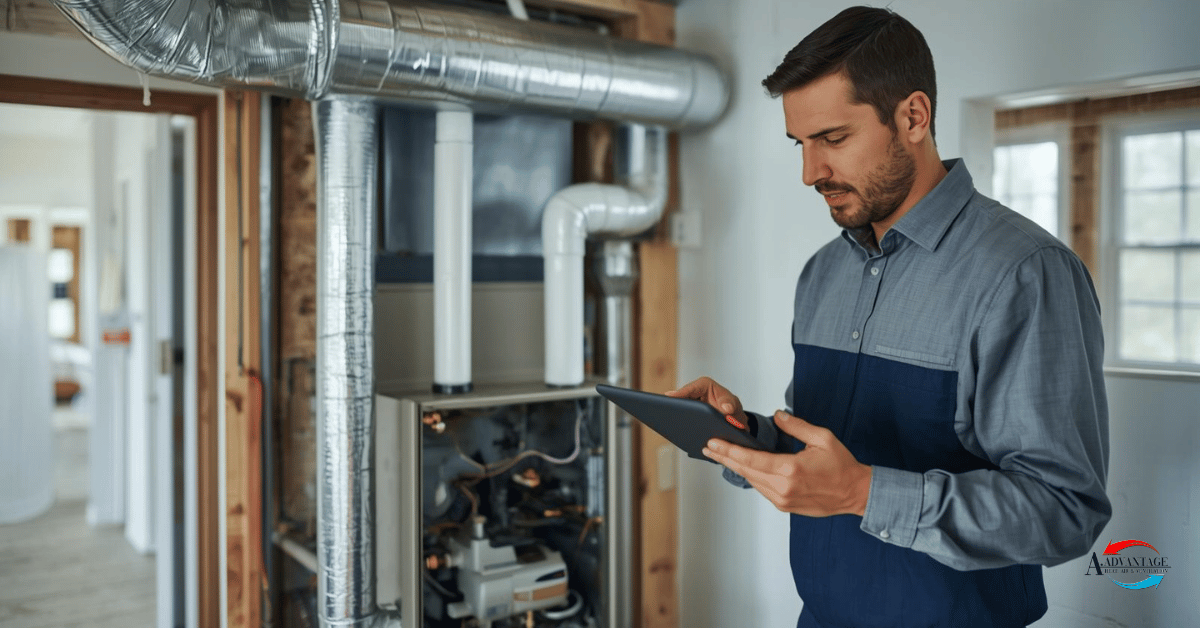
An HVAC professional uses a detailed process to measure the heating needs of a home. This includes insulation values, window placement, duct sizing, building materials, and local climate. The result is a precise recommendation that helps you get the right furnace and avoids guesswork.
Key factors that influence furnace sizing:
- Home’s square footage and total volume
- Insulation quality and R-values
- Climate zone and local weather patterns
- Number of windows and their energy ratings
- Ductwork size and condition
- Home age and construction materials
Why Professional Sizing Is Essential
Shopping for a new furnace requires more than just knowing your square footage of your house. A Advantage Inc performs complete evaluations before suggesting any furnace installation or replacement. This helps ensure homeowners get a system size that fits both their home and their budget without creating future problems.
The company’s 50 years of combined experience in HVAC repair Oklahoma City, furnace repair, cleaning, and complete system installations helps ensure homeowners get solid answers instead of confusing recommendations.
What homeowners can expect:
- A complete home evaluation and measurement
- Use of a furnace sizing calculator for accuracy
- Straightforward recommendations on the perfect furnace size
- Transparent pricing and clear explanations
- Installation from licensed professionals
Different Furnace Types and Efficiency Levels
Not all furnaces deliver heat the same way. The fuel source and efficiency level can influence the ideal furnace size for your specific needs. A high-efficiency furnace may reach the same comfort level using fewer BTUs, depending on the home.
Gas furnaces are common in Oklahoma City and provide strong heating output. Electric furnaces can work well in homes without gas access but often require careful sizing since they heat differently. A properly sized furnace matched to your fuel type ensures the best performance.

Finding the Right Size Furnace for Your Home
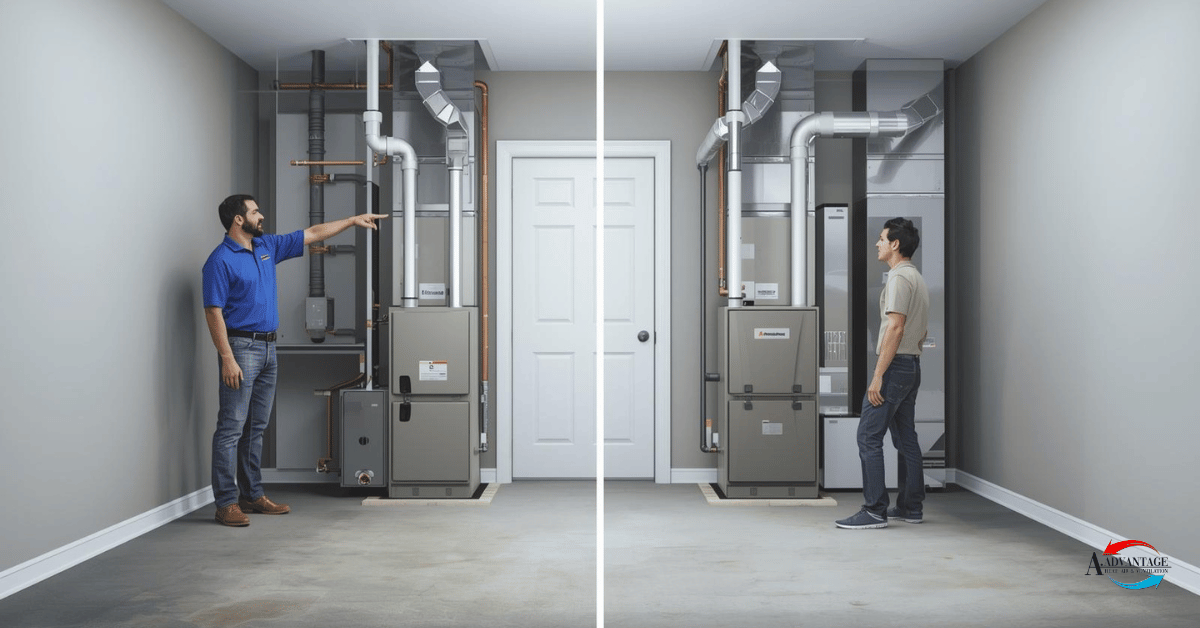
When homeowners reach out with questions about “what size furnace do I need,” the A Advantage Inc team walks them through the process in a clear and practical way. During a visit, technicians check ductwork, insulation, airflow, and overall home structure to determine the correct size furnace.
This allows them to provide a furnace recommendation that aligns with comfort goals and long-term reliability. Installing a new furnace that’s correctly sized means better comfort, lower energy bills, and fewer repair calls.