


A refrigerant leak can cause an air conditioning unit to lose cooling power, run nonstop and struggle during the hottest days in Oklahoma City. Many homeowners don’t realize a leak has formed until comfort levels start slipping. If you ever find yourself wondering how to fix a freon leak in air conditioner, getting the system checked quickly can prevent bigger failures.
A Advantage Inc has worked with AC systems across Oklahoma City for decades, and leaks are one of the most common issues we’re called to investigate. Understanding how leaks form and how professionals repair services can help you make the right decision for your home.
What Freon Does Inside Your Air Conditioning System
Refrigerant is the fluid that absorbs heat from the air inside your home and releases it outdoors. Without the right refrigerant levels, the system can’t cool properly and the entire air conditioning unit becomes strained. Older systems often carry R22, while newer ones use updated refrigerants like R134a.
When a leak is detected, performance drops fast. Common signs include:
- Warm or weak airflow
- Ice on the evaporator coil
- Long run times with poor cooling
- Higher electric bills
Signs Your Unit is Leaking
A freon leak doesn’t always make itself obvious. Sometimes an air conditioning system slowly loses refrigerant over months. Other times the leak grows quickly and cooling fades almost overnight.
Homeowners in Oklahoma City should watch for a few early clues:
- Hissing or bubbling noises from the indoor or outdoor condenser
- Ice buildup on copper lines or the evaporator
- AC unit running longer than usual
- Rooms that never quite reach the set temperature
- Sudden increases in energy use
If you notice more than one of these issues, it’s a good idea to schedule a checkup with A Advantage Inc.
Why Freon Leaks Form in Your HVAC System
Most leaks happen because of wear and tear. Over time, copper lines can corrode or fittings loosen. Oklahoma’s temperature swings and humidity can also contribute to coil deterioration. Seals can gradually degrade over time, creating weak points where refrigerant escapes.
A few of the most common causes of freon leakage include:
- Corrosion on the evaporator coil or condenser
- Vibrations causing joints to weaken
- Damaged copper tubing
- Aging materials inside older air conditioners
- Rubber seals surrounding valves that allow freon to escape
- Improper installation work in past repairs
A Advantage Inc has specialized tools to pinpoint these issues so the real cause of the leak is addressed, not just the symptoms.
Why You Should Avoid DIY Repairs
Handling freon and other refrigerants requires proper certification. Trying to fix a freon leak or recharge the system at home can lead to safety risks and long term damage. Exposure to freon can cause adverse health effects like shortness of breath.
Most importantly, adding more refrigerant without fixing the leak is only a short term patch. The unit will continue losing refrigerant and can eventually damage the compressor, one potential point of failure that costs thousands to replace.
Risks of DIY repair attempts include:
- Exposure to refrigerant gases
- Incorrect charging levels
- Voiding equipment warranties
- Damage to critical components inside the unit
A licensed HVAC technician from A Advantage Inc can safely repair the leak and restore the system to proper working condition.
How to fix a freon leak in air conditioner
Repairing a refrigerant leak is a multi step process that requires skill and testing equipment. Each step helps confirm the leak location and ensures the air conditioning system works the way it should after the repair.
Leak Detection
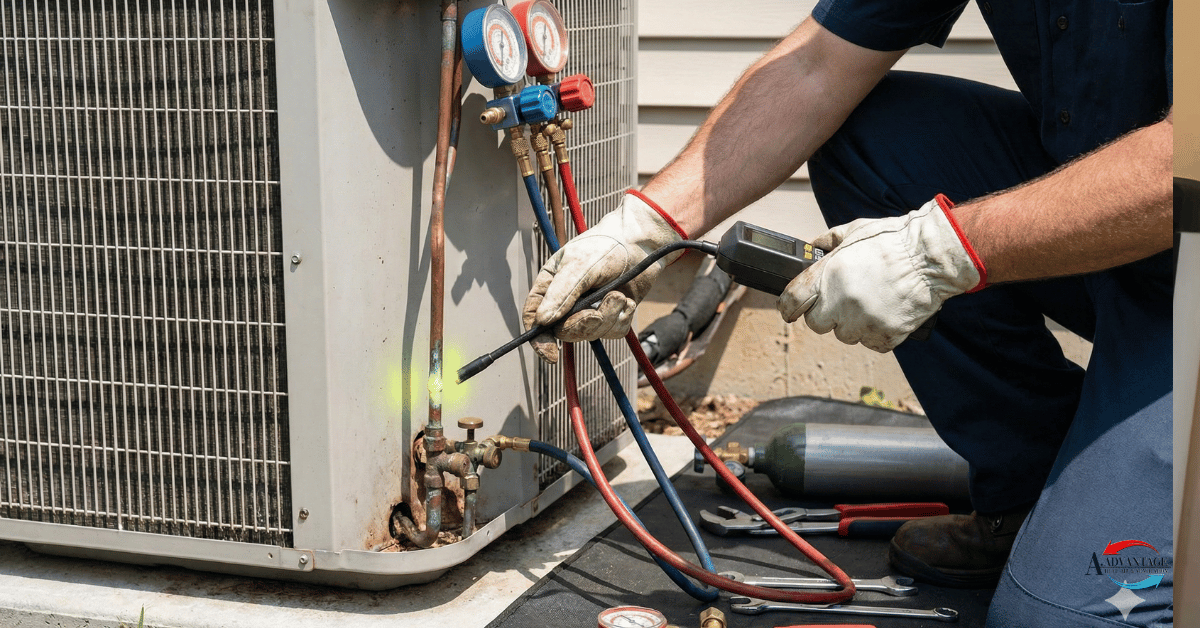
An HVAC technician begins by searching for the exact leak point. This may involve UV dye with a UV light, pressure tests or electronic detectors. The goal is to find the source at the leaking component, not guess. Finding the leak if it’s in a tight space requires specialized tools.
Repairing the Damaged Area
The way to fix depends on what’s found. The repair may involve using solder to seal a small pinhole leaks, replacing a section of tubing or installing a new coil. Some systems designed to hold refrigerant may need a rubber seal replaced at the valve or orifice. Older systems may require more extensive work if corrosion is widespread, and replacing the whole coil becomes necessary.
Vacuuming and Cleaning
Moisture must be removed from the system before ac refrigerant is added. A vacuum pump clears the lines and prepares the HVAC system for proper charging. This cleaning step is essential.
Recharging With the Correct Refrigerant
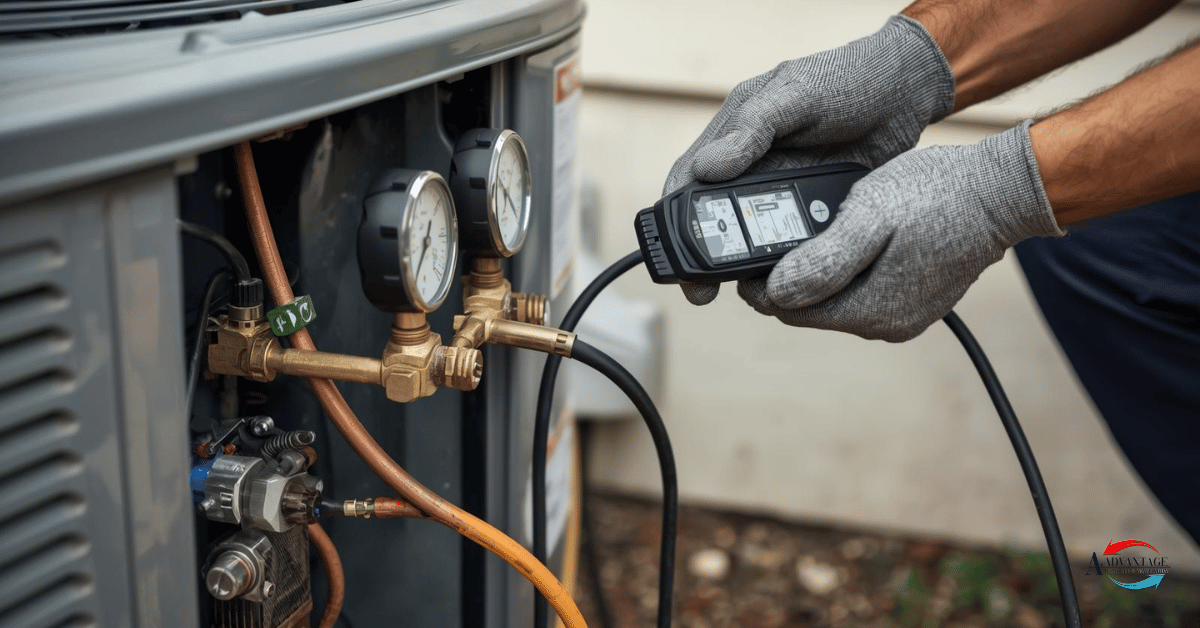
The HVAC contractor will recharge the system according to the manufacturer’s specifications. Accurate pressures are essential for reliable cooling. Refrigerants can be tricky, and only a professional HVAC technician should handle this installation step.
System Testing
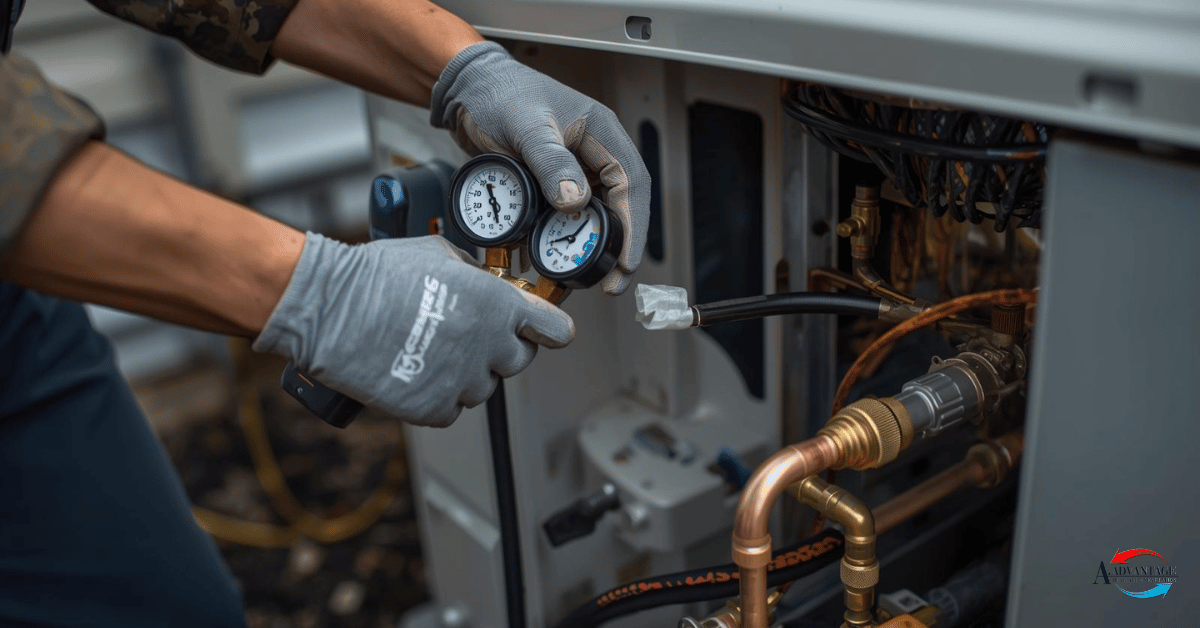
Final tests confirm that the system holds steady pressure, temperatures drop correctly and the air conditioning unit cycles as expected. The evap is checked to ensure proper function. Air today means comfort restored.
When Repair Costs Make Sense
Not every leak can be fixed the same way. Some involve an easy fix, while others require replacing parts or the whole system. The type of refrigerant also plays a large part in cost since R22 is no longer produced.
Costs usually depend on:
- Type of refrigerant
- Size and leak location
- Whether the coil or lines need replacement
- Age of the system
- Amount of refrigerant lost
If your air conditioner is more than 12 to 15 years old, A Advantage Inc may recommend replacing the unit. In many cases, a modern installation provides better comfort and can lower energy use.
Why Adding More Freon Is Not a Solution
Many homeowners think they could recharge refrigerant once a year as normal maintenance. It isn’t. A sealed system should never need refrigerant unless a leak exists. Using a leak sealant without addressing the issue also fails. Air conditioners are generally designed to hold liquid freon for their entire lifespan.
Adding refrigerant without repairing the leak often leads to:
- Repeated service calls
- Higher costs over time
- Strain on the compressor
- Poor cooling on hot days
Leaks can be fixed properly once, which is almost always more cost effective than adding refrigerant again and again. You need to stop the leak at its source.
Preventing Future Refrigerant Leaks Through Regular Maintenance
Routine HVAC maintenance is the easiest way to prevent leaks before they start. A well maintained system runs better and experiences fewer issues over the years.
A Advantage Inc recommends yearly inspections for homeowners in Oklahoma City. During a tune up, a technician can spot early corrosion, loose fittings or low refrigerant levels. Regular maintenance helps address weak points before they become a freon leak in your home.
Good maintenance habits include:
- Cleaning coils annually
- Checking refrigerant pressures
- Inspecting copper lines
- Making sure air filters are changed regularly
- Removing debris around the outdoor condenser
These simple steps help the air conditioning system stay reliable season after season.
Why Oklahoma City Homeowners Trust A Advantage Inc
A Advantage Inc has built long lasting relationships across Oklahoma City by providing honest evaluations, dependable repair services and clear communication. Our team handles everything from minor leak repairs to full AC installation, and we always guide homeowners toward the option that makes the most sense for their space and budget.
Whether it’s residential cooling, commercial HVAC work or emergency service during a heat wave, our goal is to restore comfort as quickly and professionally as possible.
Final Thoughts
A refrigerant leak is more than an inconvenience. It can impact comfort, energy costs and the lifespan of your air conditioning unit. Paying attention to common signs and calling a qualified HVAC professional can save you from expensive breakdowns.
If you suspect a leak or notice your cooling system struggling, A Advantage Inc is ready to help. Our team provides prompt, reliable air conditioning repair services throughout Oklahoma City and surrounding areas.