


Your HVAC system keeps your home comfortable year-round, but when was the last time you gave it any attention? Most homeowners don’t think about their heating and cooling systems until something goes wrong. By then, a simple $10 filter replacement has turned into a $1,000 repair bill. The good news is that a basic HVAC system check takes less than 30 minutes and can help you catch small problems before they become expensive emergencies.
You don’t need to be an HVAC expert to keep your system running smoothly. This guide walks you through simple checks you can safely perform yourself, shows you what red flags to watch for, and helps you understand when it’s time to call in the professionals. Whether you’re dealing with Oklahoma’s scorching summers or Portland’s damp winters, these preventive steps will help your system run more efficiently and last longer.
What Can You Safely Check Yourself?
Not every HVAC task requires a professional. There’s a clear line between safe DIY maintenance and work that needs expert hands. Understanding the DIY safety boundary protects both you and your system from potential damage.
The DIY-Friendly Zone
You can safely handle these basic maintenance tasks on your own:
- Air filter inspection and replacement (the single most important task)
- Thermostat battery changes and settings verification
- Outdoor unit debris removal (leaves, grass, dirt)
- Visual inspections for obvious damage or leaks
- Vent and register cleaning to improve airflow
These tasks don’t require special tools or technical expertise. They’re designed to be homeowner-friendly and can prevent many common HVAC problems when done regularly.
What Requires a Professional
Some HVAC components are off-limits for DIY work, and for good reason. Refrigerant handling requires EPA certification because it’s hazardous and strictly regulated. Electrical components can pose serious shock or fire risks if mishandled. Gas connections and fuel lines should never be adjusted without proper training, as mistakes can lead to dangerous leaks or carbon monoxide exposure.
Professional work also protects your investment. Many manufacturers require documented professional maintenance to keep your warranty valid. Attempting repairs yourself could void that coverage and cost you thousands down the line.
Step-by-Step Basic HVAC System Check
Let’s walk through a simple home HVAC system check that you can perform yourself. These steps take about 20-30 minutes and should be done monthly or at minimum before each heating and cooling season.
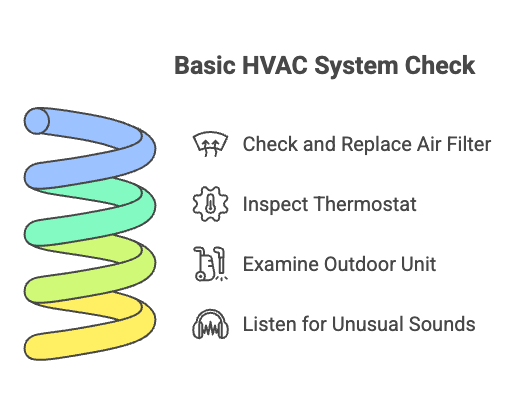
Step 1: Check and Replace Your Air Filter (Most Important!)
Your air filter is the hardest-working part of your entire system. It traps dust, pollen, pet dander, and other particles before they enter your ductwork. When filters get clogged, your system works harder, uses more energy, and wears out faster. Research shows preventive maintenance like regular filter changes can reduce breakdowns by up to 95%.
Here’s how to check your filter:
- Locate your filter (usually in the return air vent or furnace cabinet)
- Remove the filter and hold it up to a light source
- If little to no light passes through, replace it immediately
- Check the size printed on the filter frame and buy the correct replacement
- Install the new filter with arrows pointing toward the blower
Most homes need filter changes every 1-3 months. If you have pets, allergies, or live in a dusty area, check monthly. During Oklahoma’s high-pollen springs or Portland’s wildfire seasons, you might need even more frequent changes.
Step 2: Inspect Your Thermostat
Your thermostat is your system’s control center. A faulty thermostat can increase energy costs by up to 10% and leave you uncomfortable in your own home. Thankfully, checking your thermostat’s functionality is straightforward.
Quick thermostat checklist:
- Replace batteries if your model uses them (do this annually)
- Verify it’s set to the correct mode (heat or cool)
- Check that temperature readings match a separate thermometer
- Look for loose wires or dust buildup inside (turn off power first)
- Consider upgrading to a smart thermostat for better control and energy savings
If your thermostat shows the right temperature but your system isn’t responding, that’s a sign you need professional help.
Step 3: Examine the Outdoor Unit
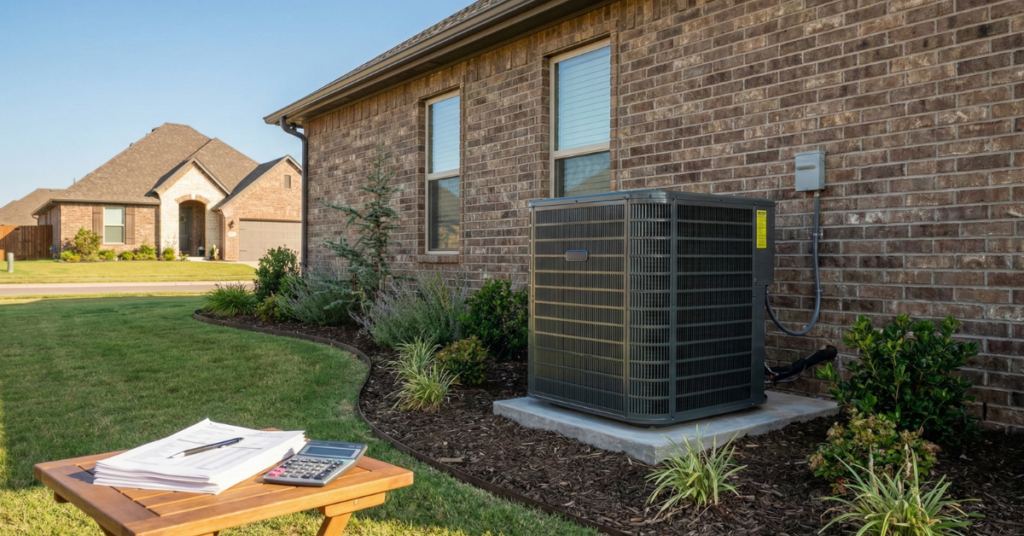
Your outdoor condenser unit needs breathing room to work efficiently. Blocked airflow forces your system to work harder, which drives up energy bills and shortens its lifespan. Proper outdoor unit maintenance includes regular cleaning and clearance checks.
Outdoor unit inspection steps:
- Turn off power at the disconnect box near the unit
- Remove debris like leaves, grass clippings, and dirt from around the unit
- Gently spray down the exterior fins with a garden hose (top to bottom)
- Check for damage such as bent fins, rust, or dents
- Ensure 2-foot clearance on all sides (trim back plants and shrubs)
- Verify the unit sits level on its pad (unlevel units wear out faster)
In Oklahoma, dust and extreme heat can clog units quickly. In Portland, moss and moisture buildup require extra attention. A clean outdoor unit can save you 10-15% on energy costs.
Step 4: Listen for Unusual Sounds
Your HVAC system makes some noise during normal operation. A quiet hum or the whoosh of air through vents is expected. But certain sounds signal trouble. Grinding or screeching often means worn bearings or a failing motor. Banging or clanking could indicate loose parts rattling inside the unit. Hissing sounds might point to refrigerant leaks or ductwork problems.
If you hear anything beyond the normal operating sounds, note when it happens (startup, shutdown, or continuous) and call a professional. Basic troubleshooting steps can identify simple fixes, but unusual noises usually need expert diagnosis.
How Often Should You Check Your HVAC System?
Consistency matters more than intensity when it comes to HVAC maintenance. Establishing a maintenance routine helps you catch issues early and keeps your system running efficiently year-round.
Monthly Quick Checks (5-10 minutes)
What to do every month:
- Inspect and change the air filter if needed
- Verify thermostat is working correctly
- Do a quick visual scan of the outdoor unit
- Listen for unusual sounds during operation
- Check that all vents are open and unblocked
These quick checks take less time than brewing your morning coffee but can save you hundreds in repair costs.
Seasonal Deep Checks (20-30 minutes)
Before summer and winter hit, when your system will work hardest, perform a more thorough inspection. In Oklahoma, late spring is crucial before the extreme summer heat. In Portland, check your heating system in early fall before the damp, chilly weather arrives.
Seasonal checklist includes:
- Complete air filter replacement
- Outdoor unit deep cleaning
- Visual duct inspection for visible leaks
- Carbon monoxide detector testing (for gas systems)
- Scheduling professional maintenance for preparing your system for summer
One Oklahoma property manager saw a 60% drop in emergency repairs simply by implementing regular system checks and seasonal maintenance, proving that a small time investment prevents major headaches.
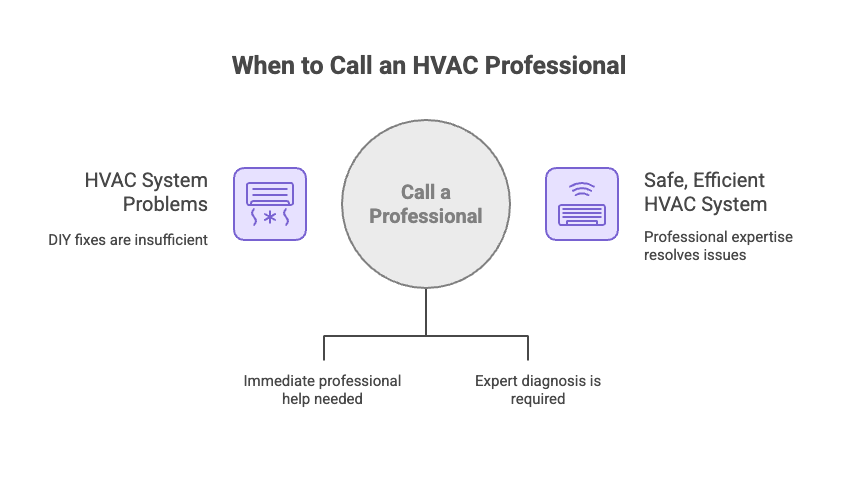
Red Flags That Mean Call a Professional Immediately
Some HVAC problems aren’t DIY projects. Knowing when to step back and call for help protects your safety, your system, and your wallet. Complex system problems require professional expertise and specialized tools.
Safety Concerns (Stop and Call Now)
Immediate professional help needed if you notice:
- Gas smell or odor of rotten eggs near the furnace
- Burning electrical smell or visible sparking
- Carbon monoxide detector alarm
- Visible flames outside the burner area
- Standing water around indoor unit (potential electrical hazard)
Never ignore these warning signs. Turn off your system at the breaker, leave the area, and call for emergency service. Your safety comes first.
Performance Problems That Need Expert Diagnosis
Some issues seem minor but signal deeper problems. If your system runs constantly but never reaches the set temperature, it could be low refrigerant, ductwork leaks, or a failing compressor. Weak airflow from vents might indicate blower problems, duct blockages, or motor issues. Unexplained spikes in your energy bills often mean your system is working inefficiently due to internal problems you can’t see.
If you notice ice forming on your indoor or outdoor coils, that’s a refrigerant issue. Water leaking inside your home suggests a clogged condensate drain or cracked drain pan. These problems require professional attention to diagnose and fix correctly.
The Cost Savings of Regular System Checks
Let’s talk numbers. Preventive care delivers impressive returns that show up in multiple ways throughout the year. For every dollar you spend on maintenance, you save $4 in avoided breakdown and repair costs. That’s a 400% return on investment.
Energy efficiency improves dramatically with proper care. Studies consistently show that well-maintained systems use 10-20% less energy than neglected ones. On a $200 monthly summer cooling bill in Oklahoma, that’s $20-$40 in savings every single month.
The real-world impact:
- 85% of all HVAC repairs stem from lack of basic maintenance
- Properly maintained systems last 15-20 years vs. 10 years for neglected units
- Emergency repairs cost 50-100% more than scheduled service calls
- 5-15% energy savings add up to hundreds annually
Your HVAC system is one of the biggest investments in your home. Regular checks and maintenance protect that investment while keeping you comfortable when Oklahoma temperatures soar past 100°F or Portland’s winter dampness settles in.
When to Schedule Professional Maintenance
DIY checks are valuable, but they can’t replace professional service. A comprehensive HVAC tune-up includes inspections and adjustments you simply can’t do yourself.
Why DIY Checks Aren’t Enough
Professional technicians have specialized tools to measure refrigerant levels, test electrical connections under load, and inspect internal components safely. They can spot early warning signs of wear that aren’t visible to homeowners. A comprehensive professional inspection includes safety testing for carbon monoxide leaks, gas line integrity checks, and electrical system verification.
Most manufacturers and HVAC experts recommend professional maintenance twice yearly. Schedule one visit before your cooling season and another before heating season. This timing ensures your system is ready when you need it most.
What Professional Maintenance Includes
A complete professional tune-up covers:
- Refrigerant level check and adjustment
- Electrical connection testing and tightening
- Blower motor lubrication and inspection
- Condensate drain cleaning
- Evaporator and condenser coil cleaning
- Heat exchanger inspection (critical for safety)
- Airflow measurement and adjustment
- Thermostat calibration
- Full system performance testing
For homeowners with heat pumps, heat pump maintenance essentials include reversing valve checks and defrost cycle testing. If you’re experiencing specific heating issues, our troubleshooting furnace problems guide can help identify common concerns before your professional visit.
The investment in professional maintenance typically runs $150-350 per visit, but it prevents breakdowns that can cost $1,000 or more. More importantly, it keeps your family comfortable and safe.
Keep Your System Running Strong
A basic HVAC system check is one of the smartest things you can do as a homeowner. It takes minimal time, requires no special skills, and pays for itself many times over through prevented repairs and lower energy bills. By checking your filter monthly, keeping your outdoor unit clear, and listening for warning signs, you’re taking control of your home’s comfort and your budget.
Remember that DIY checks work best alongside professional maintenance, not instead of it. The benefits of regular HVAC maintenance extend beyond cost savings to improved air quality, consistent comfort, and peace of mind knowing your system won’t fail when you need it most.
Whether you’re beating the Oklahoma heat or staying cozy through Portland’s rainy season, a well-maintained HVAC system is your best friend. Start with these simple checks today, and schedule your professional tune-up to ensure your system is ready for whatever weather comes next.
Ready to give your HVAC system the care it deserves? A few minutes of attention now saves hours of discomfort and hundreds of dollars later. Your future self will thank you.