

Hot water baseboard heaters remain a long-standing heating option for homeowners who want reliable indoor comfort during winter. A hot water baseboard heater works differently from forced air or heat pump systems, which makes this style of heating appealing for some and less ideal for others. If you are considering using hot water baseboard heaters in your home, knowing the pros and cons helps you make the right decision.
This guide breaks down the pros and cons of using baseboard heaters, how this type of heating system works, and when it makes sense to schedule professional installation, cleaning, or repair.
A Advantage Inc proudly serves Oklahoma City with dependable HVAC repair, furnace services, and AC installation.
What Are Hot Water Baseboard Heaters?
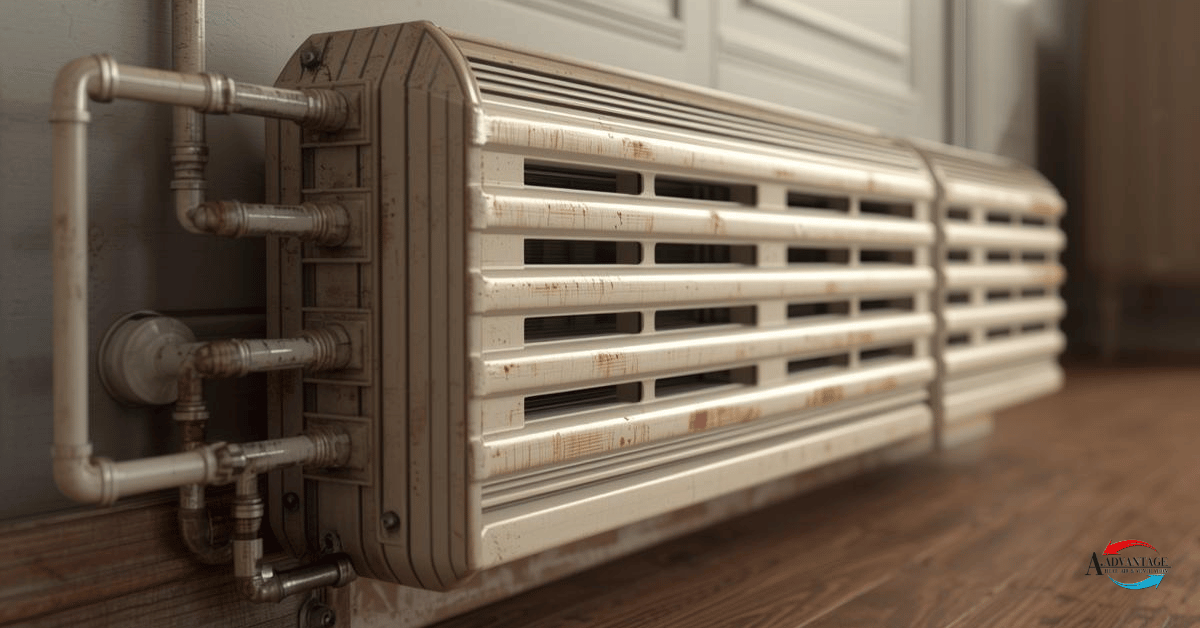
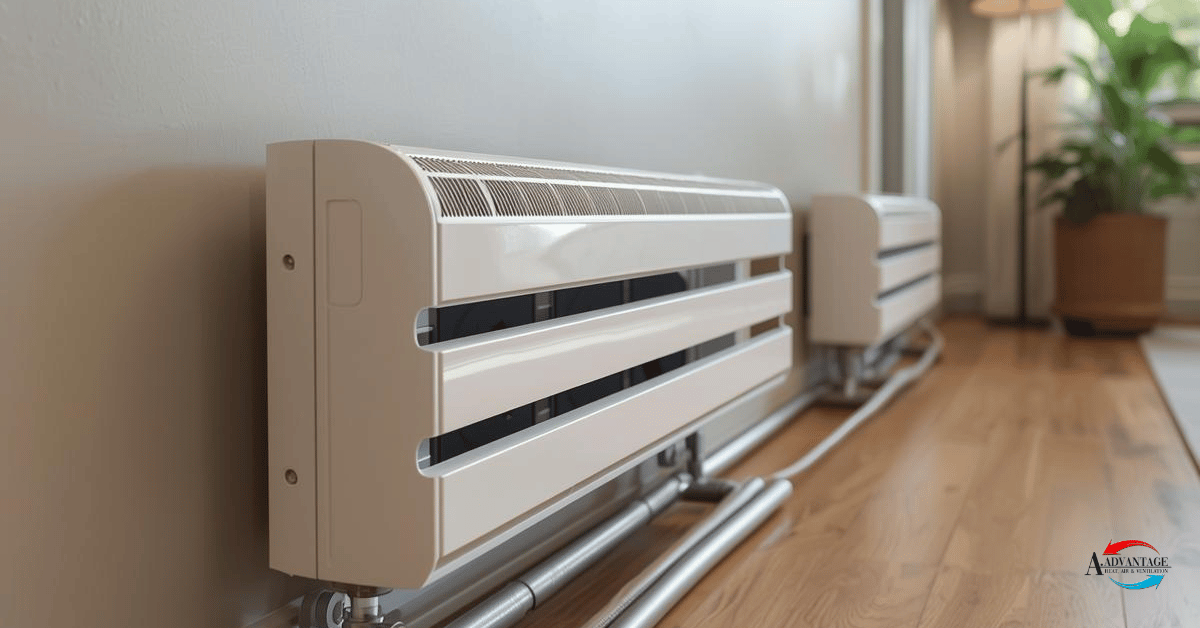
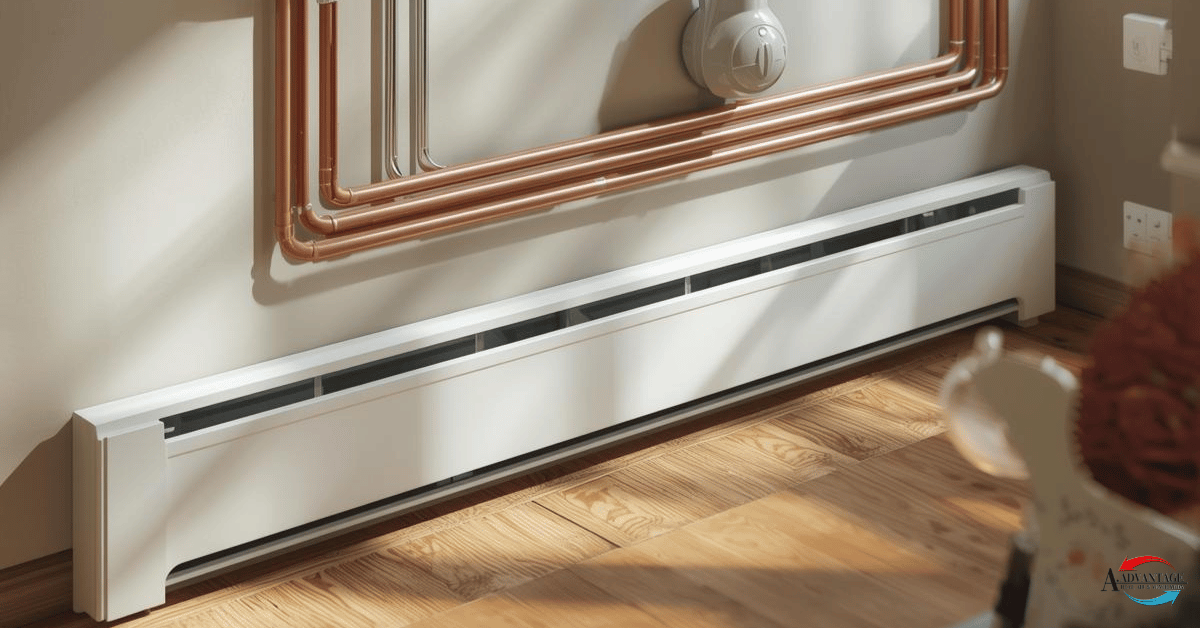
A hot water baseboard heater is a hydronic baseboard heating system that relies on hot water instead of warm air. Rather than blowing warm air through ducts, these systems circulate heated water through hot water pipes that run along the base of a wall.
A boiler heats the water and a water pump circulates it through the hydronic baseboard. As the water stays at a constant temperature, it gently warms the room with a constant flow of warm air.
Common Types
- Hydronic baseboard heaters: Use a boiler that keeps the water heated and delivers warmth
- Electric baseboard heaters: Use electric elements instead of a boiler
Hydronic heaters have gained popularity because they often feel more natural and steady compared to electric heaters or forced air systems.
Pros of Hot Water Baseboard Heaters
1) Quiet Heating Operation
Because these heaters work without fans, baseboard heaters operate quietly. This makes them suitable for bedrooms, offices, and nurseries.
2) Even Heat Distribution
The boiler maintains the water at a constant temperature, and the heater gives a constant flow of warmth. This type of heater avoids sudden heating swings and provides a calm indoor environment.
3) Energy-Efficient Heating
Hydronic heating keeps warm water circulating longer, reducing how often the system needs to run. Pairing with condensing boilers and regular cleaning boosts energy efficiency.
4) Low Maintenance
There are few moving parts. Most maintenance is related to periodic boiler service, cleaning the fins, and occasional repair if needed.
5) Better Indoor Air Quality
Because it does not blow air like central air or forced air HVAC systems, the system reduces dust, pollen, and allergens.
Cons of Using Hot Water Baseboard Heaters
1) Higher Upfront Installation Cost
The cost of installing a radiant heating system is typically higher because a new heating system requires piping, a boiler, and sometimes a water pump. The heater may be lower cost than ductwork, but the boiler raises overall pricing.
2) Slow Heat Response
Hydronic heating takes a longer time to heat because it slowly heats the water and the room.
3) Limited Temperature Control
Since the water holds heat longer, thermostat adjustments take time to feel. Temperature at all times stays steady but reacts slowly to change.
4) Takes Up Wall Space
Because baseboard is typically installed along walls, furniture placement becomes limited.
5) Leak Risks
Hydronic systems use water, so frozen pipes or leaks may occur. If a leak happens, repairing the heater requires a professional.
Hot Water Baseboard vs Forced-Air Heating
| Feature | Hot Water Baseboard | Forced Air |
| Heating | Gradual hydronic heating | Fast warm air |
| Noise | Very quiet | Noticeable |
| Air Quality | Minimal dust movement | Circulates allergens |
| Installation | Higher cost of installing | Lower |
| Heating Response Time | Longer time to heat | Quick |
| Cooling | Heating only | Air conditioning possible |
Compared to other types of heating system designs, hydronic versions create steady warmth but lack cooling ability.
Best Uses for Baseboard Heating
Good for:
- Rooms that need heating for long periods
- People sensitive to noise
- Homes without ductwork
- Bedrooms and older properties
Their gentle and silent heat makes them ideal when forced air or HVAC is not desired.
When Hot Water Baseboard Heating May Not Fit
Not the best choice if you:
- Want heating and cooling in one system
- Want fast temperature control
- Have limited wall space
- Need highly adjustable temperatures
Maintenance Tips
Basic maintenance keeps your heating system running smoothly:
- Cleaning heater covers regularly
- Scheduling boiler service each year
- Bleeding air from hot water pipes
- Checking for leak concerns
- Ensuring furniture does not block airflow
If you notice reduced heating output, cleaning or repair may be necessary.
Installation or Repair: When to Call a Professional
Do not attempt hydronic installation or boiler repair yourself. Call a heating professional if you notice:
- Uneven heating
- Strange radiator or boiler noises
- Water heater problems
- Reduced thermostat response
- Leaks
Professionals can assess water heaters, inspect the boiler, and repair heating lines safely.
Why Work with A Advantage Inc in OKC?
A Advantage Inc brings more than 50 years of combined experience. We offer:
- HVAC service
- Hydronic heating repair
- Furnace repair
- AC installation
- Ductless and central air services
We help you invest in quality components, maintain comfort, and choose the right type of boiler you choose for your home.
Conclusion
A hot water baseboard heating system provides steady warmth with quiet hydronic comfort. The pros and cons of baseboard heating show that although the system is energy-efficient and low maintenance, installation costs and slower temperature change are drawbacks. Knowing the 9 pros and cons helps you decide if this type of heating system is right for you.
Professional installation, repair, and cleaning keep the system running smoothly and help heat a home efficiently.