


For most Oklahoma City homeowners, a dual fuel heat pump is the smarter long-term investment. It combines an electric heat pump with a gas furnace, automatically switching between the two based on outdoor temperature to deliver lower energy bills and year-round comfort. A gas furnace remains a solid choice for tighter budgets, but OKC’s moderate winters with occasional deep freezes make it an ideal climate for dual fuel technology.
If you’ve been comparing electric and gas furnace options, this guide takes your research further by breaking down costs, efficiency, expert recommendations, and incentives specific to Oklahoma City.
Key Takeaways: Dual Fuel Heat Pump vs Gas Furnace in OKC
- Best for most OKC homeowners: A dual fuel heat pump system delivers 30% to 60% lower winter energy costs by using the heat pump for roughly 85% of the heating season and switching to gas only during deep freezes.
- Upfront cost difference: Dual fuel systems run $8,000 to $15,000 installed versus $6,000 to $12,000 for a gas furnace plus AC, but the dual fuel package includes both heating and cooling.
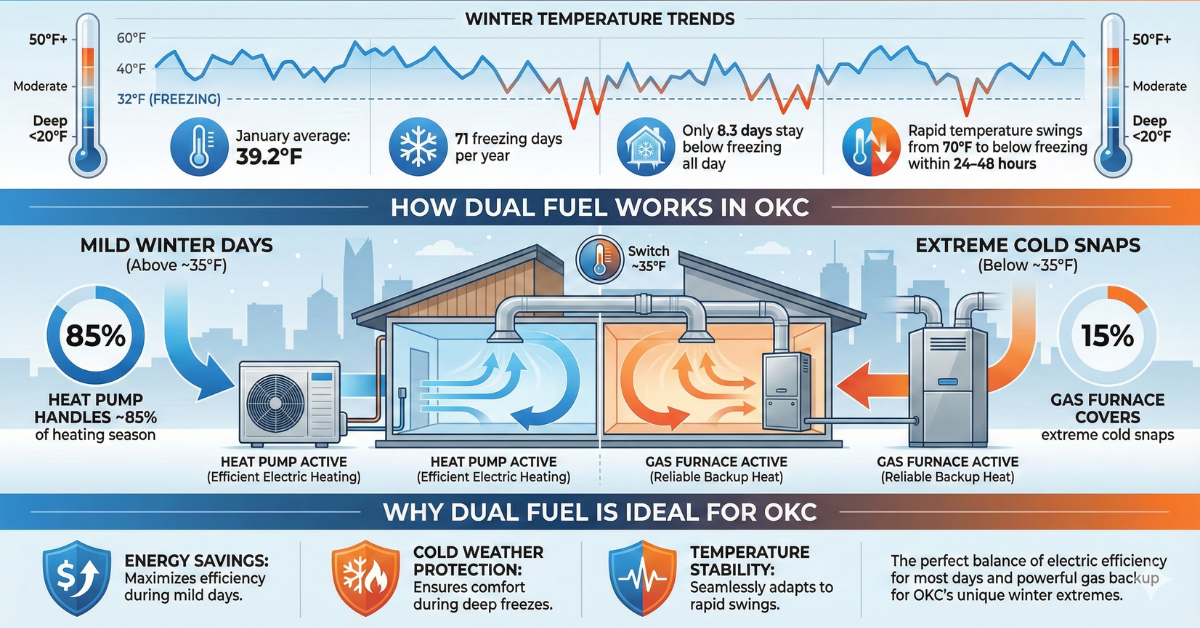
- OKC climate advantage: With January averaging 39.2 degrees Fahrenheit and only 8.3 days per year staying below freezing all day, Oklahoma City’s winters are ideal for heat pump efficiency.
- Efficiency gap: Heat pumps operate at 175% to 300% efficiency compared to 80% to 98.5% AFUE for gas furnaces, meaning significantly less energy waste.
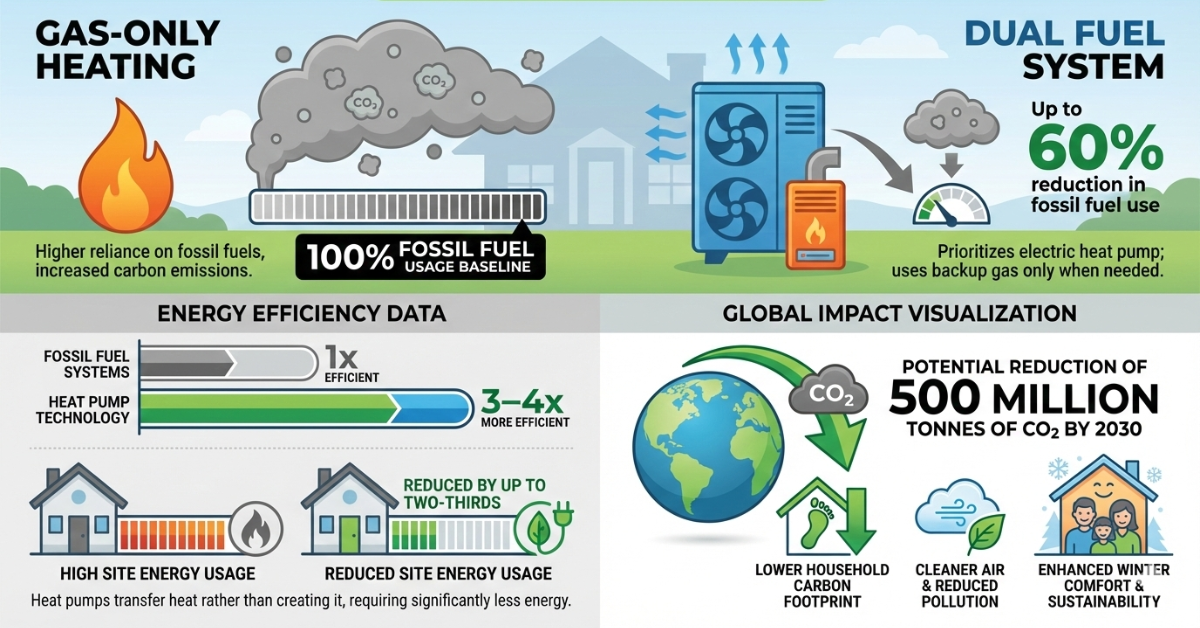
- Environmental benefit: Dual fuel systems can reduce site energy usage by up to two-thirds compared to traditional gas-only heating, according to Johnson Controls.
- 2026 incentives: The federal 25C tax credit expired in 2025, but IRA-funded state rebate programs (HOMES and HEAR) may still offer up to $8,000 for qualifying households.
- When gas wins: A standalone gas furnace makes more sense if you already have a newer unit, face a tight budget, or have limited electrical panel capacity.
What Is a Dual Fuel Heat Pump System?
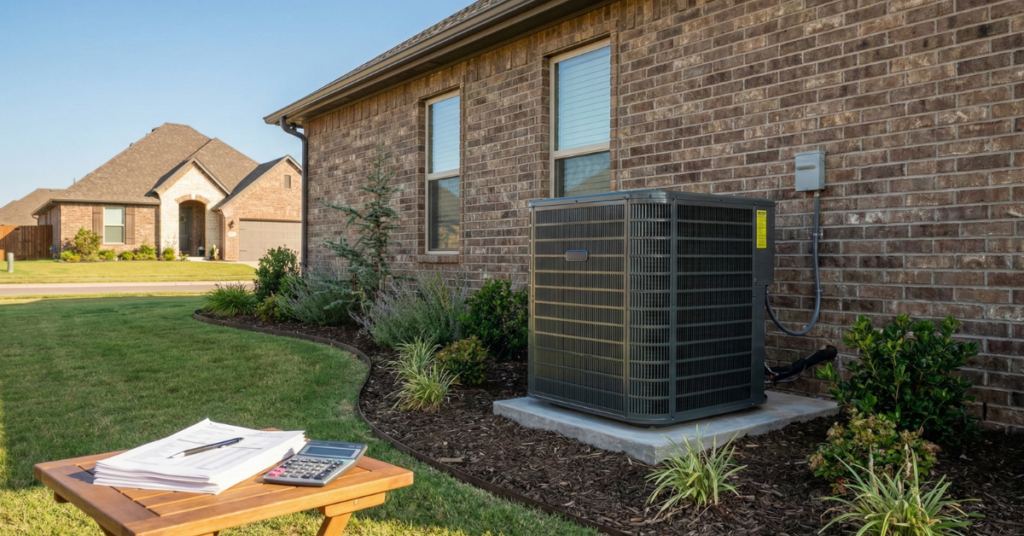
A dual fuel heat pump system is a hybrid HVAC setup that pairs an electric heat pump with a gas furnace, controlled by a single thermostat. The U.S. Department of Energy describes these systems as combining the efficiency of a heat pump with the reliability of a gas furnace, offering homeowners a flexible and effective heating solution.
Here’s how it works in practice. During mild and moderate weather (roughly above 35 degrees Fahrenheit), the electric heat pump provides all heating and cooling. It transfers heat from outdoor air into your home rather than burning fuel, which makes it significantly more efficient. When temperatures drop below that switchover point, the system automatically engages the gas furnace for intense, reliable heat.
Jeff Goss, Director of Product Management for Residential Systems at Rheem, explains that dual fuel energy savings come from two areas: the system’s high overall efficiency ratings and the heat pump’s strong heating capacity at cold temperatures. “In regions where heating with electricity is more cost effective than carbon-based fuels, performing well in both areas can mean significant utility cost savings,” Goss notes, as reported by ACHR News.
Why Is Oklahoma City’s Climate Ideal for Dual Fuel?
Oklahoma City sits in the “dual fuel sweet spot” because its winters are moderate overall but include occasional deep freezes that demand gas furnace backup. This climate pattern allows the heat pump to handle the majority of the heating season efficiently, while the furnace covers the coldest days.
Here are the key OKC climate facts that matter for this decision:
- January average temperature: 39.2 degrees Fahrenheit, according to historical climate records
- Freezing days per year: Approximately 71 days when temperatures reach 32 degrees Fahrenheit
- Days that stay below freezing all day: Only about 8.3 days per year
- Temperature swings: OKC regularly experiences shifts from 70 degrees to below freezing within 24 to 48 hours
Those numbers tell an important story. On roughly 85% of winter days, outdoor temperatures stay above the heat pump’s switchover point. That means the heat pump does the heavy lifting for most of the season, and the gas furnace activates only during the most extreme cold snaps.
In the average dual fuel setup, the heat pump handles approximately 85% of a household’s heating needs, according to industry analysis. In OKC’s climate, that ratio may be even more favorable.
How Do Upfront Costs Compare Between the Two Systems?
A dual fuel system costs more upfront, but it includes both heating and cooling in a single package. Here is a general cost breakdown for OKC homeowners:
- Gas furnace + central AC: $6,000 to $12,000 installed
- Dual fuel system (heat pump + gas furnace): $8,000 to $15,000 installed
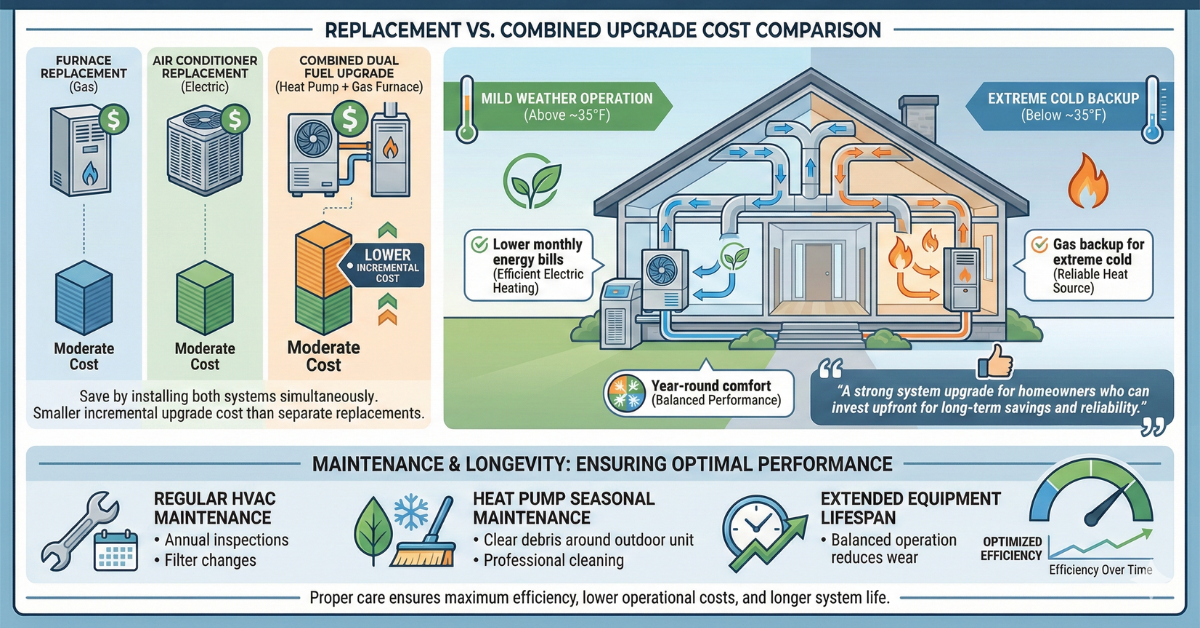
The price difference ranges from $2,000 to $5,000 depending on equipment brand, efficiency tier, and home size. However, the dual fuel system replaces both your furnace and your air conditioner, since the heat pump cools your home in summer. If you’re already replacing both units, the incremental cost of going dual fuel is significantly smaller.
Tim Brizendine, Director of Product Management at Lennox, emphasizes that dual fuel allows homeowners to “maximize comfort or utility costs depending on the cost of energy or the weather conditions,” as reported by ACHR News.
Can a Dual Fuel System Really Lower Your Energy Bills?
Yes. The U.S. Department of Energy estimates that heat pumps can reduce winter energy usage by 30% to 60% compared to furnace-only systems. Over a 15-year system lifespan, those savings can offset the higher initial investment and then some.
The efficiency advantage comes down to how each system produces heat:
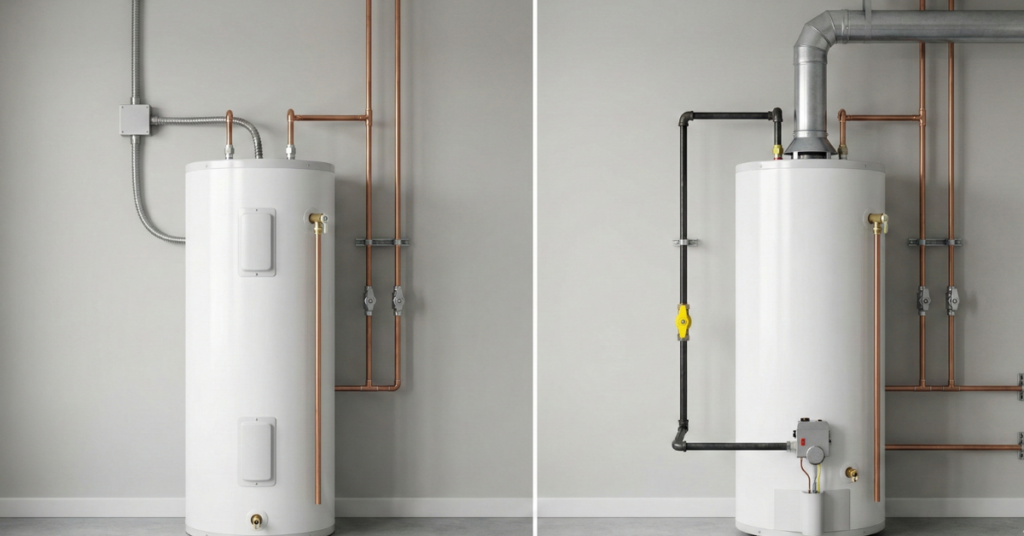
- Gas furnaces burn fuel at 80% to 98.5% AFUE (Annual Fuel Utilization Efficiency). Even the best gas furnace wastes at least 1.5 cents of every dollar spent on fuel.
- Heat pumps transfer heat rather than generate it, achieving efficiency between 175% and 300%, according to American Standard. In mild weather, they deliver three to four times more heat energy than the electricity they consume.
One Oklahoma City family saw these savings firsthand. After replacing a 15-year-old unit with a high-efficiency system installed by AAdvantage, they experienced a 35% reduction in summer cooling costs along with quieter operation and improved indoor air quality.
Understanding how SEER2 ratings affect your Oklahoma energy bills can help you compare specific models. And if you’re curious about how inverter heat pump technology improves on older models, the efficiency gains with variable-speed systems are even more dramatic.
What Is the Environmental Impact of Each System?
Dual fuel systems significantly reduce carbon emissions compared to gas-only heating. By using the heat pump as the primary heating source and running the furnace only during extreme cold, homeowners can cut fossil fuel consumption by 60% or more.
Mark Lessans, Senior Director of Sustainability and Regulatory Affairs at Johnson Controls, states that dual fuel systems can “reduce site energy usage by as much as two-thirds” compared to traditional heating, as reported by ACHR News. That represents a substantial reduction in both energy consumption and household carbon emissions.
On a broader scale, research from the World Economic Forum and the International Energy Agency confirms that heat pumps are three to four times more efficient than fossil fuel heating systems. The IEA estimates that widespread heat pump adoption could reduce global CO2 emissions by 500 million tonnes by 2030. For OKC homeowners who want to reduce their environmental footprint without sacrificing winter comfort, dual fuel offers a practical middle ground.
Are There Rebates or Tax Credits Available in 2026?
The federal 25C Energy Efficient Home Improvement Tax Credit, which offered homeowners up to $2,000 for qualifying heat pump installations, expired on December 31, 2025. Equipment installed in 2026 is not eligible under current law.
However, IRA-funded state rebate programs remain active in many states. The two key programs are:
- HOMES (Home Owner Managing Energy Savings): Rewards verified energy efficiency improvements
- HEAR (Home Electrification and Appliance Rebates): Provides up to $8,000 in heat pump rebates for qualifying low-to-moderate income households
Eligibility, funding availability, and application processes vary by state. Because these programs change frequently, your best resource is a knowledgeable local HVAC contractor who tracks available incentives. Even without federal tax credits, the long-term energy savings from a dual fuel system make it a financially sound decision for many OKC homeowners.
When Does a Gas Furnace Make More Sense?
A gas furnace paired with a separate air conditioner is the better choice in specific situations:
- You already own a newer gas furnace with years of useful life remaining
- Your upfront budget is limited and long-term savings are a secondary priority
- Your home’s electrical panel cannot support a heat pump without costly upgrades
- Local natural gas prices are exceptionally low relative to electricity rates
For homeowners focused on the lowest installation cost with reliable performance, a high-efficiency gas furnace remains an excellent option. You can explore the best way to heat your home to compare all available methods.
When Is Dual Fuel the Clear Winner?
Dual fuel is the stronger choice when you’re replacing both a furnace and air conditioner at the same time, since the incremental cost of adding dual fuel capability is much smaller than installing both systems separately. It also wins if you want lower monthly energy bills while maintaining gas backup for the coldest nights.
Alexander Siv, an HVAC professional with Amherst Heating and Plumbing, describes dual fuel as a “great system upgrade if you can afford it,” noting that a heat pump paired with a furnace delivers year-round comfort while keeping energy costs manageable.
If you go the dual fuel route, staying on top of regular HVAC maintenance and following a heat pump maintenance checklist will help you maximize performance and equipment lifespan.
Ready to Choose the Right System for Your OKC Home?
Oklahoma City’s climate gives homeowners a genuine advantage when it comes to dual fuel technology. The moderate winters keep the heat pump running efficiently for most of the season, and the gas furnace provides peace of mind during deep freezes.
At AAdvantage Heating & Air Conditioning, we help OKC homeowners make informed heating decisions every day. Reach out to our team for a no-pressure consultation, and we’ll help you find the system that fits your home, your budget, and your goals.